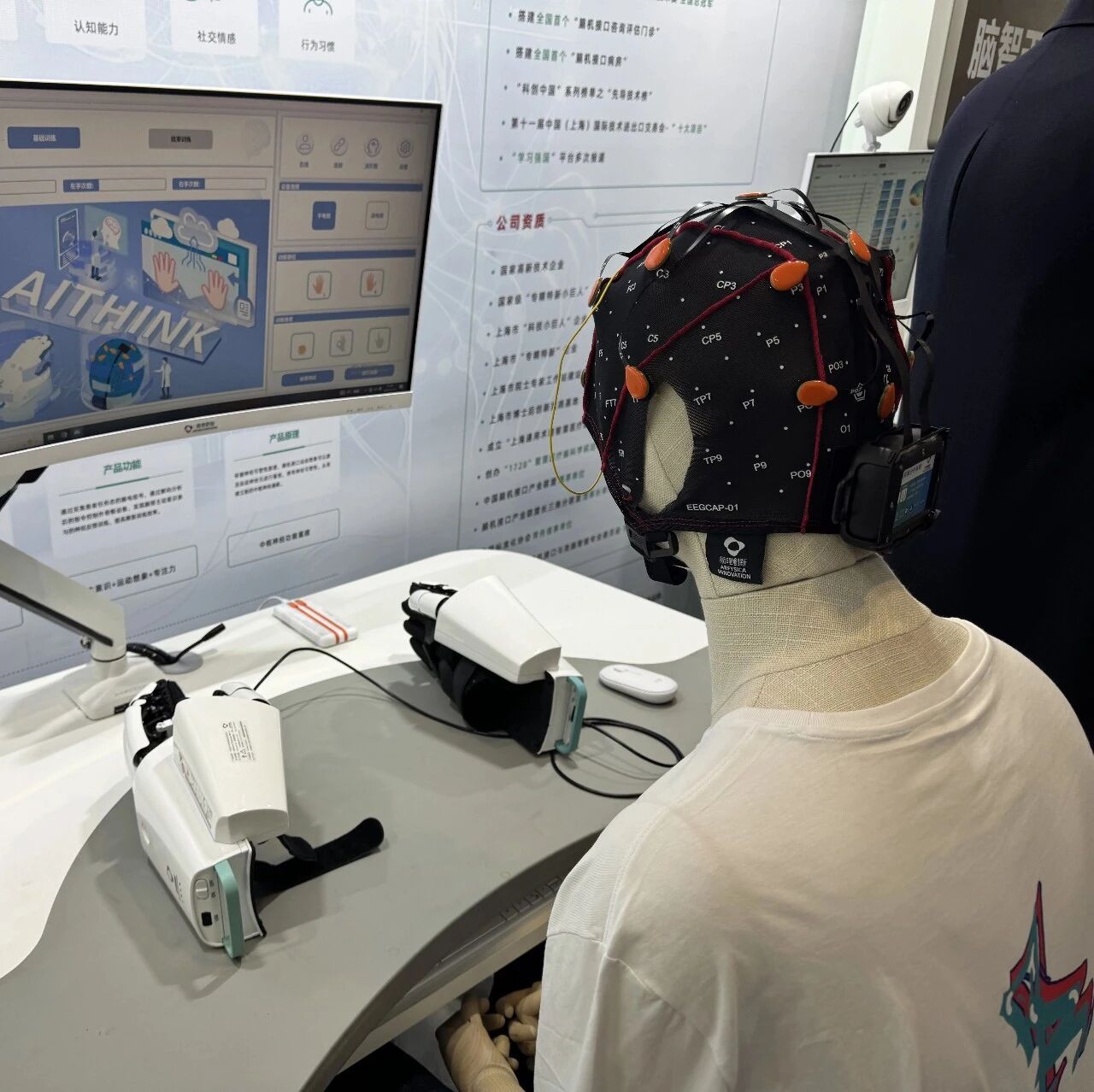
半侵入式脑机接口产品

Search documents
医药生物行业周报(20260112-0116):产业化进程加速,脑机接口发展进入快车道-20260116
Shanghai Securities· 2026-01-16 12:29
Investment Rating - The industry investment rating for the medical biology sector is "Hold" [2]. Core Insights - The report highlights significant advancements in the brain-computer interface (BCI) industry, emphasizing the acceleration of industrial development and the establishment of a robust innovation ecosystem [3][4]. - The Shanghai Municipal Government has released a plan to cultivate the BCI industry, aiming for clinical applications of semi-invasive and invasive BCI products by 2027, with a comprehensive application by 2030 [4]. - The report suggests that the BCI field is entering a rapid development phase, driven by the release of industry standards and supportive government policies [7]. Summary by Sections Industry Overview - The BCI industry is experiencing accelerated industrialization, with recent breakthroughs in invasive devices and the establishment of new treatment paradigms for conditions like epilepsy [4][6]. - The report notes the importance of integrating BCI technology with artificial intelligence and virtual reality to enhance product offerings and market reach [4]. Government Initiatives - The Shanghai action plan outlines key milestones, including the development of over five invasive and semi-invasive BCI products for clinical trials and the establishment of a national-level BCI industry development zone [4]. - The plan also emphasizes the need for collaboration between innovative entities and medical institutions to foster product development in various applications, including rehabilitation and education [4]. Investment Recommendations - The report recommends focusing on companies such as Innovation Medical, Aipeng Medical, and Sanbo Brain Science, which are positioned to benefit from the growing BCI market [7].
中美脑机接口技术差距有多大?瑞银专家电话会议:大约落后两年时间
Zhi Tong Cai Jing· 2026-01-14 14:46
Core Viewpoint - The brain-computer interface (BCI) technology has gained significant attention in the capital market since January, with related company stock prices experiencing substantial increases. A recent research call organized by UBS highlighted the technological gap between Chinese and American companies in BCI, with an expected narrowing of this gap in the next two years. Group 1: Comparison of BCI Technologies - Non-invasive BCI: - Application scenarios include rehabilitation training, mental illness assessment and treatment, sleep monitoring and treatment, and fatigue monitoring - Advantages include ease of use and operation [1] - Semi-invasive BCI: - Application scenarios include traditional electrocorticography (ECoG) for intraoperative monitoring and coarse motor decoding, with flexible ECoG enabling higher precision in motor decoding - Advantages include better signal quality than non-invasive products and higher safety than invasive products, offering a balanced performance [2] - Invasive BCI: - Application scenarios include external robotic arm/cursor control, sensory reconstruction, and treatment for Parkinson's disease - Advantages include higher decoding precision [3] Group 2: Product Registration and Certification Timeline - Non-invasive BCI: - Most are classified as Class 1/2 medical devices, with registration and certification taking less than one year. More non-invasive products are expected to launch in the Chinese market within the next 6-12 months [4] - Semi-invasive BCI: - Classified as Class 3 active implantable medical devices, with expectations for products to be launched in China within 1-2 years, particularly from Neuracle, which may receive certification by 2026-2027 [5] - Invasive BCI: - Also classified as Class 3 active implantable medical devices, with a longer certification cycle due to stricter regulatory requirements. Some companies may obtain product registration by the end of 2027 to 2028 [6] Group 3: Key Parameters for Invasive and Semi-invasive Products - Semi-invasive BCI: - Key parameters include spatial resolution, typically with fewer channels and relatively lower signal quality [7] - Invasive BCI: - Key parameters include channel count, signal-to-noise ratio, decoding precision, lifespan of implants, and biocompatibility. Manufacturers often promote products based on these aspects [8] Group 4: Technological Gap Between Chinese and American Companies - Current technological gap: - Chinese companies lag behind American counterparts by approximately two years, particularly in electrode technology, chip development, and decoding techniques. However, this gap is expected to narrow in the next 2-3 years [9] - Electrode technology: - American products typically have 1024 channels, while Chinese products range from 128-256 channels. China is expected to achieve large-scale production of flexible micro-nano/ECoG electrodes within 3-5 years [10] - Chip technology: - American companies utilize self-developed chips with high system integration, while Chinese companies primarily rely on imported chips. Domestic chip manufacturers face demand constraints rather than technical limitations [11] Group 5: Market Potential and Pricing - Market size: - Non-invasive products are expected to account for at least 70% of the total BCI market, with significant growth anticipated over the next 5-10 years. The overall market size for BCI products in China is projected to reach several hundred billion RMB by 2030 [12] - Pricing expectations: - Non-invasive products are priced around 10,000 RMB for sleep monitoring devices and 200,000-400,000 RMB for rehabilitation and mental illness products. Invasive/semi-invasive products are expected to align with current deep brain stimulation (DBS) device pricing [13] Group 6: Leading Companies in BCI Products - Non-invasive BCI: - Companies such as Neuracle, Genlight, and PINS Medical have launched front-end products. Optimizing backend decoding algorithms may enhance treatment effects and expand indications [14] - Semi-invasive BCI: - WE-LINKING is noted for its flexible ECoG technology, which can cover large areas of the brain for multi-region decoding [15] - Invasive BCI: - Companies like StairMed, BCIFlex, and NeuCyberNeuroTech utilize similar technology routes with flexible micro-nano electrodes for precise implantation and higher decoding accuracy [16]

上海发布脑机接口重磅文件,5年内全面实现临床应用
第一财经· 2026-01-12 14:25
Core Viewpoint - Shanghai is positioning itself as a leading hub for brain-computer interface (BCI) technology, with a comprehensive R&D system covering invasive, semi-invasive, and non-invasive technologies, aiming for significant advancements and clinical applications by 2027 [3][4]. Group 1: Development Plans and Goals - The "Shanghai Brain-Computer Interface Future Industry Cultivation Action Plan (2025-2030)" outlines goals to achieve high-quality brain control and clinical applications for semi-invasive BCIs by 2027, alongside breakthroughs in invasive BCI research [3][4]. - By 2030, the plan aims for comprehensive clinical application of BCI products and the establishment of a globally competitive innovation hub for BCI technology [4][5]. Group 2: Clinical Trials and Innovations - The second invasive BCI clinical trial in China successfully demonstrated thought-controlled wheelchair operation, marking a significant milestone in BCI technology [4]. - The plan includes the goal of having over five invasive and semi-invasive BCI products pass medical device inspections by 2027, and fostering at least five innovative companies with core BCI technology [4][5]. Group 3: Data and Standards - The initiative emphasizes the creation of standards for brain signal data collection across various tasks, aiming to build a high-quality dataset of at least 1,000 cases to support algorithm development and neuroscience research [5][6]. - The "iBRAIN EEG dataset" is being developed to promote shared public data resources, addressing the current scarcity of brain signal data [5][6]. Group 4: Industry Ecosystem and Support - Shanghai is establishing specialized incubators and industry clusters to accelerate the commercialization of BCI technologies, with financial support for leading companies and projects [6][7]. - The "Brain Intelligence Future Industry Cluster" has attracted nearly 20 teams and companies since its launch, with significant investment and support from the local government [7][8]. Group 5: Future Prospects and Collaboration - The Shanghai government is committed to fostering innovation in BCI technology across various sectors, including healthcare and education, while enhancing international collaboration [8].