
华为鸿蒙智家主动健康空气解决方案

Search documents
智能家居将带来哪些全新生活体验?
Ren Min Ri Bao Hai Wai Ban· 2025-12-01 22:11
Core Insights - The smart home industry is entering a rapid development phase, with China's smart home market expected to reach approximately 784.8 billion yuan in 2024 and surpass 800 billion yuan in 2025 [1] Group 1: Industry Development - The Ministry of Industry and Information Technology and five other departments have launched a plan to enhance the adaptability of consumer goods supply and demand, designating smart home technology as a new area for development [1] - The focus is on transitioning from smart individual products to a fully integrated smart home experience, promoting an immersive, proactive, and interconnected lifestyle [1] Group 2: Technological Advancements - Current smart home products are evolving towards autonomous control through "perception + reasoning, decision-making + execution," integrating new technologies such as large models, cloud services, and artificial intelligence [2] - The complete supply chain in China's smart home industry, from upstream components to downstream platform services, provides robust support for meeting both domestic and global market demands [3] Group 3: Market Potential - Despite the smart home industry entering a phase of large-scale adoption, over 60% of users lack a systematic understanding of whole-home smart solutions, indicating significant market potential [5] - The future of smart home technology is expected to enhance proactive intelligence and service experiences, expanding into areas such as elderly care, personal health management, and energy management [5]

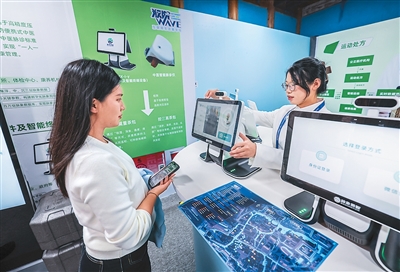
从“智能单品”到“全屋智能”,智能家居将带来哪些全新生活体验?
Xin Hua She· 2025-12-01 10:07
Core Viewpoint - The smart home industry is entering a rapid development phase, driven by advancements in big data, cloud computing, and artificial intelligence, leading to a projected market size of approximately 784.8 billion yuan in 2024 and expected to exceed 800 billion yuan in 2025 [1] Group 1: Industry Development - The Ministry of Industry and Information Technology, along with five other departments, has introduced a plan to enhance the adaptability of consumer goods supply and demand, positioning smart home technology as a new growth area [1] - The transition from smart individual products to whole-home smart solutions aims to create an immersive, proactive, and interconnected smart living experience [1] Group 2: Technological Advancements - Current smart home products are evolving towards autonomous control through "perception + reasoning, decision-making + execution," integrating new technologies like large models into the smart home process [2] - The Huawei HarmonyOS smart home solution exemplifies this trend by actively monitoring air quality and automatically adjusting systems to maintain optimal conditions [2] Group 3: Market Potential - The complete supply chain in China's smart home industry supports robust production capabilities, meeting both domestic and global market demands [3] - Despite the growing popularity of whole-home smart solutions, over 60% of users lack systematic understanding, and 80% have not established clear purchasing pathways, indicating significant untapped market potential [3] - Future advancements in smart home technology are expected to enhance user experience through seamless integration of hardware, software, and services, focusing on areas like elderly care and energy management [3]