华为ADS智驾方案

Search documents
华为ADS智驾方案分析
自动驾驶之心· 2026-01-10 03:47
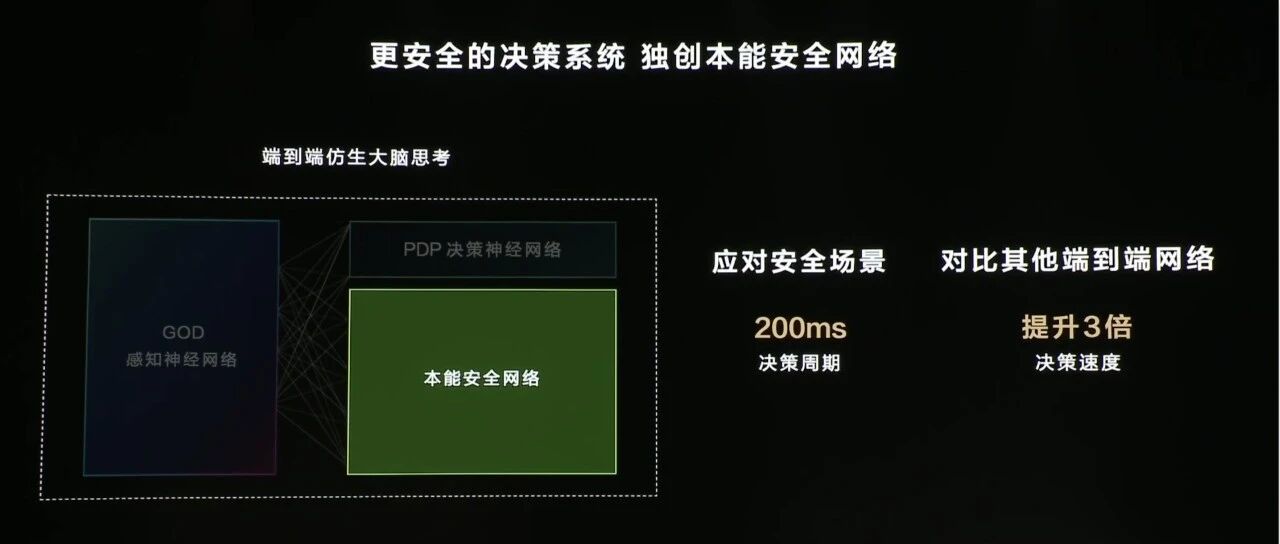
Core Viewpoint - Huawei's ADS (Autonomous Driving System) has evolved through multiple iterations, focusing on multi-sensor fusion to enhance perception capabilities under various conditions, ultimately aiming for a fully autonomous driving experience by 2025 [2][4]. Summary by Sections ADS Iterations - ADS 1.0 was launched in April 2021, featuring multi-sensor fusion and basic intelligent driving capabilities, primarily in urban areas [4]. - ADS 2.0, released in April 2023, introduced advanced algorithms (GOD 2.0 and RCR 2.0) for improved object and road recognition, achieving a 99.9% recognition rate for common obstacles [4][8]. - ADS 3.0, expected in April 2024, will implement an end-to-end neural network design, enhancing the system's ability to mimic human driving decisions and improve overall driving experience [18][20]. - ADS 4.0, projected for April 2025, aims to integrate cloud training and vehicle inference, fundamentally restructuring the driving logic to enhance safety and adaptability [4]. Sensor Fusion and Perception - The system employs a combination of LiDAR, millimeter-wave radar, ultrasonic radar, and cameras to create a comprehensive perception framework, capable of functioning in various weather conditions [3][20]. - LiDAR provides high-precision 3D mapping, while millimeter-wave radar enhances performance in adverse weather, and cameras assist in recognizing traffic signs and dynamic objects [3][20]. Key Algorithms - The General Obstacle Detection (GOD) network is crucial for identifying various obstacles, including atypical ones, and is trained using extensive driving data [12][21]. - The Road Topology Reasoning (RCR) network enhances the system's ability to match navigation maps with real-world conditions, significantly improving the vehicle's situational awareness [16]. Innovative Features - ADS 3.0 introduces a Park-to-Park feature, allowing vehicles to autonomously navigate from parking lot entrances to designated spots, achieving a parking success rate of over 95% in complex scenarios [24]. - The system includes a comprehensive Collision Avoidance System (CAS 3.0) with 23 active safety features, reportedly preventing over 2 million potential collision incidents [25]. - The Navigation Cruise Assist (NCA) function supports both urban and highway driving, with a 99% accuracy rate in traffic signal recognition [26]. Future Developments - The transition from rule-based to data-driven approaches in ADS iterations aims to address complex driving scenarios and enhance overall driving safety and efficiency [4].