
端到端数据驱动

Search documents
华为ADS智驾方案分析
自动驾驶之心· 2026-01-10 03:47
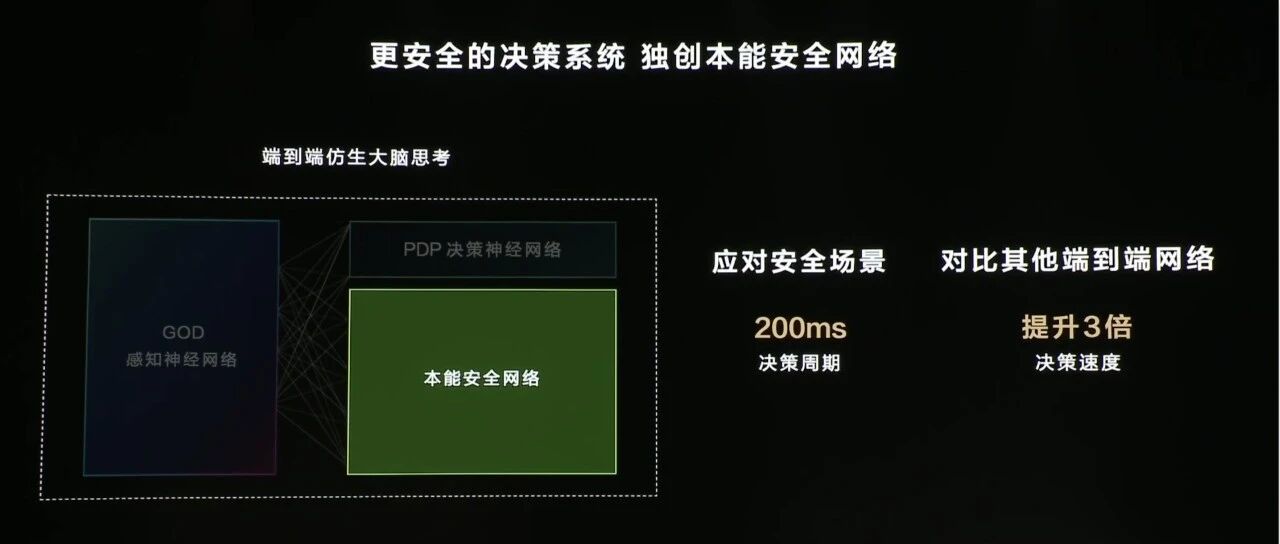
Core Viewpoint - Huawei's ADS (Autonomous Driving System) has evolved through multiple iterations, focusing on multi-sensor fusion to enhance perception capabilities under various conditions, ultimately aiming for a fully autonomous driving experience by 2025 [2][4]. Summary by Sections ADS Iterations - ADS 1.0 was launched in April 2021, featuring multi-sensor fusion and basic intelligent driving capabilities, primarily in urban areas [4]. - ADS 2.0, released in April 2023, introduced advanced algorithms (GOD 2.0 and RCR 2.0) for improved object and road recognition, achieving a 99.9% recognition rate for common obstacles [4][8]. - ADS 3.0, expected in April 2024, will implement an end-to-end neural network design, enhancing the system's ability to mimic human driving decisions and improve overall driving experience [18][20]. - ADS 4.0, projected for April 2025, aims to integrate cloud training and vehicle inference, fundamentally restructuring the driving logic to enhance safety and adaptability [4]. Sensor Fusion and Perception - The system employs a combination of LiDAR, millimeter-wave radar, ultrasonic radar, and cameras to create a comprehensive perception framework, capable of functioning in various weather conditions [3][20]. - LiDAR provides high-precision 3D mapping, while millimeter-wave radar enhances performance in adverse weather, and cameras assist in recognizing traffic signs and dynamic objects [3][20]. Key Algorithms - The General Obstacle Detection (GOD) network is crucial for identifying various obstacles, including atypical ones, and is trained using extensive driving data [12][21]. - The Road Topology Reasoning (RCR) network enhances the system's ability to match navigation maps with real-world conditions, significantly improving the vehicle's situational awareness [16]. Innovative Features - ADS 3.0 introduces a Park-to-Park feature, allowing vehicles to autonomously navigate from parking lot entrances to designated spots, achieving a parking success rate of over 95% in complex scenarios [24]. - The system includes a comprehensive Collision Avoidance System (CAS 3.0) with 23 active safety features, reportedly preventing over 2 million potential collision incidents [25]. - The Navigation Cruise Assist (NCA) function supports both urban and highway driving, with a 99% accuracy rate in traffic signal recognition [26]. Future Developments - The transition from rule-based to data-driven approaches in ADS iterations aims to address complex driving scenarios and enhance overall driving safety and efficiency [4].

卓驭科技CEO沈劭劼:智驾行业进入“端到端”竞速期
Zhong Guo Zheng Quan Bao· 2026-01-04 20:07
"如果到现在哪一个做智能辅助驾驶的公司,还没有完成数据驱动开发范式的改造,那它被斩下去是迟 早的事情。"2025年12月31日,卓驭科技CEO沈劭劼在接受中国证券报记者专访时表示,唯有完成向"端 到端"数据驱动的转型,且能将技术与传统制造业落地衔接,才能抵御行业淘汰赛的冲击。 作为从大疆体系拆分独立仅一年多的智驾玩家,卓驭科技已凭借端到端技术突破,覆盖9大乘用车客户 15个品牌、50余款量产车型,从10万元级燃油车到百万元级高端车型全面渗透,还将触角延伸至重卡 NOA与无人物流车领域。在沈劭劼看来,当前智驾行业已进入"端到端扎堆"的竞速期,头部企业的技 术差距以"月"为单位波动,2026年的竞争激烈程度将远超往年。 数据驱动至关重要 "智能辅助驾驶的核心矛盾,早已不是'要不要做端到端',而是'能不能转得彻底'。"沈劭劼的判断,源 于卓驭自身的"断臂式"转型。2024年10月,他带领团队删掉了三年积累的所有规则代码,彻底告别规则 驱动路线——彼时,行业内多数企业仍选择"规则兜底+数据优化"的渐进式转型,而卓驭因规则驱动在 城区领航开发中陷入"解决1个问题冒出10个新问题"的困境,最终下定决心"删库重练"。 "我 ...