卫星遥感系统

Search documents
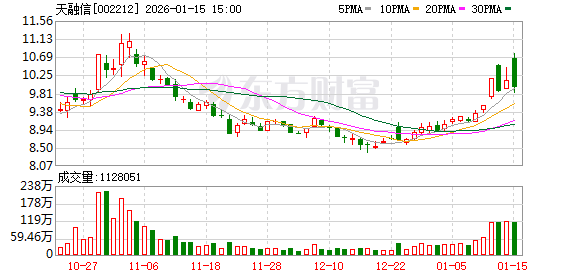
天融信:公司目前在卫星互联网安全领域已有技术储备
Zheng Quan Ri Bao· 2026-01-15 13:17
Group 1 - The company is focusing on the space computing sector and has existing technological reserves in satellite internet security [2] - The company has launched a satellite application service platform and satellite remote sensing system as part of its cybersecurity solutions, which have been implemented in multiple countries along the "Belt and Road" initiative [2] - The company is investing in the intelligent computing cloud sector, introducing products such as the intelligent computing cloud platform and integrated computing machine to provide high-performance and secure integrated infrastructure solutions for clients [2]


天融信:深耕卫星互联网安全市场 已有丰富落地实践
Zheng Quan Shi Bao Wang· 2026-01-12 11:33
Group 1 - The company has developed network security solutions in the commercial aerospace sector, including satellite application service platforms and satellite remote sensing systems, with implementations in China and several Belt and Road Initiative countries [1] - The company's "Belt and Road Satellite Remote Sensing System Network Security Solution" was included in the 2022 collection of practical cases for building a community of shared future in cyberspace [1] - The company has extensive experience in providing network security for national-level aerospace launch missions, supporting various Shenzhou missions and Tiangong space stations [1] Group 2 - The company has participated in the development of over ten cryptographic technology standards, covering areas such as link encryption and identity authentication, enhancing data transmission security [2] - The company has successfully won a bid for a cryptographic security resource pool project from China Star Network Application Research Institute, with a bid amount exceeding 18.82 million yuan, aimed at improving the security and compliance of commercial cryptographic technology for clients [2]
重磅!2025年中国及31省市卫星应用行业政策汇总及解读(全)“推进航天产业发展 扩展卫星应用领域及深度”
Qian Zhan Wang· 2025-05-16 06:14
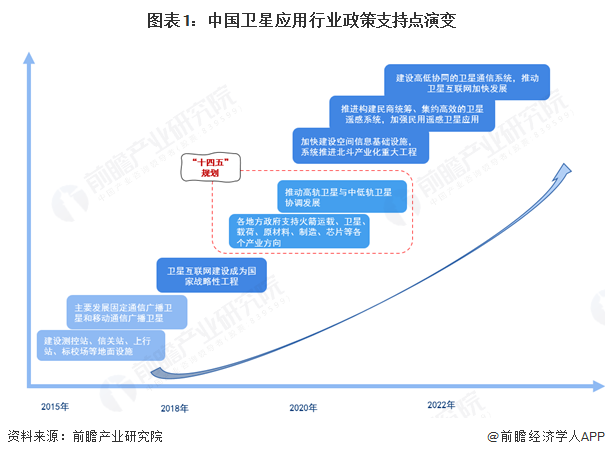
Core Viewpoint - The article discusses the evolution and current state of China's satellite application industry, highlighting the significant role of government policies in promoting the development of satellite communication, navigation, and remote sensing technologies as part of national strategic initiatives [1][5][11]. Policy Evolution - The rapid advancement of technology and intensifying geopolitical competition have transformed the application scenarios of satellites in communication, navigation, and remote sensing, making it a critical area for national security and economic growth [1]. - The "14th Five-Year Plan" emphasizes the construction of a global coverage, efficient operation communication, navigation, and remote sensing infrastructure, which is crucial for the development of the satellite industry [11]. National Policy Summary - Recent policies focus on enhancing the coordination efficiency of satellite networks, optimizing procedures, and promoting the efficient use of frequency and orbital resources [5]. - The government supports the entire satellite application industry chain, including manufacturing, launching, ground equipment construction, and operational applications, while encouraging innovation in satellite technology [5][11]. Local Government Initiatives - Various provinces and cities have introduced policies to align with national strategies, particularly in the context of the Beidou satellite navigation system and the "14th Five-Year Plan" [17]. - Local policies aim to foster the development of satellite applications in areas such as smart cities, logistics, agriculture, and emergency communication, leveraging satellite technology for digital transformation [18][19]. Industry Development Goals - The overall goal across provinces is to establish a secure and reliable global satellite internet system, enhancing the integration of satellite applications in various sectors [19]. - Specific initiatives include the promotion of satellite navigation, remote sensing, and communication applications, with a focus on building a robust satellite infrastructure and fostering innovation [19].