
口内扫描仪

Search documents
投资策略点评:机构关注度环比回升:医药生物、建筑材料、通信
KAIYUAN SECURITIES· 2026-03-24 07:45
Group 1: Industry Overview - The overall attention from institutions has seen a rebound, particularly in the pharmaceutical, building materials, and communication sectors [1][2] - Weekly, the total number of companies surveyed in the A-share market decreased, remaining significantly lower than the same period in 2025, indicating a continued low level of survey activity [11][18] - Monthly, the total number of companies surveyed in February 2026 also fell compared to January, with a total of 451 surveys conducted, down from 1305 in February 2025 [18][20] Group 2: Sector-Specific Insights - The pharmaceutical, building materials, and communication sectors experienced an increase in survey activity compared to the previous week, with notable rises in the number of surveys conducted [11][17] - In the last month, the electronic, mechanical equipment, pharmaceutical, basic chemicals, and electric power equipment sectors received the highest attention from institutions [18][21] Group 3: Individual Company Focus - Companies such as Fuirjia, Guangli Technology, and Changlan Technology have garnered significant market attention, with Fuirjia receiving 18 surveys in the last month, indicating strong interest in its dental repair materials and digital equipment [31][32] - Aidi Te, involved in dental repair materials and digital equipment, has seen a favorable market demand, with two surveys conducted last week, reflecting growing industry demand driven by increased patient visits and rising per capita spending on dental care [30]
爱迪特(301580) - 301580爱迪特投资者关系管理信息20260312
2026-03-12 09:42
Market Overview - The company leads the global market in zirconia ceramic blocks, with a significant competitive edge in pricing and gross margin. The introduction of the 3Dpro Ultra/Max is expected to strengthen its market position, with overseas business revenue projected to grow at a compound annual growth rate (CAGR) of over 30% from 2021 to 2024, surpassing the industry average [1] - The global dental implant medical device market exceeds 100 billion yuan, showing robust growth driven by increasing oral health demands [1] Digital Equipment Development - The digital equipment segment focuses on dental digital devices, including intraoral scanners and 3D printers, and is the company's second-largest business area. The dual domestic and overseas market strategy is showing gradual recovery, becoming a key growth driver. The market size for digital equipment is expected to match that of the materials segment, with a target to achieve a 1:1 revenue ratio [2] Strategic Partnerships and Expansion - The company holds a 42% stake in Jingdezhen Wanwei Powder, establishing a strategic partnership that enhances raw material supply stability. Wanwei has announced expansion plans to increase zirconia powder production capacity, supporting both the company's and its own growth needs [3] - The 3D printing business, part of the digital equipment segment, is focused on personalized denture production and is in the early growth phase. The expansion of new facilities is expected to alleviate current capacity constraints [4] Robotics in Dental Surgery - The company anticipates rapid growth in the dental implant surgical robot sector, with the first robot launched in the U.S. in 2015. The technology and business model have matured, and the company plans to leverage its market advantages to support the development of the surgical robots produced by Central Mountain Medical, which have received relevant product certifications [5]
高瓴押注“银牙”赛道 增持现代牙科背后透露何种信号?
Xin Lang Cai Jing· 2026-02-05 10:44
Core Viewpoint - Hillhouse Capital is significantly increasing its stake in Modern Dental Group from less than 1% to approximately 17%, indicating strong confidence in the long-term potential of the Chinese dental healthcare sector [1][2]. Investment Strategy - The increase in stake reflects Hillhouse's long-term commitment to the dental healthcare industry, having already established a comprehensive ecosystem in the medical health sector through investments in various companies [2]. - Hillhouse's subsidiary, Songbai Investment, has been deeply involved in the dental sector, covering the entire industry chain from education and training to dental clinics and distribution [2]. Market Positioning - The Chinese dental care service market has grown from $13.2 billion in 2015 to $26.2 billion in 2020, with a compound annual growth rate (CAGR) of 14.8%, and is expected to reach $75.2 billion by 2030 [4]. - There is significant growth potential in the Chinese dental market compared to developed countries, with a much lower penetration rate of invisible aligners [4]. - The retail sales revenue of the Chinese invisible aligner market is projected to grow from $1.5 billion in 2020 to $11.9 billion by 2030, with a CAGR of 23.1% [4]. Financial Perspective - Modern Dental Group has a market capitalization of approximately $620 million, which is considered attractive given the growth potential of the dental market [5]. - Hillhouse's investment comes at a time when Modern Dental's stock has declined by about 3% this year, showcasing a contrarian investment approach and confidence in the company's long-term value [5]. Industry Dynamics - The dental industry is characterized by a dual oligopoly, with the top two market players holding a combined market share of 82.4%, creating a favorable environment for full-service providers like Modern Dental [4]. - Hillhouse's investment strategy is not merely financial but aims to cultivate an ecosystem capable of transforming the industry, indicating a long-term vision for the dental sector [6].
“十五五”口腔正畸产业深度研究及趋势前景预判报告
Xin Lang Cai Jing· 2026-02-03 12:52
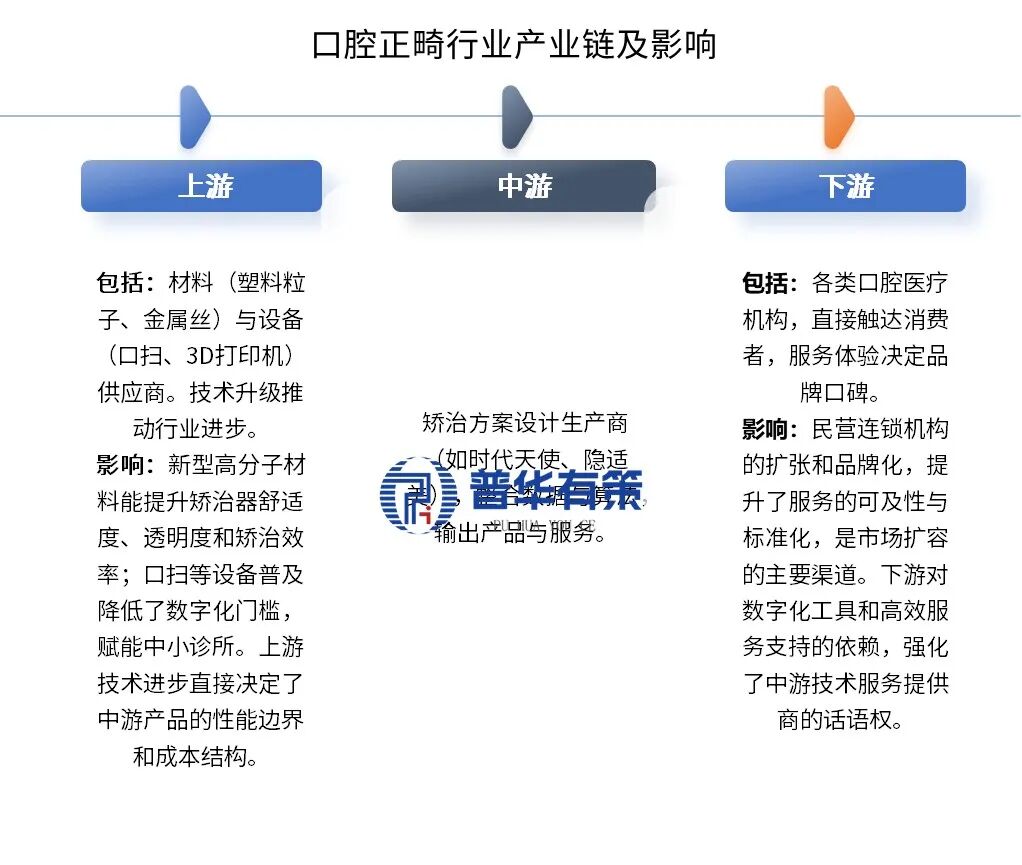
Core Insights - The orthodontic industry is experiencing a dual drive from aesthetic economy and health necessities, with significant advancements in AI and consumer engagement [1][21] - The industry has evolved into a cross-sector involving high-end medical device manufacturing, digital healthcare services, and personalized consumption [1][21] Industry Chain Summary and Impact - The orthodontic industry chain is clearly defined, with a "smile curve" distribution, where the midstream digital treatment solution design and service platform is the core of value creation and profit center [3][22] - The upstream includes medical polymer materials (e.g., TPU, PETG for invisible aligners), metal alloys (brackets, archwires), digital equipment (intraoral scanners, CBCT, 3D printers), and design software suppliers [3][22] - The downstream consists of various dental service institutions, which are the final value realization and customer touchpoints, with changes in the downstream landscape influencing the upstream and midstream [3][22] Competitive Landscape - The current competition in the industry shows a distinct characteristic of "high concentration in midstream, decentralized but accelerating integration in downstream" [4][23] - The midstream invisible aligner solution market has formed a solid "duopoly" with Align Technology (Invisalign) and Angelalign dominating the market, holding a significant share [4][23] - The private market is represented by chain institutions like Tongce Medical and Ruier Group, which are expanding market share through standardized management and brand building [5][23] Technology Level and Characteristics - The industry is at a stage of comprehensive digitalization and burgeoning intelligence [6][24] - Digital technology has become the industry infrastructure, with 3D scanning replacing traditional silicone impressions, and CBCT widely used for three-dimensional assessments [7][25] - AI is rapidly penetrating and deepening its application, significantly enhancing design efficiency and reducing communication costs between doctors and technicians [8][26] Development Trends - AI is expected to evolve from "assisting" to "empowering" core functions, enhancing predictive capabilities and treatment plan adjustments [10][28] - The integration of treatment scenarios is expanding from "orthodontics" to "overall oral health management," creating new treatment combinations [11][29] - The trend towards affordability and market penetration is expected to activate a large incremental population, especially in lower-tier cities [12][30] - Leading companies are shifting from merely selling products to providing comprehensive solutions that enhance customer engagement and data value [13][31] - Chinese companies are accelerating their global expansion, establishing competitiveness in the digital orthodontics field [14][32]

共探口腔医学高质量发展路径
Xin Lang Cai Jing· 2025-12-27 22:48
Group 1 - The National Oral Medicine Center's annual academic conference has become an important platform for leading the development of oral medicine and promoting industry innovation since its establishment in 2020 [1] - The theme of this year's conference is "Collaborative Innovation, Smart Future - Co-creating a New Blueprint for Oral Medicine," featuring one main venue and twelve sub-venues for discussions on clinical research, interdisciplinary collaboration, and digital transformation [1] - The National Oral Medicine Center has formed a specialized alliance covering 12 disciplines to enhance the accessibility and equity of oral healthcare services in China [1] Group 2 - The "China Dental Valley" has seen the establishment of 146 enterprises over nine years, with 400 "Ziyang-made" products covering the entire oral diagnosis and treatment scene, leading in product quantity in the central and western regions [2] - The invisible aligners and intraoral scanners from China Dental Valley have consistently ranked first in export value in Sichuan Province, with products sold to over 100 countries and regions globally [2] - China Dental Valley has become one of the important clusters for oral medical device industry in the country [2]
全球及中国口内扫描仪行业研究及十五五规划分析报告
QYResearch· 2025-12-19 04:53
Core Viewpoint - The intraoral scanner market is experiencing rapid growth due to the transition from traditional impression methods to digital scanning technology, enhancing diagnostic accuracy and treatment efficiency while improving patient comfort [2][10]. Market Overview - The global intraoral scanner market was valued at 59 million USD in 2020 and is projected to reach 113.3 million USD by 2024, with a compound annual growth rate (CAGR) of 17.72% from 2020 to 2024. By 2031, the market is expected to grow to 209.5 million USD, with a CAGR of 9.41% from 2024 to 2031 [6]. Competitive Landscape - Major global players in the intraoral scanner market include Align Technologies, Dentsply Sirona, and 3Shape, with the top three companies holding approximately 68.44% of the market share [8]. Industry Development Factors - The digital transformation in dentistry is accelerating, leading to increased adoption of digital workflows, including digital impressions and CAD/CAM design, which enhances diagnostic efficiency and patient experience [13][14]. - The expansion of application scenarios for intraoral scanners has moved beyond traditional uses in prosthodontics to include orthodontics, implants, and aesthetic dentistry, increasing market demand [15]. - Government policies are supporting the digitalization of healthcare, with initiatives like "Healthy China 2030" promoting the adoption of digital medical devices [16]. - Technological advancements and decreasing costs are improving the performance and accessibility of intraoral scanners, facilitating their adoption in smaller clinics [17]. Challenges in the Industry - The high cost of intraoral scanners remains a barrier to widespread adoption, particularly for small dental practices [18]. - Training costs for medical personnel to effectively use intraoral scanners can be significant, impacting the speed of adoption [19]. - Increased market competition is leading to price pressures, which may affect profitability for smaller companies [20]. - Acceptance of digital scanning technology is still limited in many developing regions, with traditional methods remaining prevalent [21]. Barriers to Entry - The intraoral scanner market has high technical barriers due to the need for advanced optical imaging, 3D modeling, and AI algorithms, making it difficult for new entrants to compete without substantial R&D investment [22]. - Regulatory hurdles for medical devices, including compliance with standards like CE and FDA, add complexity and cost to market entry [23]. - Established brands dominate the market, making it challenging for new entrants to gain trust and recognition among dental professionals [24]. Trade Trends in China - The reliance on imports for intraoral scanners in China is decreasing, with domestic manufacturers improving product quality and narrowing the gap with international brands. The import share has dropped from approximately 37% to below 14% [26]. - Exports of Chinese intraoral scanners are increasing, particularly in Southeast Asia and the Middle East, driven by competitive pricing [27]. - Trade policies and regulatory environments are influencing the import and export dynamics of intraoral scanners, with the Chinese government facilitating the international expansion of domestic medical device manufacturers [28].

爱迪特:公司的产品口内扫描仪主要应用于口腔建模
Zheng Quan Ri Bao· 2025-11-07 08:13
Core Viewpoint - The company Aidi Te has highlighted its intraoral scanner, which is primarily used for oral modeling, featuring capabilities such as wireless transmission, wireless charging, motion sensing control, and data transmission and storage with the company's cloud platform [2] Group 1 - The intraoral scanner is designed for oral modeling applications [2] - The product supports wireless transmission and wireless charging [2] - It includes motion sensing control and integrates with the company's cloud platform for data management [2]
打造绿色数字化口腔生态圈 爱迪特口腔智慧产业园开建
Zheng Quan Shi Bao Wang· 2025-08-02 11:48
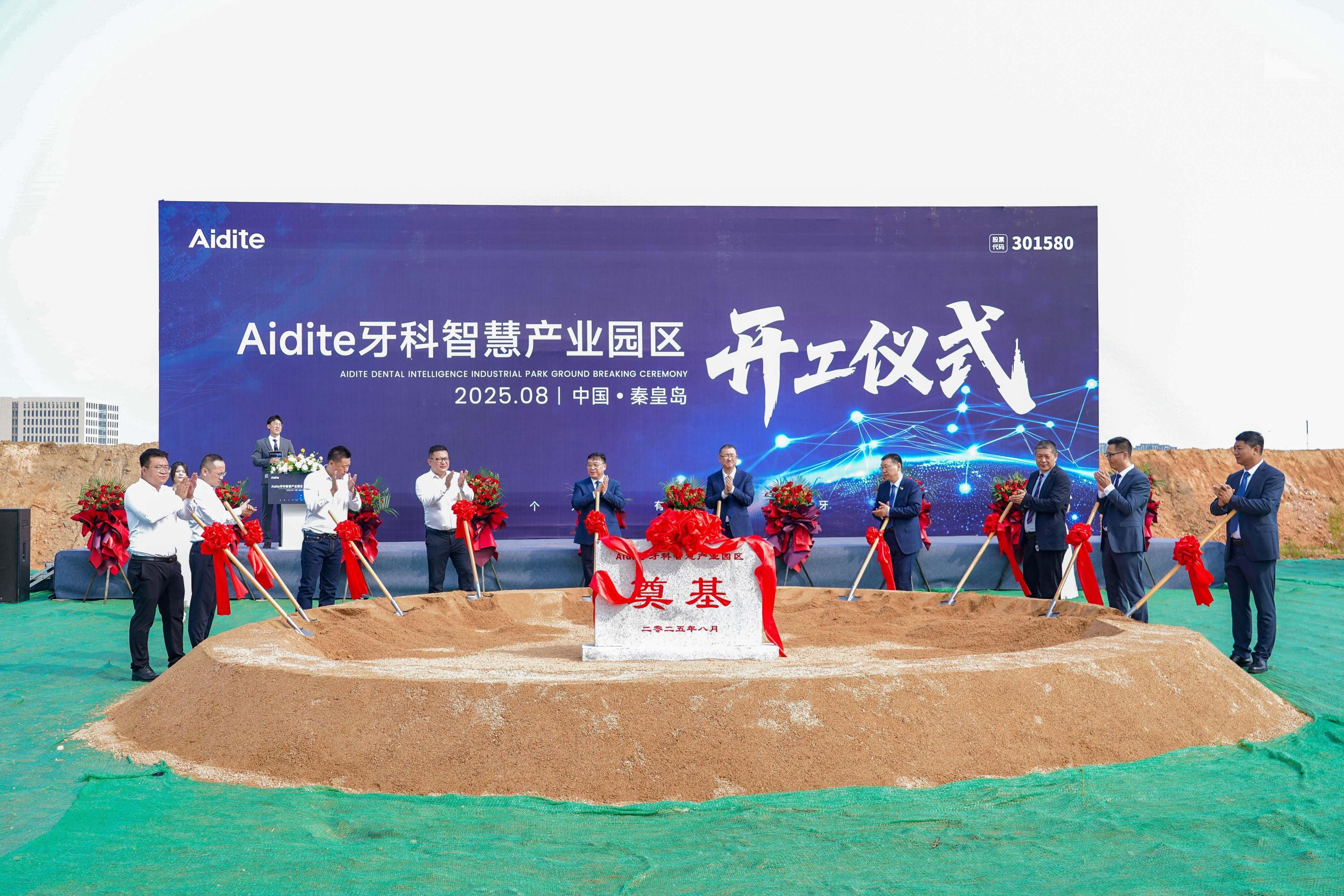
Core Viewpoint - Aidite is entering a new phase of growth with the construction of a dental intelligence industrial park, which will enhance its production capacity and support its global expansion strategy [3][9][14] Industry Overview - The global dental medical device industry is experiencing a dual inflection point driven by aging populations and consumption upgrades, leading to increased demand [4] - The market is expected to grow at a compound annual growth rate (CAGR) of 8.6% from 2020 to 2025, reaching approximately $709.7 billion by 2030 [4] Company Development - Aidite's new industrial park will be built over two years with an investment exceeding 600 million yuan, covering an area of 107.7 acres and a construction area of 82,200 square meters [3][9] - The park will focus on the industrialization of CAD/CAM dental materials and the establishment of a digital dental comprehensive service platform [9][10] Technological Advancements - The integration of digital and intelligent technologies is transforming traditional dental treatment processes into data-driven approaches, enhancing patient communication and reducing anxiety [5] - Aidite aims to enhance its product structure by increasing the production ratio of high-end zirconia dental materials and glass-ceramic dental materials [9] Sustainability Initiatives - The new industrial park will incorporate environmental, social, and governance (ESG) indicators into its planning and construction, including distributed photovoltaic power generation [14] - The park is projected to save approximately 1.736 million yuan in electricity costs annually and reduce carbon emissions by 31,000 to 46,500 tons per year [14]
隐形正畸市场格局生变:时代天使收购舒雅齐35%股权背后的攻守之道
Xin Lang Zheng Quan· 2025-06-27 07:10
Core Insights - The acquisition of a 35% stake in Hangzhou Shuyaqi Medical Technology by Times Angel signifies a strategic move to enhance market positioning amid increasing competition in the orthodontic industry [1][4] - This transaction reflects a broader trend of industry consolidation and the evolution of competitive dynamics within the orthodontic market [4][5] Group 1: Strategic Positioning - The acquisition is not merely a financial maneuver but a strategic positioning to enhance business synergy, market defense, and international expansion [2][3] - Times Angel aims to complement its product line by integrating Shuyaqi's offerings, which include a comprehensive range of orthodontic solutions and digital equipment [2][3] - The pricing strategy of Shuyaqi's products, which are significantly lower than Times Angel's, allows for a dual-brand strategy that targets both high-end and mid-range markets [2][3] Group 2: Market Dynamics - The competitive landscape is shifting, with Times Angel maintaining a leading position in the Chinese market but experiencing a slowdown in growth, with a 3.2% year-on-year increase in case numbers [3][4] - The acquisition serves as a defensive strategy against potential competition from Hanseph's "Aorishi" brand, which has introduced similar orthodontic products [3][4] - The international market is also a focus, with Times Angel's international case numbers reaching 140,000 in 2024, representing 39% of total cases, indicating a significant global presence [3][4] Group 3: Industry Evolution - The acquisition is expected to accelerate the integration process within the orthodontic market, potentially leading to increased merger and acquisition activity [4][5] - The competition is evolving from a focus on individual product performance to a comprehensive ecosystem that includes devices, materials, and software [5][6] - The selection of Shuyaqi, a newly established company, by a market leader highlights the importance of technological innovation and integration within the industry [5][6]