可持续航空燃料SAF

Search documents
中航油与中石化重组 生产到加注全链条打通
Zhong Guo Jing Ying Bao· 2026-01-09 09:09
Group 1 - The core point of the news is the successful restructuring of China Aviation Oil Group Co., Ltd. (CAO) and China Petroleum & Chemical Corporation (Sinopec), which was approved by the State-owned Assets Supervision and Administration Commission (SASAC) [1][3] - The restructuring was anticipated as early as October 2025, when CAO's subsidiary announced it was in talks with another company, later confirmed to be Sinopec [1][2] - Sinopec is the largest refining company globally and the largest supplier of refined oil and petrochemical products in China, with total assets of 2.74 trillion yuan and total revenue of 3.14 trillion yuan in 2024 [1][2] Group 2 - CAO, which was originally part of the People's Liberation Army Air Force, has evolved into a major player in the aviation fuel market, providing services to 258 transport airports and 454 general airports in China [2] - In 2024, China's aviation fuel consumption is expected to grow by 13% year-on-year to 39.28 million tons, making it the second-largest aviation fuel consumer globally [2][3] - The restructuring aligns with SASAC's push for the professional integration of state-owned enterprises to optimize the state-owned economy and build world-class enterprises [3] Group 3 - The merger enhances the competitive edge of the aviation fuel sector by integrating production and sales, addressing core pain points in the supply chain [4] - The restructuring is expected to improve the supply security of aviation fuel by leveraging Sinopec's upstream resources and refining capabilities, reducing reliance on international markets [3][4] - The aviation fuel market is projected to continue growing, with annual growth rates expected to be around 5% and 4% during the 14th and 15th Five-Year Plans, respectively [3] Group 4 - The restructuring may lead to increased competition for other oil suppliers and local private refineries, as CAO and Sinopec will dominate the market [4] - Sustainable Aviation Fuel (SAF) is highlighted as a key area for growth, with the potential to reduce greenhouse gas emissions by up to 80% compared to traditional fuels [5][6] - The collaboration between Sinopec and CAO is expected to accelerate the commercialization of green aviation fuel, helping the aviation industry achieve carbon reduction goals [6]

聚四海群贤,助非粮启“杭” | 第五届非粮生物质高值化利用论坛在杭州成功举办!
合成生物学与绿色生物制造· 2025-11-30 02:44
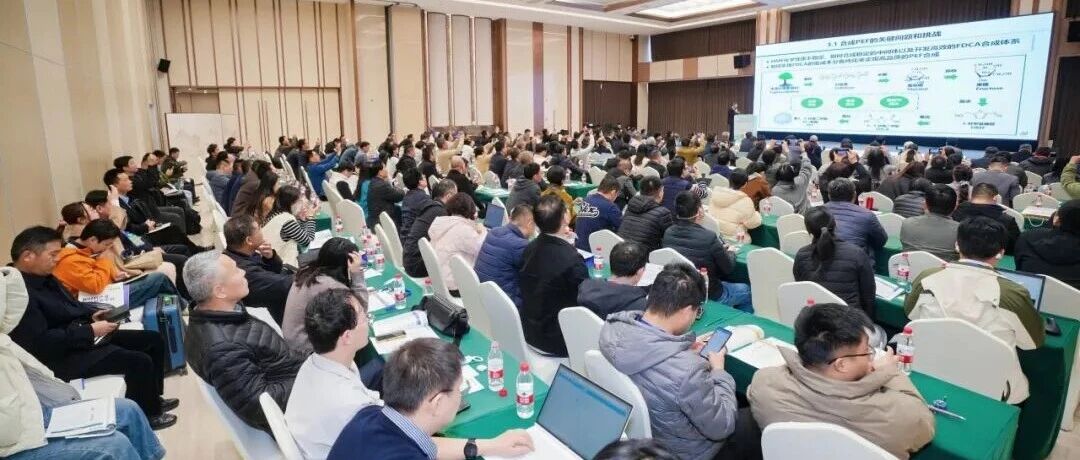
Core Insights - The "5th Non-Grain Biomass High-Value Utilization Forum (NFUCon 2025)" was successfully held in Hangzhou from November 27 to 29, focusing on the economic feasibility of non-grain biomass utilization and its related policies, technologies, and market expectations [1][3]. Group 1: Forum Overview - The forum was co-hosted by Ningbo Detaizhong Research Information Technology Co., Ltd. and the National Key Laboratory of Bio-based Transportation Fuel Technology, with over 400 industry experts and representatives attending [3]. - Key topics discussed included the high-value utilization of non-grain biomass chemicals and materials, clean pretreatment of non-grain resources, and sustainable expansion of non-grain resources [3]. Group 2: Key Presentations - Academician Ren Qilong presented advancements in non-grain biomass research, focusing on functionalization of biomass macromolecules and directed chemical conversion [6][8]. - Academician Xu Chunbao discussed the development of efficient catalytic systems for the selective conversion of glucose and fructose into HMF, which is crucial for producing bio-based chemicals [10]. - Researcher Zhu Jin highlighted the importance of bio-based polymers and recent policy developments in non-grain biomass utilization [12]. Group 3: Industry Applications - Deputy Mayor Yang Shufei introduced a complete bio-based materials industrial chain in Nanle, achieving an annual output value exceeding 3 billion yuan and creating over 12,000 jobs [14]. - Professor Xu Feng presented work on the green and efficient separation of lignin, emphasizing its applications in functional materials [16]. Group 4: Thematic Forums - The first thematic forum on non-grain biomass chemicals and materials featured discussions on biomass conversion strategies and the production of platform compounds [17][19]. - The second thematic forum on non-grain biomass energy focused on the strategic importance of cellulose ethanol and advancements in anaerobic fermentation technology [36][40]. Group 5: Sustainable Aviation Fuel (SAF) - Researcher Zhang Le emphasized that sustainable aviation fuel is a viable path for carbon reduction in the aviation industry, with multiple technological routes being explored [55]. - Manager Tang Xiao shared Axens' leading position in biomass technology and its core SAF technologies, including HEFA and Fischer-Tropsch synthesis [57]. Group 6: Youth Forum and Industry Exchange - The forum included a Youth Forum to promote visibility for young scientists in the bio-based field, featuring 21 researchers sharing their latest work [68]. - An industry exchange meeting on SAF gathered 30 participants to discuss trends, technological routes, and sustainable certification [89].