
航油

Search documents
电灯亮不起!古巴正被“勒住脖子”,俄罗斯能否成为救命稻草?
Sou Hu Cai Jing· 2026-02-14 09:59
Core Viewpoint - The article discusses the severe energy crisis in Cuba, exacerbated by U.S. sanctions and tariffs, which threaten the country's oil supply and, consequently, its electricity and essential services [1][3][8]. Group 1: Impact of U.S. Sanctions - The U.S. has imposed tariffs on countries providing oil to Cuba, leading to a declaration of a national emergency by President Trump [1]. - Cuba's response to the U.S. actions includes declaring an "international emergency," highlighting the pressure from U.S. policies [1][3]. - The energy structure of Cuba is heavily reliant on oil, with over 80% of its electricity generated from oil products, making it vulnerable to supply disruptions [3]. Group 2: Consequences of Energy Shortages - The immediate effects of oil supply disruptions include potential flight cancellations and impacts on tourism, as airlines are unable to refuel in Cuba [3][4]. - Historical context shows that Cuba has faced multiple electricity crises due to fuel shortages, with significant blackouts occurring in recent years [3][4]. - The current situation threatens not only electricity but also essential services such as water supply, agriculture, and healthcare [3]. Group 3: International Response and Support - Russia has expressed its commitment to support Cuba by continuing oil supplies and condemning U.S. economic pressures [4][8]. - The Russian government has indicated a willingness to provide both political and material support to Cuba during this crisis [4]. - The ongoing dialogue between Russia and Cuba suggests a strategic partnership aimed at mitigating the immediate energy crisis [4][8]. Group 4: Long-term Energy Strategy - Cuba aims to increase the share of renewable energy in its power generation to 24% by 2030, indicating a shift towards sustainable energy solutions [4][6]. - The current energy crisis may accelerate Cuba's transition to renewable energy sources, as reliance on oil becomes increasingly risky [6][8]. - The historical context of U.S. sanctions since 1962 highlights the long-term challenges Cuba faces in achieving energy independence and resilience [6][8].


2026春运|中国航油广东公司广州航空加油站春运连续三天单日供油破万吨
Zhong Guo Min Hang Wang· 2026-02-12 08:46
Core Viewpoint - The Guangzhou Aviation Refueling Station has achieved record-breaking daily fuel supply and service support during the Spring Festival travel season, demonstrating strong leadership and operational efficiency [2][6]. Group 1: Operational Achievements - On February 10, the Guangzhou Aviation Refueling Station set a new record by supplying over 10,000 tons of fuel in a single day for the third time during the Spring Festival [2]. - The station has implemented a comprehensive operational strategy, including early assessments and precise scheduling, to ensure safety and efficiency in fuel supply [3]. Group 2: Organizational Measures - The Guangdong Company’s Party Committee held a meeting at the beginning of the year to prioritize safety production and prepare for the Spring Festival travel season [3]. - A "Pioneer Team" and "Youth Assault Team" were established to handle peak fuel supply demands, while an internal platform was launched to address employee concerns and suggestions [3]. Group 3: Resource Management - The station has optimized its operations in response to the new "one station, two areas" model introduced with the T3 terminal, ensuring efficient resource circulation through refined management practices [4]. - A dual-duty manager system has been implemented to dynamically assess and manage fuel flow, ensuring that resources are utilized effectively throughout the day [4]. Group 4: Technological Integration - The Guangzhou Aviation Refueling Station has enhanced collaboration with airlines and airport command centers, utilizing smart technologies such as "quantitative refueling" and "electronic signing of fuel orders" to improve resource allocation [5]. - Special training and simulations were conducted for the resumption of the Emirates A380 service, successfully completing the first refueling operation for this aircraft type at T3 [5]. Group 5: Supply Chain Coordination - To address inventory pressures due to increased business volume, the Guangdong Company coordinated with refineries to enhance fuel delivery and maintain adequate stock levels during the Spring Festival [5]. - The Guangzhou Airport Oil Depot effectively managed fuel supply through direct channels and coordinated efforts with other oil depots to alleviate inventory constraints [5].
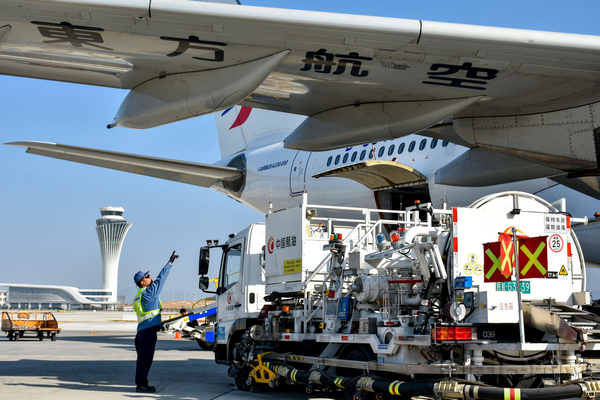
航油供应体系迎巨变 一体化整合能否稳定航司成本
Jin Rong Jie· 2026-01-14 10:48
Group 1 - The core point of the article is the restructuring of China Petroleum & Chemical Corporation and China Aviation Oil Group, which aims to create an integrated and centralized aviation fuel supply system in China, potentially consolidating the previously fragmented upstream refining, midstream trading, and downstream refueling structure into a closed industrial loop [1][3]. Group 2 - Aviation fuel is one of the main cost items for airlines, with its price fluctuations directly impacting airline profitability. According to China National Airlines' 2024 annual report, aviation fuel costs account for approximately one-third of total costs, and a 5% change in average aviation fuel prices could affect fuel cost fluctuations by about 2.686 billion yuan [3]. - Airlines express a preference for predictable fuel prices over simply low prices to stabilize cost management. The current pricing mechanism for aviation fuel purchases from China Aviation Oil is based on a weighted calculation centered around "comprehensive procurement costs," with international aviation fuel prices serving as a key reference benchmark [3]. - The initiation of this restructuring has raised market interest in the potential consolidation of other supportive state-owned enterprises in the civil aviation sector, with speculation that China Civil Aviation Information Network Co., Ltd. and China Aviation Supplies Holding Company may also be included in a higher-level industrial integration framework [3].


中航油与中石化重组 生产到加注全链条打通
Zhong Guo Jing Ying Bao· 2026-01-09 09:09
Group 1 - The core point of the news is the successful restructuring of China Aviation Oil Group Co., Ltd. (CAO) and China Petroleum & Chemical Corporation (Sinopec), which was approved by the State-owned Assets Supervision and Administration Commission (SASAC) [1][3] - The restructuring was anticipated as early as October 2025, when CAO's subsidiary announced it was in talks with another company, later confirmed to be Sinopec [1][2] - Sinopec is the largest refining company globally and the largest supplier of refined oil and petrochemical products in China, with total assets of 2.74 trillion yuan and total revenue of 3.14 trillion yuan in 2024 [1][2] Group 2 - CAO, which was originally part of the People's Liberation Army Air Force, has evolved into a major player in the aviation fuel market, providing services to 258 transport airports and 454 general airports in China [2] - In 2024, China's aviation fuel consumption is expected to grow by 13% year-on-year to 39.28 million tons, making it the second-largest aviation fuel consumer globally [2][3] - The restructuring aligns with SASAC's push for the professional integration of state-owned enterprises to optimize the state-owned economy and build world-class enterprises [3] Group 3 - The merger enhances the competitive edge of the aviation fuel sector by integrating production and sales, addressing core pain points in the supply chain [4] - The restructuring is expected to improve the supply security of aviation fuel by leveraging Sinopec's upstream resources and refining capabilities, reducing reliance on international markets [3][4] - The aviation fuel market is projected to continue growing, with annual growth rates expected to be around 5% and 4% during the 14th and 15th Five-Year Plans, respectively [3] Group 4 - The restructuring may lead to increased competition for other oil suppliers and local private refineries, as CAO and Sinopec will dominate the market [4] - Sustainable Aviation Fuel (SAF) is highlighted as a key area for growth, with the potential to reduce greenhouse gas emissions by up to 80% compared to traditional fuels [5][6] - The collaboration between Sinopec and CAO is expected to accelerate the commercialization of green aviation fuel, helping the aviation industry achieve carbon reduction goals [6]
华泰证券:维持中国石化A/H“买入”评级 有望受益于重组后的一体化优势
Xin Lang Cai Jing· 2026-01-09 07:22
Core Viewpoint - The report from Huatai Securities indicates that the restructuring between Sinopec Group and China Aviation Oil, approved by the State Council, aims to integrate aviation fuel production and sales, enhance international competitiveness, and optimize the retail system for refined oil [1] Group 1: Restructuring Impact - If the restructuring is successfully implemented, it will streamline the aviation fuel supply chain and facilitate overseas aviation fuel trade [1] - The integration is expected to strengthen the international competitiveness of China's aviation fuel industry [1] Group 2: Company Benefits and Risks - Sinopec Limited is anticipated to benefit from the integrated supply chain, although it may face increased related-party transactions [1] - The refining and chemical sectors are expected to experience a rebound after reaching a profit low, leading to a potential recovery in company performance [1] Group 3: Investment Rating - The investment rating for Sinopec Limited is maintained at "Buy" for both A-shares and H-shares, with target prices set at 7.98 yuan and 6.26 HKD respectively [1]
“绿色航油”巨头崛起!中国石化、中国航油官宣重组
Zhong Guo Dian Li Bao· 2026-01-09 05:50
Core Viewpoint - The merger between China Petroleum & Chemical Corporation (Sinopec) and China Aviation Oil Group (China Aviation Oil) marks a significant strategic move in the energy sector, aiming to create a new giant in "green aviation fuel" while enhancing fuel supply security for the aviation industry and increasing low-carbon competitiveness in international markets [1][5][7]. Group 1: Merger Details - The merger was approved by the State Council and is seen as a collaboration between the world's largest refining company and Asia's largest aviation fuel service provider [1][3]. - China Aviation Oil is the largest integrated aviation fuel service provider in Asia, while Sinopec is the largest aviation fuel producer in China, covering various sectors including oil and gas, logistics, and aviation [3][4]. - The merger is expected to streamline operations and reduce costs by eliminating intermediaries, thus enhancing the efficiency of the entire supply chain from refining to distribution [4][6]. Group 2: Market Context - The global aviation industry is experiencing a strong recovery, with a projected demand for aviation fuel of 389 million tons in 2025, reflecting a year-on-year increase of 3.9% [3][4]. - By 2040, China's aviation fuel consumption is expected to grow from 39.28 million tons in 2024 to 75 million tons, indicating a significant increase in demand [4][6]. - The merger is a strategic response to the competitive landscape dominated by integrated oil and gas companies like Shell and ExxonMobil, which have established advantages in the aviation fuel market [6][7]. Group 3: Green Transition - The merger is positioned as a critical step towards enhancing the competitiveness of China's aviation fuel industry and promoting green transformation [5][7]. - Sustainable aviation fuel (SAF) is recognized as a key pathway for reducing carbon emissions in the aviation sector, with global SAF consumption projected to reach 1.8 million tons by 2030 [7]. - Sinopec is noted for being one of the first companies in China to produce SAF, which can reduce carbon emissions by over 50% compared to traditional aviation fuel [7][8]. Group 4: Strategic Implications - This merger is part of a broader initiative to optimize the layout of state-owned enterprises and concentrate state capital in critical industries related to national security and economic lifelines [8]. - The restructuring aligns with the strategic goals set forth by the State-owned Assets Supervision and Administration Commission (SASAC) to enhance the core functions and competitiveness of state-owned enterprises [8].
国投证券:化工龙头宣布重组 推动我国SAF走向大规模商用
智通财经网· 2026-01-09 04:13
Group 1 - The core viewpoint of the news is that the merger between Sinopec and China Aviation Oil aims to enhance technological research and development, industrialization capabilities, and supply chain efficiency in the Sustainable Aviation Fuel (SAF) sector, promoting high-quality development in the aviation industry and facilitating the transition from demonstration flights to large-scale commercial use of SAF in China [1][2] Group 2 - The merger is aligned with recent state-owned enterprise reforms focusing on core responsibilities and enhancing competitiveness through integration, aiming to optimize state capital allocation and avoid homogenized competition [2] - China Aviation Oil, as Asia's largest integrated aviation fuel service provider, and Sinopec, the world's largest refining company, will create a more robust supply chain and competitive advantage by merging their operations [2] Group 3 - The strategic significance of the merger lies in the strong recovery momentum of the aviation industry, with global jet fuel demand projected to reach 389 million tons by 2025, a year-on-year increase of 3.9%, and China's jet fuel consumption expected to grow from 39.28 million tons in 2024 to 75 million tons by 2040 [3] - The merger will allow Sinopec to establish a complete "refining-distribution" integration from crude oil refining to aircraft refueling, while China Aviation Oil will benefit from a more stable upstream supply, thus reducing costs and enhancing energy security for China's aviation sector [3]
2026央企重组“第一枪”打响,未来合并同类项“化学合成”成趋势
Bei Jing Ri Bao Ke Hu Duan· 2026-01-09 01:32
Core Viewpoint - The restructuring of China Petroleum & Chemical Corporation (Sinopec) and China Aviation Oil Group (China Aviation Oil) is a strategic move aimed at optimizing state-owned assets and enhancing core competitiveness in the energy sector, which is expected to significantly reshape the domestic aviation fuel market and the entire energy supply chain [1][4]. Group 1: Restructuring Details - The restructuring was approved by the State Council and is seen as a continuation of the trend towards consolidating state-owned enterprises (SOEs) to improve efficiency and competitiveness [1][5]. - China Aviation Oil, established in 1990 and a key player in the aviation fuel supply chain, controls over 98% of the civil aviation fuel market in China, ensuring stable sales through its extensive network [2][3]. - The integration aims to create a seamless connection between Sinopec's refining capabilities and China Aviation Oil's distribution network, enhancing supply chain stability and reducing operational risks [3][6]. Group 2: Market Implications - The merger is expected to eliminate redundant competition and create synergies between refining and aviation fuel supply, thereby increasing market control and resilience against risks [3][4]. - Industry experts suggest that this restructuring signals a shift in SOE reform towards more specialized and strategic consolidations, focusing on enhancing competitiveness in key sectors [6][7]. - The trend indicates a move from simple asset aggregation to a more sophisticated integration aimed at improving innovation and efficiency within the industry [7][8].
【新华解读】2026央企重组“第一枪”打响 未来合并同类项“化学合成”成趋势
Xin Hua Cai Jing· 2026-01-09 01:04
Group 1 - The core viewpoint of the news is that the restructuring of China Petroleum & Chemical Corporation (Sinopec) and China Aviation Oil Group (China Aviation Oil) is a strategic move aimed at optimizing state-owned assets and enhancing core competitiveness in the energy sector, which will significantly reshape the domestic aviation fuel market and the entire energy supply chain [1][4][5] - The restructuring aligns with recent trends in state-owned enterprise (SOE) reforms, focusing on core responsibilities and enhancing competitiveness through integration, which is expected to lead to a more efficient allocation of resources [3][6] - China Aviation Oil, as the only supplier of civil aviation fuel in China, controls over 98% of the market for aviation fuel at civil airports, and the integration with Sinopec is anticipated to create synergies that enhance market control and risk resistance [3][4] Group 2 - The restructuring is seen as a signal for future SOE reforms, emphasizing professional integration and resource optimization to achieve greater competitiveness in key sectors [5][6] - The trend of SOE restructuring is shifting from merely addressing overcapacity and reducing competition to focusing on upgrading emerging industries and enhancing supply chain resilience [7] - The integration is expected to facilitate a seamless connection between Sinopec's refining capabilities and China Aviation Oil's distribution network, thereby stabilizing fuel supply for the aviation industry [3][6]
四大证券报精华摘要:1月9日
Zhong Guo Jin Rong Xin Xi Wang· 2026-01-09 00:50
Group 1: Lithium Battery Industry - Longpan Technology has announced plans to build a new production base for high-pressure lithium iron phosphate with an annual capacity of 240,000 tons, with a total investment not exceeding 2 billion yuan, due to existing capacity being insufficient to meet customer demand [1] - Multiple companies, including Fulin Precision, Dongfang Zirconium, Zhongkuang Resources, and Xinzhoubang, have announced lithium battery project investments, continuing the expansion trend seen since 2025 [1] - Industry experts predict that the investment boom in the lithium battery sector will continue into 2026, driven by improving supply-demand dynamics [1] Group 2: Fund Sales and Regulations - The public fund industry is at a critical transformation point as the scale continues to reach new heights, with recent regulations aimed at reducing fund subscription and sales service fees to enhance investor experience [2] - The new regulations are designed to guide the fund industry back to long-term investment and strengthen investor satisfaction [2] Group 3: State-Owned Enterprise Restructuring - The restructuring of China Petroleum & Chemical Corporation and China Aviation Oil Group has been approved, aiming to reduce aviation fuel supply costs and enhance competitiveness in the aviation fuel industry [3] - This merger aligns with the trend of state-owned enterprise reform focused on optimizing capital layout and avoiding homogeneous competition [3] Group 4: H-Share Listings - Several A-share companies, including 聚辰股份 and 鹏辉能源, have announced plans for H-share listings, indicating a trend of companies seeking to capitalize on favorable policies and financing needs [4] - This "batch southward" movement is expected to reshape the Hong Kong stock market structure and enhance the global resource allocation capabilities of leading Chinese enterprises [4] Group 5: Commercial Aerospace - Several companies, dubbed "China's version of SpaceX," are vying to become the first commercial rocket stock, with valuations exceeding 10 billion yuan [6] - The commercial space race is intensifying, with significant capital influx and project competition, indicating a shrinking investment window [6] Group 6: Margin Trading in A-Shares - As the A-share market becomes more active, the margin trading balance has reached a historical high of 2.6047 trillion yuan, marking a significant increase [7] - The trading volume of margin transactions has also surged, with a notable increase in daily trading amounts [7] Group 7: Advanced Manufacturing in Guangzhou - Guangzhou's government has released a plan to accelerate the construction of an advanced manufacturing city, aiming for significant progress by 2030 [8] - The plan includes optimizing industrial structure and enhancing quality and efficiency, with a focus on creating world-class manufacturing clusters [8] Group 8: AI and Semiconductor Market - Beijing Zhiyu Huazhang Technology has become the first Hong Kong-listed company focused on original general models, with a market capitalization of 57.9 billion HKD [10] - The demand for AI computing power is driving a surge in storage chip prices, with significant increases noted in server memory costs due to structural supply-demand imbalances [10]