启航·低空规划平台

Search documents
打造“低空大脑” 亮出“软体移植”
Shen Zhen Shang Bao· 2025-11-15 17:30
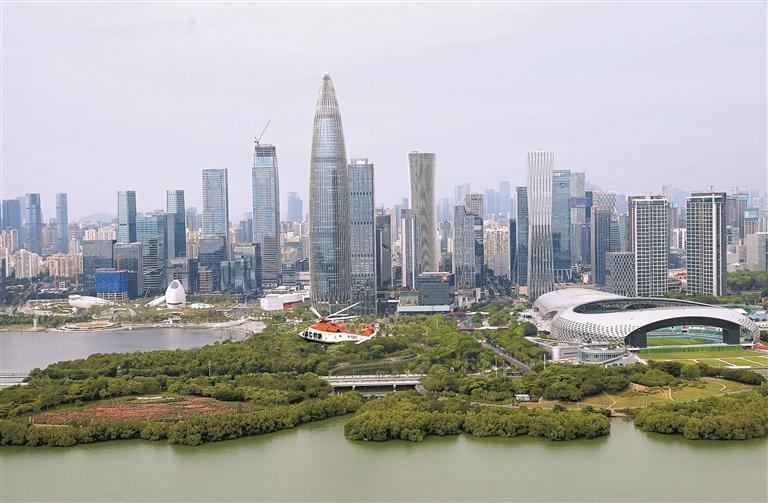
Core Viewpoint - The low-altitude economy is transitioning from concept to reality, as demonstrated by the innovative torch relay at the 15th National Games in Shenzhen, but it still faces challenges such as infrastructure development, application scenarios, and profitability pathways [2] Group 1: Infrastructure and Management - The low-altitude industry is hindered by insufficient infrastructure and the need for optimized management systems, with a report indicating that by 2024, only 449 general airports and 32 flight service stations will be operational, highlighting a significant gap in infrastructure [3] - Traditional manual approval and regulation methods are inadequate for managing the increasing number of low-altitude flying vehicles, necessitating the development of intelligent digital airspace management platforms [3] - Shenzhen has launched the Shenzhen Intelligent Integrated Low-altitude System (SILAS), which integrates city-wide spatial information and data from major telecom operators to enhance low-altitude flight safety [4] Group 2: Technological Innovations - The low-altitude economy's growth relies on cross-industry technological integration rather than single technology breakthroughs, as evidenced by innovations showcased at the high-tech fair [5] - Hydrogen-powered drones have been developed to address the limitations of lithium battery drones, offering double the flight time and operational capabilities in extreme conditions [5] - Soft robotic technology has been adapted for low-altitude applications, enabling drones to perform tasks such as inspection and maintenance with human-like dexterity [5] Group 3: Market Dynamics and Investment - The low-altitude economy is entering a new phase of development, with significant investments and a focus on commercial viability, as indicated by a report showing 194 financing events totaling 26.33 billion yuan in the first half of the year [7] - The Chinese government has recognized the low-altitude economy as a strategic emerging industry, aiming to foster its growth as a new pillar of the economy [7][8] - By 2025, the low-altitude economy is projected to contribute 3.5 trillion yuan to the national economy, with expectations of surpassing 20 trillion yuan by 2030 and exceeding one trillion dollars by 2035 [8]

“空天地一体”防线多维度赋能低空安全治理 护航低空经济发展
Yang Shi Wang· 2025-11-15 03:22
Group 1 - The core viewpoint of the article is the launch of China's low-altitude all-scenario safety solution, the Zhongke Xingtou low-altitude safety product matrix, aimed at ensuring the healthy and sustainable development of the low-altitude economy through a comprehensive "air-ground integration" defense line [1] Group 2 - The low-altitude safety product matrix addresses the pain points of low-altitude economic development and includes multiple safety products such as the Qihang Low-altitude Planning Platform, forming a complete solution for low-altitude planning, safety assurance, collaborative regulation, flight services, and scenario applications [4] Group 3 - The five major products within the matrix are interconnected and each has the capability to address specific typical scenarios, applicable to major event security and critical infrastructure defense [6] Group 4 - The all-scenario safety solution integrates multi-source perception devices for communication, navigation, monitoring, meteorology, site testing, and countermeasures based on holographic grid technology, enabling real-time communication and flight services for cooperative targets, and rapid identification, tracking, and counteraction for non-cooperative targets [9] - The system can intelligently generate defense strategies using large models and monitoring detection data, constructing an efficient command data chain to empower low-altitude safety governance comprehensively [9]

我国空天信息产业从跟跑迈向领跑 低空经济“飞向”万亿新蓝海
Huan Qiu Wang· 2025-07-11 09:52
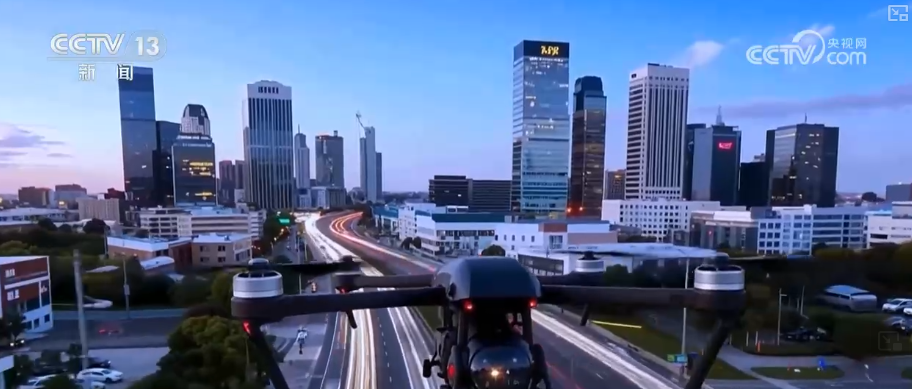
Core Insights - The aerospace information industry in China is transitioning from "catching up" to "keeping pace" and even "leading" in certain areas, becoming a new engine for digital economic development [3] - The low-altitude economy is identified as a strategic emerging industry with significant market demand and development potential, expected to evolve into a trillion-level industry under national policy incentives [3] - The recent conference highlighted the importance of innovation systems and safety frameworks in the development of the low-altitude economy, emphasizing the integration of manned and unmanned systems [3][4] Industry Developments - The aerospace information industry is experiencing a golden opportunity period supported by national strategies, with companies like Zhongke Xingtu developing five core capabilities: data, computing, service, operation, and innovation [4] - Zhongke Xingtu has launched a comprehensive product matrix covering geographic information, commercial aerospace, and low-altitude economy, consisting of 27 products [4][5] - The company is focusing on building a full-industry chain for low-altitude economy, with a newly released platform that includes 20 products for low-altitude planning, safety assurance, and collaborative regulation [5] Technological Advancements - The current trend in commercial aerospace is the establishment of commercial remote sensing satellite constellations, which are essential for the application of aerospace information in the new era of digital earth [3] - Zhongke Xingtu is leveraging large models, big data, and high computing power to deepen its aerospace information technology, while also developing a commercial satellite constellation and low-altitude digital infrastructure [7]
2025星图低空云发展大会在合肥举办
Cai Fu Zai Xian· 2025-07-11 06:38
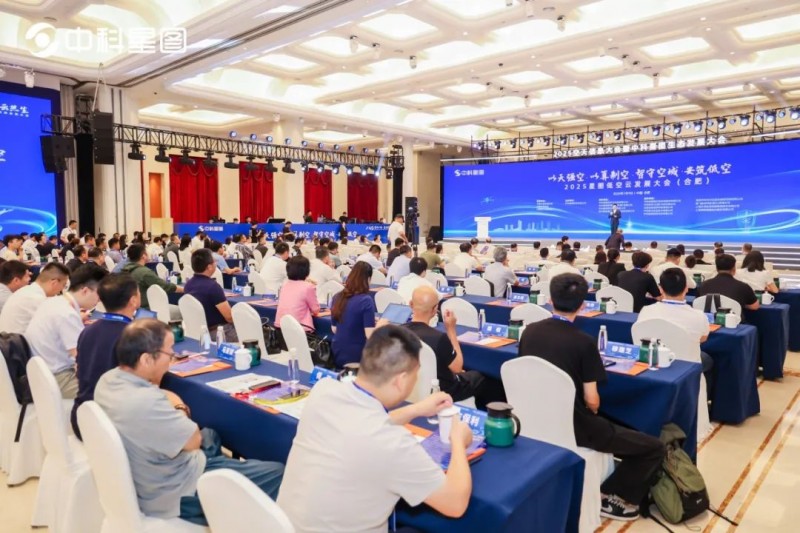
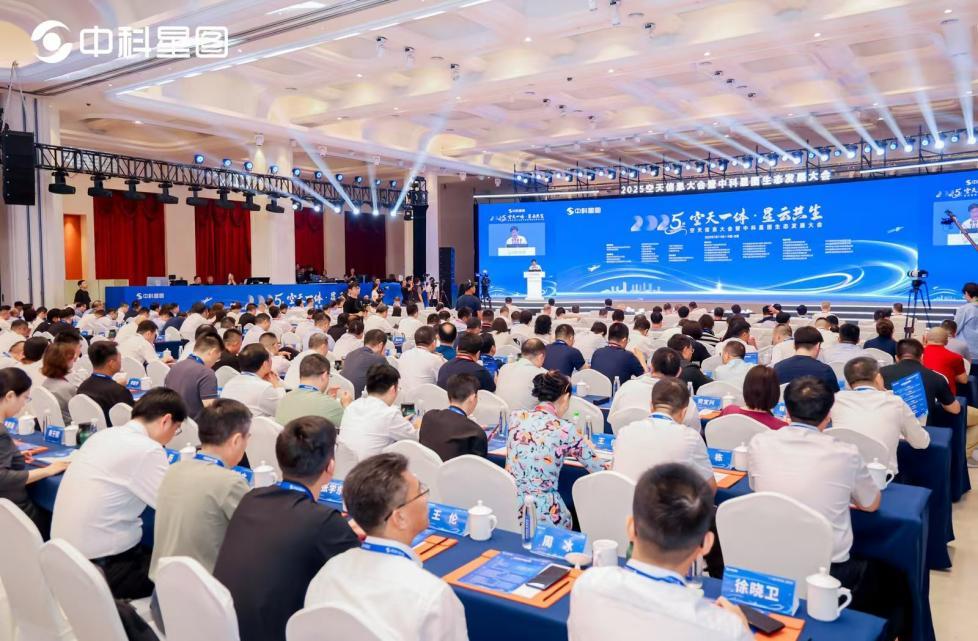
Group 1 - The 2025 Low Altitude Cloud Development Conference was successfully held in Hefei, focusing on building a low-altitude safety defense and promoting sustainable development of the low-altitude economy, with over 800 experts and industry elites in attendance [1][3][5] - The conference emphasized the importance of safety, innovation, and collaboration in the development of the low-altitude economy, which is seen as a strategic emerging industry for the country [3][5][7] - Various organizations, including China Transportation Association and China Information Association, are actively involved in enhancing low-altitude safety systems and promoting high-quality development of the low-altitude industry [5][7] Group 2 - Experts shared insights on the role of aerospace information technology in ensuring the safety of low-altitude economic development, highlighting its potential to become a trillion-dollar industry under favorable policies [11] - The conference featured discussions on low-altitude services empowering urban governance, with successful practices from Chongqing as a case study [13] - A collaborative ecosystem was established among 30 companies to focus on low-altitude safety technology research and resource integration, aiming for high-quality development of the low-altitude economy [15] Group 3 - The introduction of various low-altitude platforms and solutions, such as the low-altitude management platform and the low-altitude planning platform, aims to enhance local government capabilities in managing low-altitude traffic and safety [20][22] - The conference showcased innovative technologies, including AI applications in low-altitude logistics and electromagnetic safety systems, to address challenges in the low-altitude economy [24][40] - The importance of capital market support for low-altitude safety and the integration of financial services into the low-altitude infrastructure was discussed, indicating a growing interest in this sector [28] Group 4 - The conference highlighted the significance of collaboration between telecommunications and low-altitude services, with companies like China Mobile presenting their strategies for building a reliable low-altitude capability system [42] - The role of eVTOL technology in transforming urban transportation and its potential impact on the low-altitude economy was emphasized, showcasing its future significance [48] - The event concluded with a call for joint efforts to strengthen safety measures and develop a new ecosystem for low-altitude economic growth, focusing on technology collaboration and safety enhancement [52]