
太空探索

Search documents
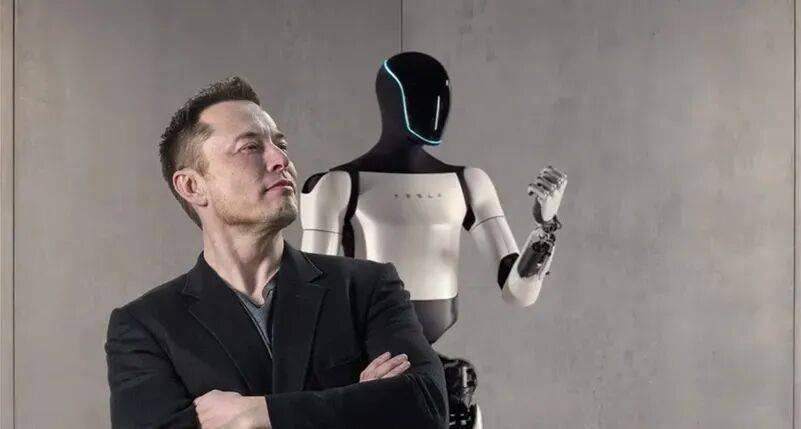
马斯克最新发言惊吓所有家长:你们孩子未来可能要没工作了!
Sou Hu Cai Jing· 2026-02-27 00:23
Group 1 - Elon Musk made a rare appearance at the Davos Forum, discussing the potential explosive growth of the global economy due to nearly free AI and ubiquitous robots [2][4] - Musk predicts that AI will surpass human intelligence by the end of 2026, and Tesla's humanoid robot, Optimus, is expected to be available for public sale by the end of 2027 [4][6] - The Optimus robot is currently performing simple tasks in Tesla factories and is expected to handle more complex industrial tasks by the end of this year, with a public launch planned for next year [6][7] Group 2 - Musk emphasized that the commercial path for Optimus includes high reliability, safety, and a wide range of functions, with future applications extending to childcare and elder care [6][8] - Tesla's Full Self-Driving (FSD) technology is described as a solved problem, with plans to widely promote the Robotaxi service in the U.S. by the end of this year [7] - Musk stated that a solar panel area of 100 square miles could power the entire U.S., and both SpaceX and Tesla are working on significant solar manufacturing capacity [8]


马斯克又抛出一个大胆设想:从月球电磁弹射AI卫星
Sou Hu Cai Jing· 2026-02-25 12:05
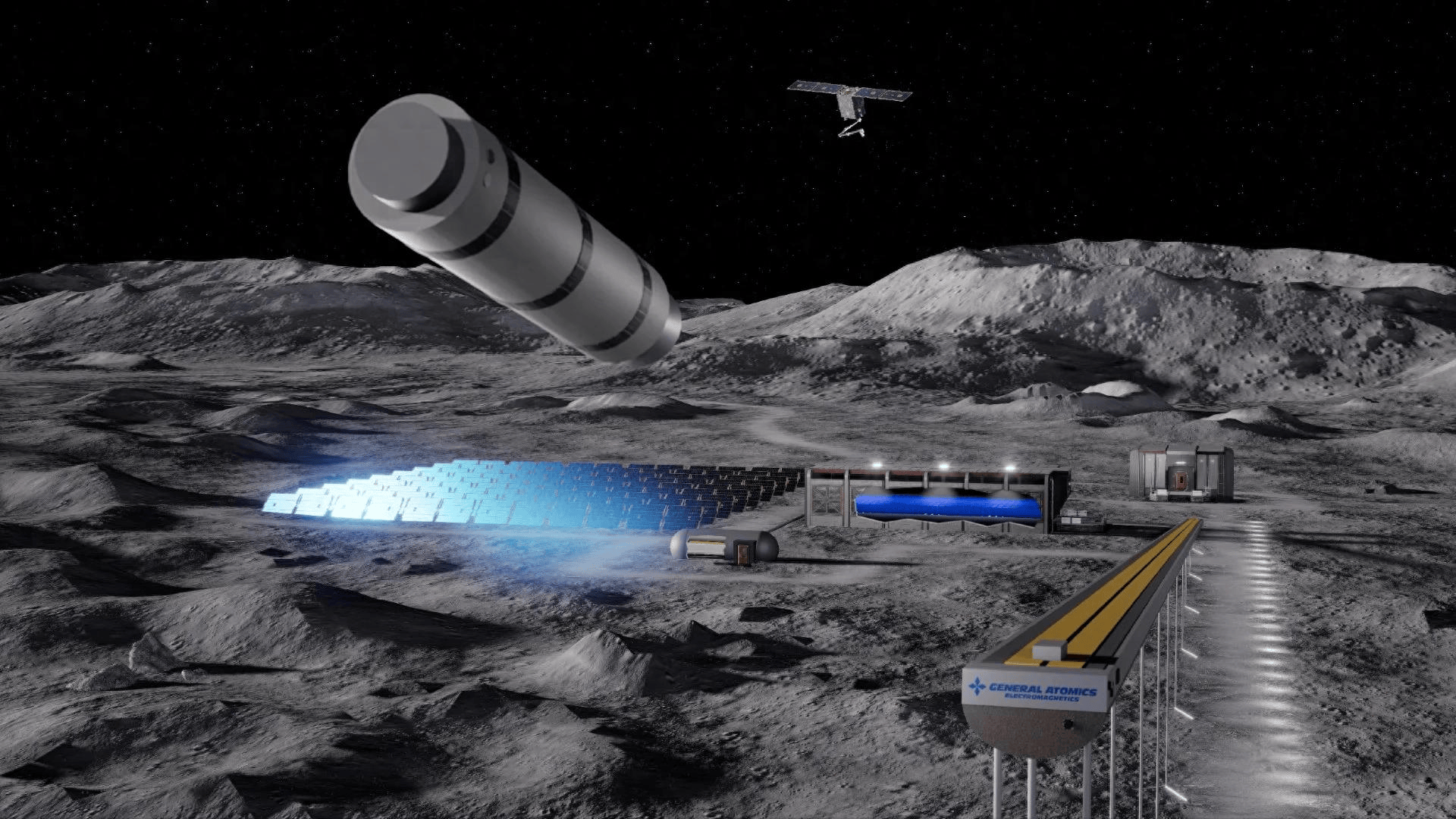
Core Idea - The CEO of SpaceX, Elon Musk, proposed an ambitious plan to launch AI-specific satellites from the Moon using an electromagnetic catapult, aiming to create a space-based AI data center network [1][3]. Group 1: Project Overview - Musk's plan includes constructing a giant electromagnetic catapult and a satellite assembly plant on the Moon, allowing satellites to be launched directly into Earth's orbit, thus simplifying the launch process [1][3]. - The initiative is part of SpaceX's broader goal to deploy up to 1 million satellites in low Earth orbit to support high-performance AI computing needs [3]. Group 2: Advantages of the Moon - The Moon offers three significant advantages for satellite launches: lower gravity, which reduces energy consumption; the absence of an atmosphere, which prevents wear during launch; and abundant solar energy, which can power the catapult and assembly plant [3]. Group 3: Challenges and Feasibility - The construction of the electromagnetic catapult poses immense engineering challenges, requiring a structure several kilometers long and a very gradual acceleration process to avoid damaging the satellites [5]. - Energy consumption for each launch is expected to be extraordinarily high, raising concerns about the storage and efficient use of solar energy on the Moon [5]. - Establishing a permanent base on the Moon to support the construction of the catapult and transport necessary equipment is a significant hurdle, as no such large-scale facility has been built beyond Earth [5]. Group 4: Expert Opinions - Musk expressed confidence that the space AI data center could be realized within "two to three years" [7]. - However, OpenAI's CEO, Sam Altman, cautioned that while the idea may be feasible in the long term, it is currently impractical due to high launch costs and operational challenges [7].
沙特基金HUMAIN在xAI与SpaceX合并前向xAI投资30亿美元
Sou Hu Cai Jing· 2026-02-19 13:26
Core Insights - The Public Investment Fund (PIF) of Saudi Arabia, through its AI-focused investment company HUMAIN, has made a strategic investment of $3 billion (approximately 207.4 billion RMB) in Elon Musk's AI company xAI prior to its merger with SpaceX [1][3] - HUMAIN has become a significant minority shareholder in xAI, with its stake later converting into shares of SpaceX [1] - HUMAIN and xAI announced plans to collaborate on building a flagship AI GPU data center network, which will include a facility with a capacity of over 500 MW [1] Company Statements - Tareq Amin, CEO of HUMAIN, emphasized that this investment reflects the company's strong belief in disruptive AI and its capability to allocate substantial capital towards extraordinary opportunities that combine long-term vision, superior technology, and efficient execution [3] - The merger of xAI with SpaceX is noted as one of the largest tech company mergers in history, significantly enhancing xAI's capabilities [3] - The current iteration of xAI is viewed as a platform that HUMAIN aims to support with robust capital to exert a far-reaching influence [3]
马斯克申请100万颗低轨卫星,布局太空算力新赛道
Sou Hu Cai Jing· 2026-02-19 12:12
Core Viewpoint - Musk's recent announcements regarding SpaceX's acquisition of xAI and plans for a massive satellite network deployment are strategic moves aimed at establishing a competitive edge in the space race, focusing on integrating communication and computational power in space [1][3]. Group 1: SpaceX and xAI Acquisition - SpaceX has acquired xAI, an artificial intelligence company, to enhance its capabilities in developing a powerful "orbital data center" [1]. - The acquisition aligns with Musk's vision of leveraging AI to optimize satellite operations and data processing in space [5]. Group 2: Satellite Network Deployment - Musk plans to deploy a satellite network consisting of up to 1 million satellites in low Earth orbit, which is unprecedented in scale [1]. - This deployment aims to address the increasing demand for data processing and communication capabilities as satellite constellations grow larger [3][5]. Group 3: Competitive Strategy - Musk's strategy is to create a closed-loop system utilizing SpaceX's rocket capabilities, Tesla's energy experience, and xAI's algorithms, thereby setting industry standards and forcing competitors into a reactive position [5][6]. - The high technical barriers and initial investment required for such infrastructure may deter potential competitors, giving Musk a significant first-mover advantage [6]. Group 4: Global Context and Competition - China has already begun its own initiatives in space data centers, planning to deploy a large-scale AI computing network in space, indicating a competitive landscape [9]. - By 2025, China aims to launch the world's first space computing constellation, showcasing its commitment to not only communication but also defining the next generation of space information infrastructure [9]. Group 5: Energy Considerations - A critical advantage for China in this competition is its robust energy infrastructure, which supports large-scale computing needs, contrasting with the aging energy grid in the U.S. [10][12]. - China's electricity consumption is projected to exceed 10 trillion kilowatt-hours by 2025, providing a solid foundation for any scale of computing cluster [10][12]. Group 6: Future Implications - The competition for space computing capabilities is fundamentally about establishing dominance in the infrastructure of the future digital age, involving not just technological prowess but also strategic national planning [13][14]. - The contrasting approaches of Musk's disruptive innovation model versus China's systematic strategy raise questions about the most effective path to success in space exploration and development [14].
马斯克:仍将推进火星计划;此前宣布优先十年内建月球城市,五至七年启动火星计划
Sou Hu Cai Jing· 2026-02-15 04:05
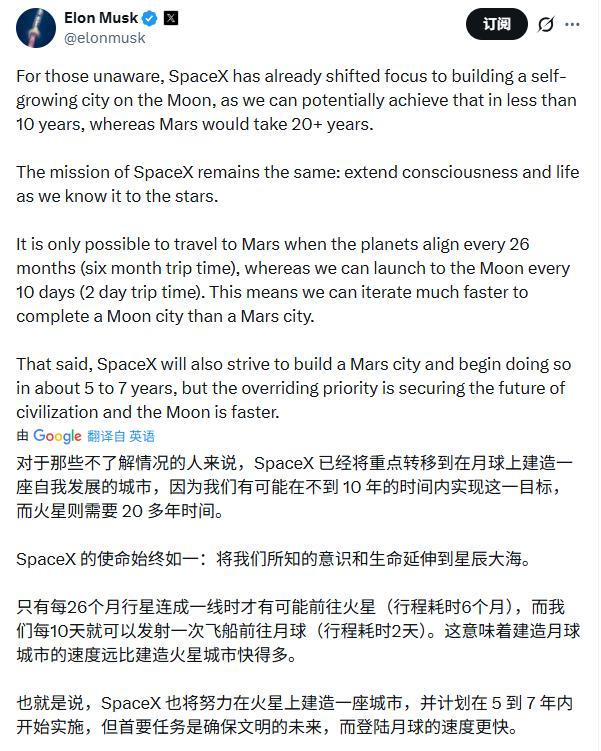
Core Viewpoint - SpaceX is shifting its focus from Mars to the Moon, planning to establish a self-sustaining city on the Moon within ten years, while still pursuing its Mars ambitions, which may be accelerated by this shift [1][3][5]. Group 1: Strategic Shift - Elon Musk announced that the recent focus has shifted to building a self-expanding city on the Moon, which could be achieved in less than ten years, compared to over 20 years for Mars [3][5]. - The company will still work on the Mars city, with plans to initiate related work in 5 to 7 years [5][8]. Group 2: Technical Considerations - Musk highlighted that the launch window for Mars occurs every 26 months, requiring a 6-month journey, while lunar missions can be launched every 10 days with a 2-day travel time [5]. - This indicates that the iterative development speed for the lunar city will be significantly faster than for the Martian city [5]. Group 3: Business Developments - SpaceX has postponed its planned Mars mission to prioritize the long-awaited NASA lunar flight, aiming for an unmanned lunar landing in March 2027 [8]. - The company is also expanding its efforts in deploying AI data centers in space and has recently acquired Musk's startup xAI, raising the combined company's valuation to $1.25 trillion [8]. - SpaceX is considering an initial public offering (IPO) as early as this summer [8]. Group 4: NASA Collaboration - NASA has commissioned SpaceX to prepare a modified Starship vehicle for docking with its spacecraft near the Moon, which is a key part of NASA's Artemis program to land astronauts on the Moon [9]. - SpaceX has utilized billions in funding from NASA to assist in the development of the Starship, which is over 400 feet tall and fully reusable [9].
通胀降温难抵AI忧虑,美股三大指数周线齐跌,中概股涨跌不一
Feng Huang Wang· 2026-02-13 22:20
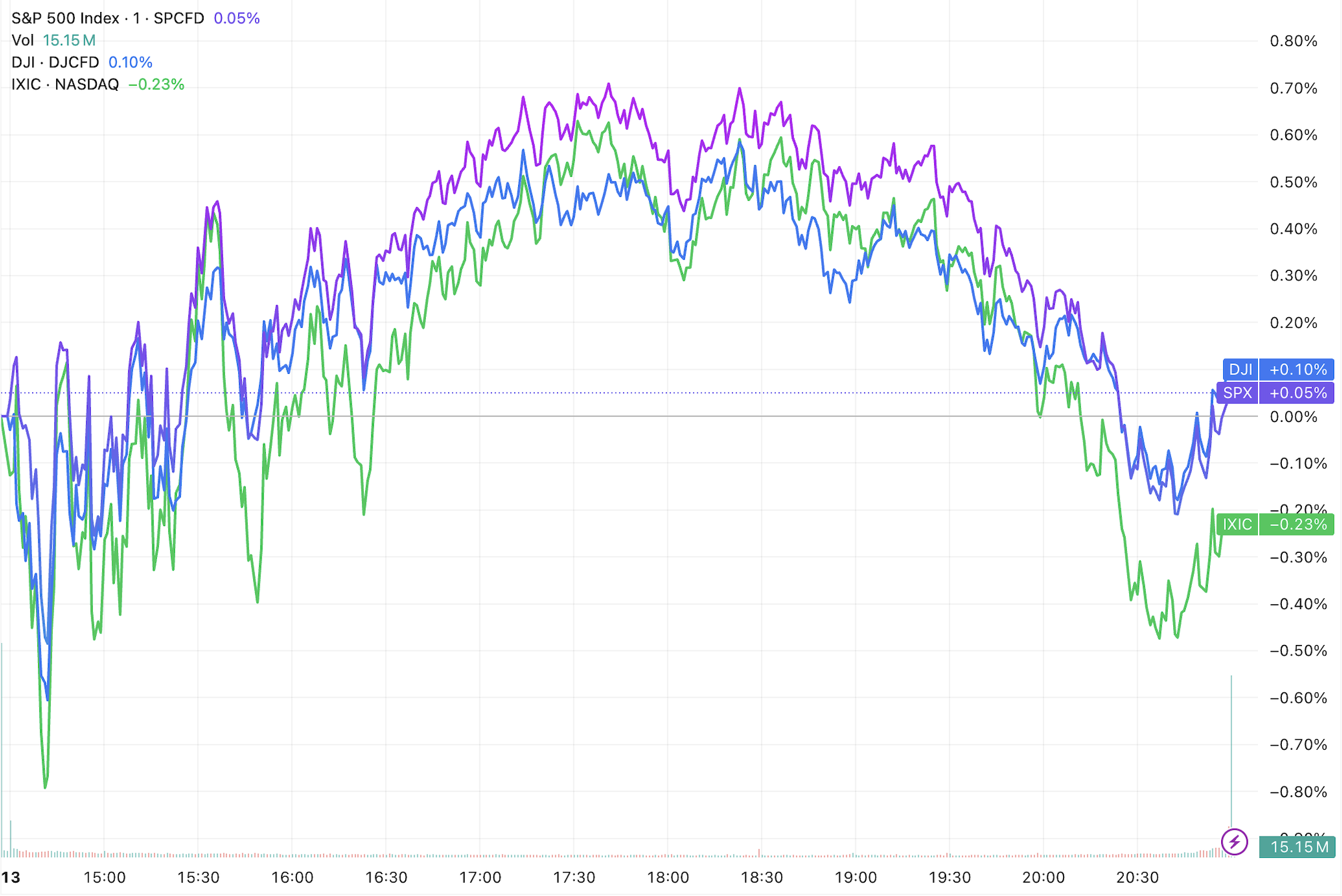
Market Overview - The three major indices showed mixed performance, with the Dow Jones up 0.10% at 49,500.93 points, the S&P 500 up 0.05% at 6,836.17 points, and the Nasdaq down 0.22% at 22,546.67 points [2] - Concerns over AI disruption led to market volatility, affecting various sectors including software, real estate, trucking, and financial services [5] - Notable declines included Charles Schwab down 10.8%, Morgan Stanley down 4.9%, and software company Workday down 11% [5] Inflation Data - The U.S. Bureau of Labor Statistics reported a 2.4% year-over-year increase in January CPI, with a 0.2% month-over-month rise, both below market expectations [2] - Core CPI, excluding volatile food and energy prices, rose 2.5% year-over-year and 0.3% month-over-month, aligning with market expectations [2] Company News - SpaceX is reportedly considering a dual-class share structure for its upcoming IPO, allowing certain shareholders, including Elon Musk, to maintain control despite lower ownership stakes [6] - Anthropic appointed former General Motors executive Chris Liddell to its board as it prepares for a potential IPO in 2026, indicating openness to going public by the end of this year [9] - Following the merger with xAI, Musk's team is exploring financing options to reduce high-interest debt, which has accumulated to nearly $18 billion, in preparation for a potential IPO [10] - Moderna reported fourth-quarter revenue of $678 million, a 30% year-over-year decline, with a loss of $2.11 per share compared to a loss of $2.91 per share in the same period last year [11]
马斯克念念不忘的“火星梦”,为什么突然转向月球了?
3 6 Ke· 2026-02-10 11:37
Core Viewpoint - Elon Musk announced a strategic shift for SpaceX, prioritizing the construction of a self-sustaining city on the Moon over the long-term goal of Mars colonization, citing concerns over potential supply disruptions from Earth due to natural or man-made disasters [1][3][5]. Group 1: Strategic Shift - The decision to focus on the Moon is based on the need for speed, as reaching Mars involves long wait times for rescue and supplies, making it less viable for initial colonization [3][4]. - The Moon offers more frequent launch windows (approximately every 10 days) and shorter travel times (around 2 days), allowing for quicker emergency responses and better survival prospects for initial bases [4][5]. - Musk estimates that a self-sustaining lunar city could be developed in less than 10 years, while a Martian city would take over 20 years due to longer iteration cycles [5]. Group 2: Lunar City Blueprint - The proposed lunar city, likely named "Alpha Lunar Base," is expected to be located near the Moon's south pole, where water ice may be found, crucial for supporting life and fuel production [6][9]. - The base will not be a temporary camp but designed for self-expansion and long-term survival, featuring modular habitats and energy solutions, potentially including nuclear power [6][7]. Group 3: SpaceX's Role and Partnerships - SpaceX is deeply integrated into NASA's plans for lunar exploration, having been selected to develop the crewed landing system for the Artemis III mission, with a contract worth nearly $3 billion [10]. - The development of the Starship rocket system is critical for transporting large modules and equipment to the Moon, with the potential for significant cost reductions due to its reusability [10][11]. - Other companies, such as Blue Origin, are also competing for lunar contracts, indicating a competitive landscape for lunar exploration and development [12]. Group 4: Future Technologies and AI Integration - Musk's vision includes relocating AI computational infrastructure to space, with plans for solar-powered data centers in orbit, potentially utilizing the Moon as a manufacturing base for AI satellites [15][16]. - This initiative could lead to a significant leap in energy utilization levels, as envisioned by the Kardashev Scale, with the potential to produce substantial computational power from lunar resources [16][18].
Juno markets 官网:SpaceX与xAI合并,垂直整合模式如何运作?
Sou Hu Cai Jing· 2026-02-10 06:39
Group 1 - The merger between SpaceX and xAI has created a non-public entity valued at $1.25 trillion, with SpaceX valued at $1 trillion and xAI at $250 billion [1][3] - The integration aims to leverage business synergies, with SpaceX's Starlink providing internet services through over 15,000 satellites across 155 countries, projected to generate revenue of approximately $15 billion to $16 billion in 2025 [3] - xAI focuses on developing large language models, with its Grok series requiring significant computational power, consuming about $1 billion in cash monthly [3] Group 2 - Elon Musk's strategic vision for the merger is to create "the most ambitious vertically integrated innovation engine on and off the planet," planning to deploy data centers in space powered by solar energy to support AI training [3] - The merger paves the way for a potential IPO, with SpaceX initially planning to raise $50 billion at a $1.5 trillion valuation, enhancing its narrative by linking to the popular AI sector [3] - The financial ties between Tesla, SpaceX, and xAI are deepening, with Tesla previously investing $2 billion in xAI, raising concerns about governance structures and resource allocation among the merged entity's business segments [3]

马斯克,宣布大消息!科技股大涨!白宫:正下调对这国“对等关税”
Xin Lang Cai Jing· 2026-02-10 00:08
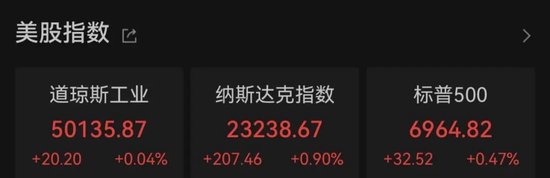
Market Performance - US stock market closed higher with technology stocks leading the gains, as the Dow Jones Industrial Average reached a new all-time high [1][16] - The Dow Jones increased by 20.20 points, or 0.04%, closing at 50,135.87 points; the Nasdaq rose by 207.46 points, or 0.90%, to 23,238.67 points; and the S&P 500 gained 32.51 points, or 0.47%, ending at 6,964.82 points [3][18] Technology Sector - Major technology stocks saw significant increases, with Microsoft rising over 3%, Nvidia and Facebook up more than 2%, and Tesla increasing by over 1% [7][22] - Alphabet Inc. plans to issue $20 billion in bonds, exceeding previous expectations of $15 billion, and will also issue bonds in Switzerland and the UK for the first time [9][23] - The bond issuance attracted over $100 billion in subscriptions, marking one of the strongest demand cases in corporate bond issuance history [9][24] - Microsoft, Amazon, Meta, Oracle, and Alphabet are planning to invest over $600 billion in capital expenditures by 2026 [9][24] Commodities - Oil prices increased, with Brent crude oil futures rising by $0.99, or 1.45%, to $69.04 per barrel, and West Texas Intermediate (WTI) crude oil futures up by $0.81, or 1.27%, to $64.36 per barrel [11][26] - Gold prices rebounded above $5,000, with spot gold rising by 2.01% to $5,064.10 per ounce, and COMEX gold futures increasing by 2.04% to $5,081.50 per ounce [11][26] - Gold mining stocks performed strongly, with significant gains for companies such as Coeur Mining, Pan American Silver, and Kinross Gold [11][27] Space Industry - SpaceX, led by Elon Musk, is shifting its focus to building a "self-sustaining city" on the Moon, aiming for completion within a decade, while still planning to establish a city on Mars in the future [29][30] - SpaceX's acquisition of AI company xAI is expected to support its plans for establishing data centers in space, with a potential IPO in June 2024 aiming to raise up to $50 billion [30]






马斯克要去月球造城
Sou Hu Cai Jing· 2026-02-09 12:41
Group 1 - Elon Musk announced that SpaceX is shifting its focus to building a "self-sustaining city" on the Moon, which could be achieved in less than 10 years [2] - SpaceX plans to prioritize lunar missions over Mars, aiming for an unmanned lunar landing by March 2027, while the Mars colonization plan is still set for 5 to 7 years from now [2] - The frequency of lunar launches is significantly higher, with a launch window every 10 days compared to every 26 months for Mars, allowing for faster development of the lunar city [2] Group 2 - SpaceX's valuation reached $1 trillion following its acquisition of xAI, which is valued at $250 billion, aimed at enhancing SpaceX's plans for establishing data centers in space [4] - The demand for computational power driven by AI development is expected to make space facilities more energy-efficient than those on Earth [4] - SpaceX is considering an initial public offering (IPO) this year, potentially raising up to $50 billion, which could be the largest IPO in U.S. history [4] Group 3 - Following its IPO, SpaceX aims to accelerate its stock's inclusion in major market indices, alongside other AI companies like OpenAI and Anthropic that may also go public this year [5]
