
商用车超充电池Gen2

Search documents
超快充赛道进入“生态竞逐”时间
中国能源报· 2025-12-27 00:38
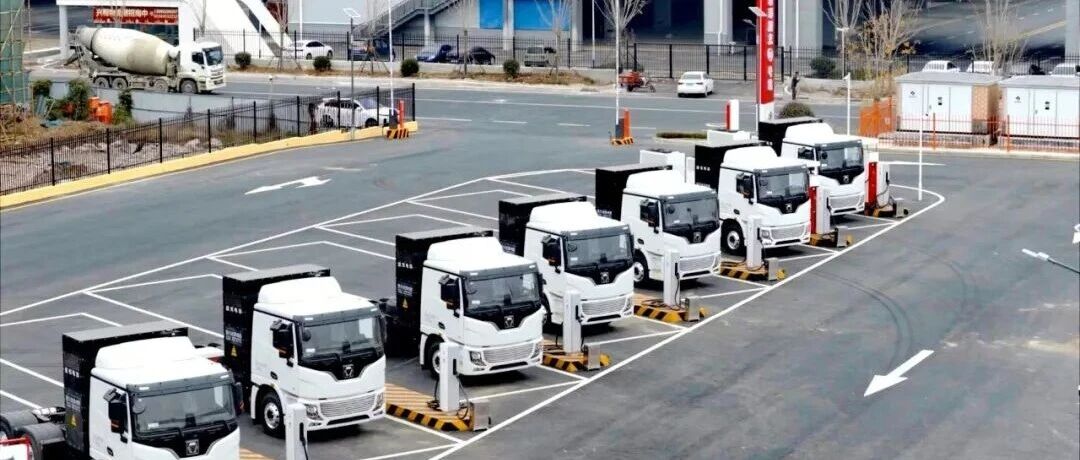
Core Viewpoint - The rapid development of ultra-fast charging technology is expected to alleviate user pain points in energy replenishment, driven by continuous technological penetration and deepening industry collaboration [1][2]. Group 1: Market Dynamics - The ultra-fast charging market is experiencing accelerated growth due to the dual drivers of technological maturity and rising demand, with numerous companies announcing advancements in product mass production [2][4]. - Major automotive and battery manufacturers are intensifying their focus on ultra-fast charging technology, leading to the introduction of new products and solutions [3][4]. Group 2: Product Innovations - Li Auto plans to mass-produce its self-branded 5C battery, enhancing safety performance and user experience [4]. - Chuangneng New Energy launched the "Zhu Feng" 6C fast-charging battery, achieving a specific energy density of 190Wh/kg and a volume energy density of 420Wh/L, supporting over 1000 km range for electric vehicles [4]. - A new commercial vehicle ultra-fast charging battery, Gen2, was released by Xinwanda, following the introduction of a large-capacity battery for heavy trucks [4]. Group 3: Infrastructure Development - The surge in private car ownership is driving the rapid deployment of ultra-fast charging stations in residential and commercial areas, while the electrification of logistics heavy trucks is boosting the construction of high-power DC charging facilities [5][11]. - There is a need for improved charging infrastructure in lower-tier cities and counties, as the current coverage remains insufficient [11]. Group 4: Safety Standards and Challenges - The implementation of ultra-fast charging requires a comprehensive optimization of vehicles, batteries, charging equipment, and thermal management, presenting technical challenges [7]. - The new national standard for electric vehicle batteries, effective from July 2026, includes safety tests for fast charging cycles, emphasizing the need for enhanced safety measures in ultra-fast charging technology [8][9]. Group 5: Ecosystem Development - A well-structured ultra-fast charging ecosystem is crucial for the industry's growth, necessitating collaboration among battery manufacturers, vehicle producers, and charging infrastructure providers [10]. - The current lack of unified charging standards and service disparities must be addressed to facilitate the widespread adoption of ultra-fast charging technology [10][11].

“充电像加油”还有多远?超快充技术狂奔,安全标准体系亟待升级
Zhong Guo Neng Yuan Wang· 2025-12-24 09:29
Core Insights - The competition in the new energy vehicle charging market is intensifying, driven by the dual forces of technological maturity and rising demand for ultra-fast charging solutions [1] Group 1: New Products and Solutions - Ultra-fast charging technology is becoming a key direction in the evolution of charging technologies, with major domestic and international automakers and battery manufacturers increasing their investments and innovations in this area [2] - Li Auto plans to mass-produce its self-developed 5C battery, enhancing safety and user experience [2] - Chunan New Energy launched the "Zufeng" 6C fast-charging battery, achieving a continuous 6C charging rate and a range of over 1000 kilometers [2] - A new commercial vehicle ultra-fast charging battery, Gen2, was released by Xinwanda, following the introduction of a large-capacity battery for heavy trucks [2] - Huawei introduced a liquid-cooled megawatt fast charging solution with a peak power of 1.5 megawatts, capable of charging 20 kWh per minute [2] Group 2: Infrastructure Development - The surge in private car ownership is accelerating the deployment of ultra-fast charging stations in residential and commercial areas, while the electrification of logistics heavy trucks is driving the construction of high-power DC charging equipment [3] Group 3: Safety Standards and Challenges - Achieving fast charging performance requires a multi-dimensional optimization of vehicles, batteries, charging equipment, thermal management, and costs, presenting certain technical challenges [4] - The new national standard for electric vehicle batteries, effective from July 2026, includes safety tests for fast charging cycles, requiring batteries to pass external short-circuit tests after 300 fast charging cycles [4] - The development of new anode materials, such as silicon-based and hard carbon, is necessary to meet the higher safety requirements posed by ultra-fast charging [5] Group 4: Ecosystem Construction - The development of ultra-fast charging technology is entering a "fast lane," with applications expanding beyond passenger vehicles to commercial vehicles and emerging eVTOL markets [6] - A more complete and efficient ultra-fast charging ecosystem is crucial for the speed and quality of industry development, necessitating collaboration among battery, vehicle, and charging infrastructure sectors [6] - There is a need for unified charging standards and communication protocols to enhance compatibility between charging stations and batteries, facilitating user convenience [6] Group 5: Regional Infrastructure Gaps - Coverage of charging infrastructure in third- and fourth-tier cities and rural areas remains insufficient, with a need for improved ratios of fast and ultra-fast charging stations [7] - The existing charging network is lagging in adapting to vehicle evolution, indicating a need for policy support to encourage the construction of high-quality charging stations in rural areas and ultra-fast networks for logistics heavy trucks [7]

