
全液冷兆瓦快充解决方案

Search documents
超快充赛道进入“生态竞逐”时间
中国能源报· 2025-12-27 00:38
Core Viewpoint - The rapid development of ultra-fast charging technology is expected to alleviate user pain points in energy replenishment, driven by continuous technological penetration and deepening industry collaboration [1][2]. Group 1: Market Dynamics - The ultra-fast charging market is experiencing accelerated growth due to the dual drivers of technological maturity and rising demand, with numerous companies announcing advancements in product mass production [2][4]. - Major automotive and battery manufacturers are intensifying their focus on ultra-fast charging technology, leading to the introduction of new products and solutions [3][4]. Group 2: Product Innovations - Li Auto plans to mass-produce its self-branded 5C battery, enhancing safety performance and user experience [4]. - Chuangneng New Energy launched the "Zhu Feng" 6C fast-charging battery, achieving a specific energy density of 190Wh/kg and a volume energy density of 420Wh/L, supporting over 1000 km range for electric vehicles [4]. - A new commercial vehicle ultra-fast charging battery, Gen2, was released by Xinwanda, following the introduction of a large-capacity battery for heavy trucks [4]. Group 3: Infrastructure Development - The surge in private car ownership is driving the rapid deployment of ultra-fast charging stations in residential and commercial areas, while the electrification of logistics heavy trucks is boosting the construction of high-power DC charging facilities [5][11]. - There is a need for improved charging infrastructure in lower-tier cities and counties, as the current coverage remains insufficient [11]. Group 4: Safety Standards and Challenges - The implementation of ultra-fast charging requires a comprehensive optimization of vehicles, batteries, charging equipment, and thermal management, presenting technical challenges [7]. - The new national standard for electric vehicle batteries, effective from July 2026, includes safety tests for fast charging cycles, emphasizing the need for enhanced safety measures in ultra-fast charging technology [8][9]. Group 5: Ecosystem Development - A well-structured ultra-fast charging ecosystem is crucial for the industry's growth, necessitating collaboration among battery manufacturers, vehicle producers, and charging infrastructure providers [10]. - The current lack of unified charging standards and service disparities must be addressed to facilitate the widespread adoption of ultra-fast charging technology [10][11].

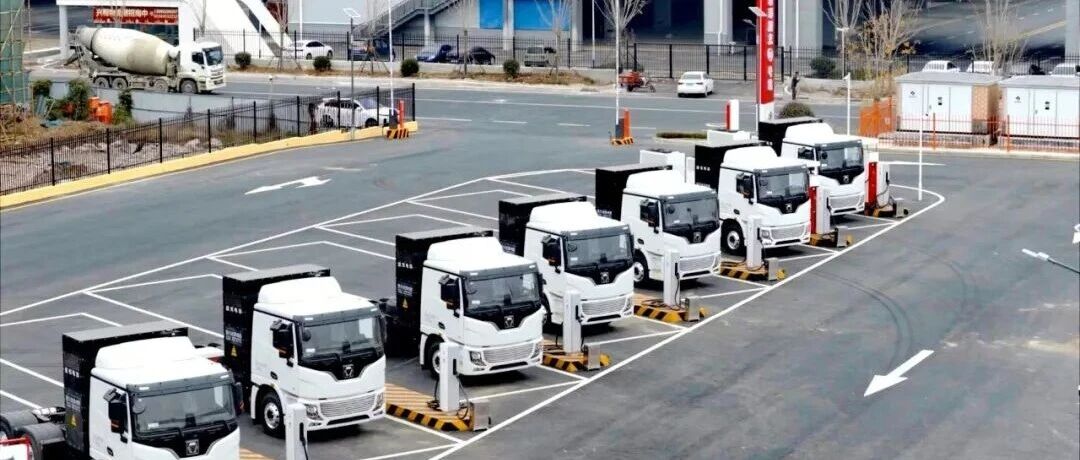
“充电像加油”还有多远?超快充技术狂奔,安全标准体系亟待升级
Zhong Guo Neng Yuan Wang· 2025-12-24 09:29
Core Insights - The competition in the new energy vehicle charging market is intensifying, driven by the dual forces of technological maturity and rising demand for ultra-fast charging solutions [1] Group 1: New Products and Solutions - Ultra-fast charging technology is becoming a key direction in the evolution of charging technologies, with major domestic and international automakers and battery manufacturers increasing their investments and innovations in this area [2] - Li Auto plans to mass-produce its self-developed 5C battery, enhancing safety and user experience [2] - Chunan New Energy launched the "Zufeng" 6C fast-charging battery, achieving a continuous 6C charging rate and a range of over 1000 kilometers [2] - A new commercial vehicle ultra-fast charging battery, Gen2, was released by Xinwanda, following the introduction of a large-capacity battery for heavy trucks [2] - Huawei introduced a liquid-cooled megawatt fast charging solution with a peak power of 1.5 megawatts, capable of charging 20 kWh per minute [2] Group 2: Infrastructure Development - The surge in private car ownership is accelerating the deployment of ultra-fast charging stations in residential and commercial areas, while the electrification of logistics heavy trucks is driving the construction of high-power DC charging equipment [3] Group 3: Safety Standards and Challenges - Achieving fast charging performance requires a multi-dimensional optimization of vehicles, batteries, charging equipment, thermal management, and costs, presenting certain technical challenges [4] - The new national standard for electric vehicle batteries, effective from July 2026, includes safety tests for fast charging cycles, requiring batteries to pass external short-circuit tests after 300 fast charging cycles [4] - The development of new anode materials, such as silicon-based and hard carbon, is necessary to meet the higher safety requirements posed by ultra-fast charging [5] Group 4: Ecosystem Construction - The development of ultra-fast charging technology is entering a "fast lane," with applications expanding beyond passenger vehicles to commercial vehicles and emerging eVTOL markets [6] - A more complete and efficient ultra-fast charging ecosystem is crucial for the speed and quality of industry development, necessitating collaboration among battery, vehicle, and charging infrastructure sectors [6] - There is a need for unified charging standards and communication protocols to enhance compatibility between charging stations and batteries, facilitating user convenience [6] Group 5: Regional Infrastructure Gaps - Coverage of charging infrastructure in third- and fourth-tier cities and rural areas remains insufficient, with a need for improved ratios of fast and ultra-fast charging stations [7] - The existing charging network is lagging in adapting to vehicle evolution, indicating a need for policy support to encourage the construction of high-quality charging stations in rural areas and ultra-fast networks for logistics heavy trucks [7]


车展季·大咖说丨重卡超充补能热度上升 欣旺达陈小源:重卡减排对实现“双碳”目标有关键意义
Mei Ri Jing Ji Xin Wen· 2025-04-28 07:40
Core Viewpoint - The electrification of heavy-duty trucks (HDVs) is crucial for achieving China's "dual carbon" goals, with significant carbon emissions originating from this sector [1][3]. Group 1: Market Trends - In Q1 of this year, the domestic new energy heavy-duty truck market saw a substantial increase in sales, with cumulative sales reaching approximately 23,700 units, a year-on-year growth of 164% [3]. - The number of new energy heavy-duty truck models listed in the latest announcements was 430, surpassing the 361 models from the same period last year [3]. Group 2: Technological Developments - Companies like XWANDA and Huawei are actively developing high-capacity ultra-fast charging solutions for heavy-duty trucks, with XWANDA introducing a specialized battery capable of 1.4MW charging and Huawei launching a full liquid-cooled megawatt fast charging solution [3][4]. - The first megawatt-level ultra-fast charging station in Shanghai has been put into operation, featuring a maximum charging power of 1.5 megawatts [4]. Group 3: Industry Collaboration - The construction of a robust charging infrastructure for heavy-duty trucks requires collaboration among various stakeholders, including battery manufacturers and vehicle producers [8][9]. - Huawei has announced the formation of a supercharging alliance with several companies to accelerate the expansion of ultra-fast charging networks [9]. Group 4: Economic Considerations - The cost of a megawatt-level ultra-fast charging pile ranges from 800,000 to 1.5 million yuan, with total investment, including grid upgrades and land infrastructure, estimated between 1.5 million and 3.5 million yuan [8]. - The high turnover rate of ultra-fast charging piles is expected to distribute costs effectively, enhancing logistics efficiency and reducing operational costs for commercial vehicle drivers [8].
多只黄金LOF,提示溢价风险!中国人寿集团新总裁落定!美团无人机,大消息→
新华网财经· 2025-04-23 00:44
5、 上证报记者从上海商务委获悉,最新发布的 《关于进一步优化上海餐饮企业发展环境的若干措施》 (以下简称若干措施)提出,鼓励金融机构有 效运用大数据和金融科技手段,在风险可控前提下开发有针对性的金融产品, 加大对餐饮企业的融资支持力度 。 6、 22日讯, 首届具身智能机器人运动会将于4月24日至26日在无锡市惠山区举办 。 本次活动包括开幕式、竞技赛/应用赛、主题会议等多个环 节。 其中,竞技赛包括竞速跑、越野跑、足球、篮球、舞蹈等; 应用赛包括搬运、智能抓取、室内救援等。 在无锡(惠山)人形机器人产业园推介 环节,宇树科技、小米人形机器人、乐聚机器人等相关负责人也将参与,就人形机器人关键技术瓶颈与突破路径、人形机器人应用场景的深度挖掘与落 脚难点等展开讨论。 今日导读 1. 多只黄金LOF在近日大涨后提示溢价风险。以易方达黄金主题证券投资基金(LOF)为例,该基金4月22日上午部分时段停牌,但复牌后继续大 涨,午后该基金再度停牌,全天涨幅超过9%。 2. 4月21日,中国人寿保险(集团)公司(以下简称"中国人寿集团")官网集团领导栏信息显示,李祝用职务更新为该集团党委副书 记、副董事长、总裁,这意味着, ...



