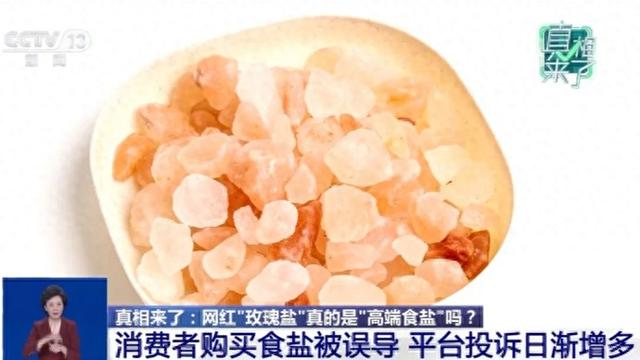
喜马拉雅岩盐

Search documents
网红“玫瑰盐”真的是“高端食盐”吗?为你揭秘→
Yang Shi Xin Wen· 2025-12-23 02:15
Core Viewpoint - The rise of "pink Himalayan salt" as a trendy product in China raises questions about its safety, legality, and nutritional value, with many consumers misled by marketing claims [1][10]. Group 1: Product Overview - "Pink Himalayan salt," also known as "rose salt," is marketed as a high-end, natural product rich in minerals, primarily sourced from Pakistan's Himalayan salt mines [1][3]. - The price of "rose salt" is significantly higher than regular salt, ranging from 6 to 10 times more, with some products even higher, often promoted with claims of containing 84 trace minerals [3]. Group 2: Regulatory Compliance - According to Chinese standards, edible salt must meet specific criteria, including a whiteness of at least 45 degrees, which "rose salt" fails to meet due to its natural pink color [5]. - The importation of "rose salt" is complicated by its classification; if labeled as industrial salt, it does not require the same regulatory scrutiny as food-grade salt, leading to potential market oversight gaps [14]. Group 3: Consumer Misleading and Complaints - There has been a rise in consumer complaints regarding "rose salt," with reports of misleading marketing and lack of proper labeling, leading to confusion about its safety for consumption [10][12]. - Many consumers have encountered issues with refunds and product returns after realizing that the purchased "rose salt" does not comply with national food safety standards [12]. Group 4: Cross-Border E-commerce Implications - The sale of "rose salt" through cross-border e-commerce platforms is legally permissible, but sellers must inform consumers that these products do not meet domestic standards [15]. - Recent government initiatives aim to strengthen the regulatory framework for cross-border e-commerce food imports, indicating a shift towards better oversight in this area [17].

玫瑰盐热销:别让“粉红滤镜”遮蔽安全底线
Xin Lang Cai Jing· 2025-12-22 11:05
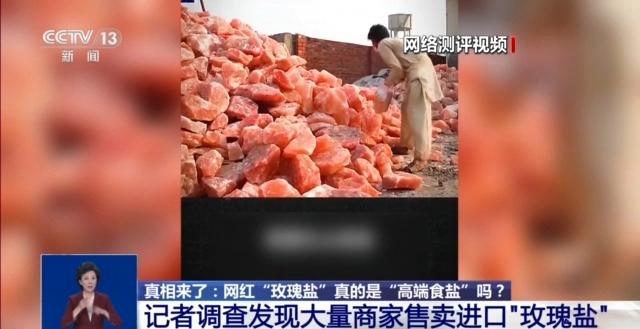
Core Viewpoint - The rising popularity of pink Himalayan salt, marketed as a high-end health product, is misleading consumers as it does not meet national food safety standards in China, highlighting significant challenges in food safety regulation and oversight [2][3]. Group 1: Product Characteristics and Misleading Marketing - Pink Himalayan salt, also known as Himalayan rock salt, is primarily imported from Pakistan and is characterized by its pink color due to impurities, which disqualifies it from being classified as edible salt under Chinese standards [2]. - Many consumers are misled into believing that pink salt is a more nutritious option, while it is actually intended for industrial use, bath products, or as crafts [3]. Group 2: Regulatory Challenges and E-commerce Impact - The influx of pink salt into the Chinese market mainly occurs through cross-border e-commerce, which complicates regulatory oversight due to the products being classified under different categories for customs [3]. - In 2024, the General Administration of Customs reported 4,200 batches of unapproved food products, a 78.12% increase from 2023, with labeling non-compliance being the most frequent issue [3]. Group 3: Recommendations for Improved Oversight - It is suggested that the State Administration for Market Regulation and the General Administration of Customs establish a joint verification mechanism for high-risk imported foods sold online, particularly those misrepresented as food products [4]. - E-commerce platforms should implement algorithmic checks to ensure that products claiming to be edible or health-related are linked to valid certifications, preventing non-compliant items from being listed [4].