国潮饰品

Search documents
春节期间广州口岸免税品售出10万件 销售额超4000万
Nan Fang Ri Bao Wang Luo Ban· 2026-02-27 08:59
Group 1 - The core viewpoint of the articles highlights the significant growth in the duty-free consumption market during the Spring Festival, driven by the expansion of visa-free travel and optimized duty-free shopping policies in China [1] - During the Spring Festival period (February 15 to 23), Guangzhou's duty-free sales reached 100,000 items, amounting to 41 million yuan, representing year-on-year increases of 17% and 30% respectively [1] - The Guangzhou Baiyun International Airport T2 terminal experienced high foot traffic, with travelers actively purchasing duty-free goods, particularly in newly opened stores featuring traditional Chinese crafts [1] - Duty-free shops at the airport are capitalizing on the Spring Festival sales peak by offering various promotions, such as discounts on cosmetics and increased membership points for purchases [1] - The combination of "cross-border travel + duty-free shopping" continues to stimulate consumer spending, with expectations that Guangzhou's duty-free sales will exceed 1.3 billion yuan by 2025, reflecting a 13% year-on-year growth [1] - Currently, there are 22 duty-free stores at Guangzhou Baiyun Airport and 2 city pickup points, offering over 21,000 types of duty-free products, including cosmetics, traditional Chinese accessories, and electronic devices [1] Group 2 - Guangzhou Customs plans to closely monitor the needs of duty-free enterprises and optimize regulatory models to support the continued growth of the duty-free economy [2]
打年货、逛市集、看世界……湖北非遗点燃荆楚年味
Xin Hua She· 2026-01-19 07:36
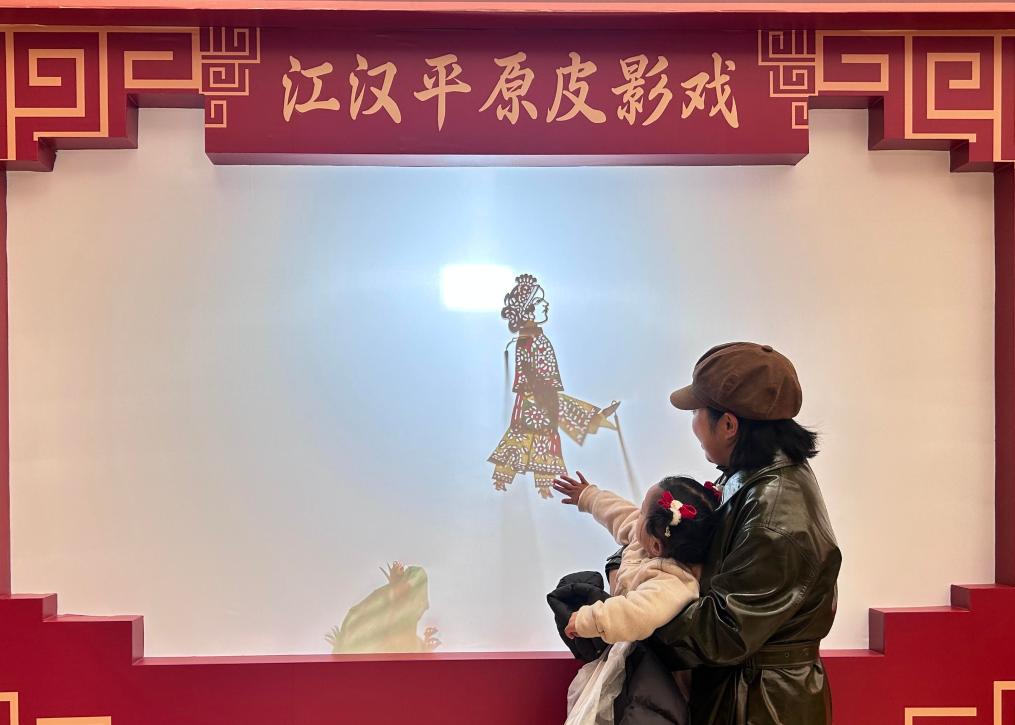
Core Viewpoint - The event "Knowledgeable Hubei Super Cultural Tourism Day" and the fifth Hubei Intangible Cultural Heritage Carnival showcased nearly 200 intangible cultural heritage projects and over 500 inheritors, highlighting the unique charm of Jingchu culture through the exhibition and sale of more than 3,000 intangible cultural heritage products and cultural tourism items [1]. Group 1 - The event attracted many citizens and tourists to Wuhan's Yangtze River New Area, where they experienced local culture and purchased New Year goods [1]. - Various traditional folk customs were performed, creating a lively atmosphere reminiscent of childhood Spring Festivals, with attendees engaging with intangible cultural heritage projects like bronze bells and shadow puppetry [2]. - The integration of traditional craftsmanship with modern consumer preferences was emphasized, as artisans created contemporary items like bookmarks and ornaments inspired by traditional shadow puppetry [2]. Group 2 - The artistic performances included regional folk songs and traditional operas, showcasing the innovative fusion of different cultural elements [3]. - A new collaboration between traditional incense and weaving techniques was introduced, aiming to revitalize intangible cultural heritage products for the market [6]. - The "Jingchu Intangible Cultural Heritage International Reception Hall" was inaugurated, facilitating international cooperation and promoting Hubei products globally [6][7]. Group 3 - The event featured a variety of Jingchu intangible cultural heritage items, including wood carvings and tea, appealing to both local and international audiences [7]. - A total of 3,000 New Year gift packages were sent from Hubei to countries like Hungary, Serbia, and Malaysia, spreading New Year blessings to overseas compatriots [7]. - The event not only showcased local products but also fostered cultural exchange, as international attendees experienced Chinese New Year traditions and local delicacies [7][8].

饰品货源群电商群,饰品电商供应链
Sou Hu Cai Jing· 2025-11-30 16:08
Core Insights - The jewelry industry is undergoing a transformation from "decorative items" to "emotional intelligent carriers," driven by new technologies and consumer perspectives [6] Group 1: Consumer Mindset Transformation - In 2026, jewelry consumption will exhibit distinct scene segmentation, with consumers seeking emotional solutions that resonate with their life scenarios rather than just purchasing single products [8] - The popularity of emotional regulation features in jewelry is rising, with a specific brand's smart bracelet achieving a user retention rate of 65% by monitoring emotional fluctuations and providing soothing scents or vibrations [8] - Cultural narratives in domestic jewelry have evolved from symbolic expression to deep cultural storytelling, with a collaboration between a brand and the Palace Museum achieving a 58% repurchase rate for its "Twenty-Four Solar Terms" series [9] Group 2: Technological Ecosystem Reconstruction - The application of technology in the jewelry industry is shifting from isolated breakthroughs to systematic solutions, with AI-based emotional computing engines improving product matching by 40% and conversion rates by 32% [12] - New materials like thermochromic and self-healing coatings are being widely adopted, with a brand's light-sensitive jewelry series achieving 200% of its sales target in the first month [13] - Digital twins are becoming commonplace, allowing users to showcase jewelry in metaverse scenarios, with a brand's digital exhibition attracting 450,000 daily visitors [14] Group 3: Channel Experience Upgrade - The sales model in jewelry e-commerce is transitioning from product display to immersive experience construction, with 5G holographic display technology increasing user interaction time by 3.5 times and conversion rates by 45% [16] - Content marketing based on specific life scenarios has proven effective, with a brand's "Workplace Seven-Day Outfits" series driving a 280% increase in related category sales [16] - AI shopping assistants are enhancing personalized recommendations, achieving an 82% accuracy rate and a 55% increase in average transaction value [16] Group 4: Supply Chain Innovation - The jewelry industry's supply chain is evolving towards intelligent and predictive models, with AI algorithms improving new product success prediction accuracy to 78% [18] - Distributed 3D printing networks enable instant production and delivery, with a brand's urban manufacturing center achieving a 4.2 times higher inventory turnover rate than the industry average [18] - Sustainable supply chains are being established, with 80% of products tracked for carbon footprint and 55% of materials being eco-friendly [18] Group 5: Future Challenges and Innovation Directions - The ethical use of emotional data collected by smart jewelry needs clear regulations, highlighting the industry's consensus on establishing a trustworthy data governance system [20] - The high costs of advanced technology applications pose challenges for broader consumer access to innovations [20] - Cultural adaptation issues are becoming prominent in global operations, necessitating deeper localized innovation strategies [20] - The jewelry e-commerce sector is transitioning from "decorative item providers" to "emotional solution providers," emphasizing the importance of emotional insight, technological integration, and cultural storytelling capabilities for future competitiveness [20]