
非物质文化遗产

Search documents
菏泽|菏泽两项国家级非遗亮相央视出圈
Da Zhong Ri Bao· 2026-02-25 01:29
Core Viewpoint - The article highlights the significance of the cultural IP of Heze, particularly through its national intangible cultural heritage (ICH) showcased in the CCTV program "2026 Non-Heritage Gala," emphasizing the need for Heze to transform its visibility into lasting recognition and cultural impact [2][4]. Group 1: Cultural Significance - The performance of "Zhuangzi Legend" and "Shandong Guqin Music" during the gala received widespread acclaim, showcasing Heze's rich cultural heritage and its ability to resonate with contemporary audiences [2][3]. - "Zhuangzi Legend" is categorized under folk literature in the national ICH list, emphasizing its role in making abstract philosophical ideas accessible and relatable through local narratives [3]. - "Shandong Guqin Music" represents a mature local music system, with Heze being a historical center for guqin, reflecting both classical and folk traditions [3][4]. Group 2: Strategic Opportunities - The gala serves as a platform for Heze to elevate its cultural narrative, transforming a one-time appearance into a sustained cultural presence [4][5]. - Heze has 32 national ICH representative projects and 22 national ICH inheritors, indicating a substantial cultural resource base that can be leveraged for ongoing engagement [4]. - Strategies to maintain interest include creating immersive experiences related to "Zhuangzi Legend," facilitating public participation in "Shandong Guqin Music," and developing continuous content that keeps the cultural narrative alive [5][6]. Group 3: Future Directions - The article suggests that Heze should capitalize on the national exposure from the gala by integrating ICH into daily life, thereby enhancing its economic and social value [6]. - The potential for traditional culture to be reinterpreted in engaging ways for younger audiences is emphasized, indicating a shift towards more accessible cultural expressions [6]. - The successful presentation of Heze's cultural identity through the gala is seen as a foundation for ongoing cultural engagement and tourism development [6].
古艺绽新彩 年味别样浓(文化中国行)
Ren Min Ri Bao· 2026-02-20 22:42
Core Perspective - The article highlights the significance of intangible cultural heritage in China, showcasing various traditional customs and practices during the Spring Festival, emphasizing their role in cultural transmission and community bonding [1]. Group 1: Intangible Cultural Heritage - Intangible cultural heritage is a vital part of Chinese traditional culture and a living testament to the continuity of Chinese civilization [1]. - Various regions in China celebrate the Spring Festival with diverse folk activities, enhancing the festive atmosphere through intangible cultural heritage [1]. Group 2: Jiao Dong Flower Steamed Buns - Jiao Dong flower steamed buns, a provincial intangible cultural heritage, have a history of over 1,000 years and are characterized by their intricate designs and flavors [2][4]. - The production process involves 72 steps, requiring precise control of time and temperature to ensure quality [3]. - Lin Rongtao, a representative inheritor, has developed over 100 varieties of flower steamed buns and has trained over 400 apprentices [5]. Group 3: Que Shan Iron Flower - Que Shan Iron Flower, also known as "Iron Flower," is a traditional performance art that involves throwing molten iron into the air, creating a spectacular visual display [7][8]. - This ancient technique faced near extinction but was recognized as a national intangible cultural heritage in 2008, leading to renewed interest and training efforts [8]. - The performance requires significant physical skill and experience, making it a rare and valuable cultural practice [8]. Group 4: Wang Mantian Fish Lanterns - Wang Mantian fish lanterns, a traditional folk custom in Huizhou, have a history of over 600 years and are used in celebrations to pray for safety and prosperity [11][12]. - The production of fish lanterns involves meticulous craftsmanship, with specific materials and techniques that have been passed down through generations [12]. - The lanterns have gained popularity, with local artisans producing them for various orders, contributing to the local economy [13]. Group 5: Chaoyang Yingge - Chaoyang Yingge is a folk dance that integrates martial arts and theatrical performance, recognized as a national intangible cultural heritage [15]. - The dance has evolved to include female performers and innovative choreography, appealing to younger audiences [16]. - Efforts are being made to promote Yingge culture internationally, with training programs established for overseas teams [17].
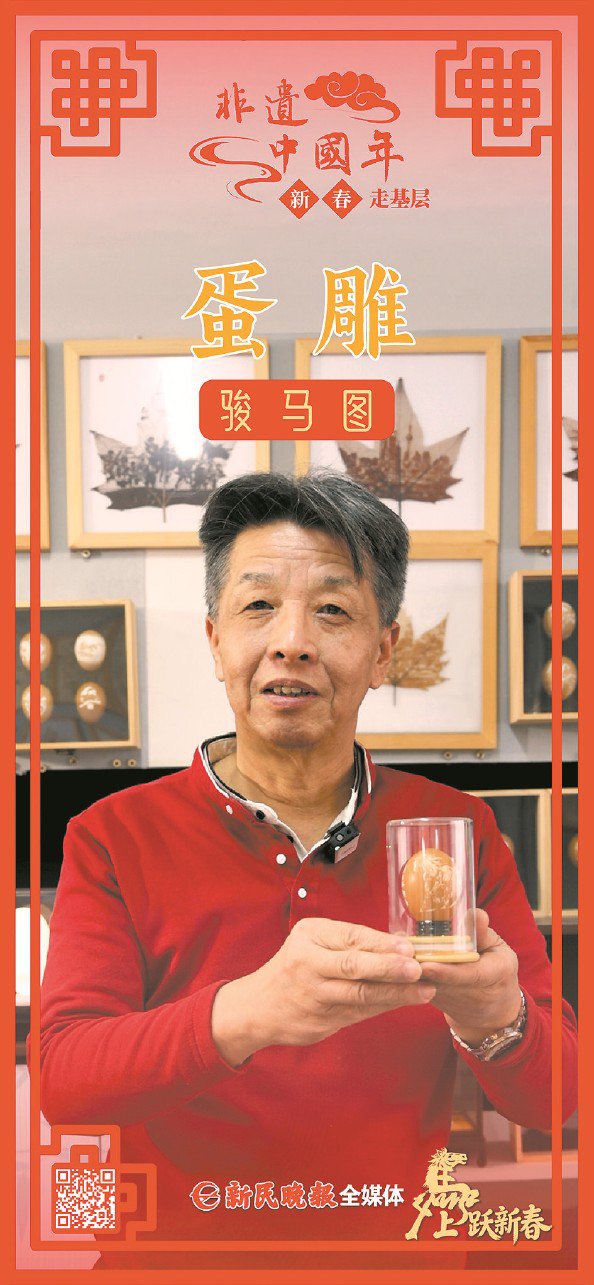
蛋壳上雕骏马
Xin Lang Cai Jing· 2026-02-20 07:17
Group 1 - The article highlights the traditional craft of egg carving in Shanghai, showcasing the intricate techniques used to create detailed designs on eggshells [3] - The representative inheritor of this intangible cultural heritage, Li Yafei, has created a "Galloping Horse" artwork on an eggshell, reflecting the style of Chinese ink painting [3] - The carving process involves using a dental machine to outline the horse's shape, followed by manual detailing to enhance the artwork [3]

非遗消费 上新走心
Sou Hu Cai Jing· 2026-02-19 00:20
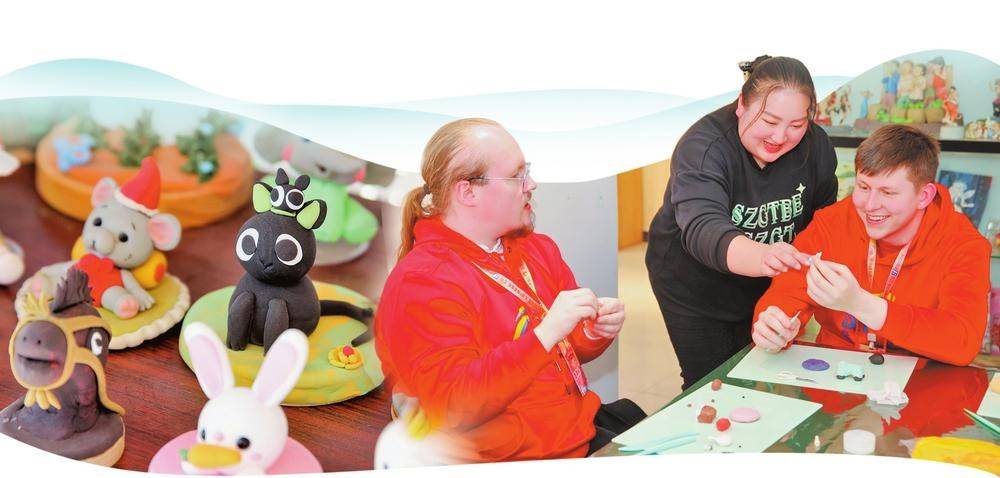
Group 1 - The core idea of the articles highlights the innovative integration of intangible cultural heritage (ICH) with modern consumer preferences, particularly targeting younger demographics in Yunnan [2][3] - By 2025, over 5.5 million people are expected to choose Yunnan for residence, driven by the appeal of "ICH + tourism" experiences [2] - The "Douyin Intangible Cultural Heritage Carnival" in Dali is set for November 2025, with a report indicating that over 6.5 billion intangible cultural heritage products were sold on Douyin e-commerce in the past year [3] Group 2 - The success story of Heqing silverware showcases the impact of digital transformation, with a 33% month-on-month increase in transactions and a 251% year-on-year growth in order volume [3] - The Dali Digital Heritage Box presents nine national-level ICH items through a digital format, enhancing user engagement with interactive features [3] - The transformation of traditional crafts, such as the creation of functional items from traditional "Wacat," reflects the emotional and practical needs of contemporary consumers [4]
新春走基层丨年画焕彩闹新春
He Nan Ri Bao· 2026-02-18 23:08
Core Insights - The integration of traditional Kaifeng woodblock New Year paintings into modern cultural tourism and consumer experiences is gaining traction, showcasing the evolution of this art form while preserving its cultural significance [1][2][3] Group 1: Cultural Significance and Innovation - Kaifeng woodblock paintings, originating from the Northern Song Dynasty, have evolved over a millennium and are now a representative cultural symbol of Kaifeng and the Central Plains region [1] - The Ren Helin New Year Painting Intangible Cultural Heritage Museum is innovating by incorporating contemporary elements into traditional art, such as creating 3D zodiac paintings for the Year of the Horse [1] - The museum is also exploring collaborations with fashion brands to create modern woodblock paintings that reflect current trends, aiming to revitalize this traditional craft [2] Group 2: Market Integration and Consumer Engagement - The "non-heritage + market + cultural tourism" integration model is becoming a key driver for cultural tourism consumption, leading to the development of diverse products like intangible cultural heritage gift boxes and themed accommodations [3] - In the past year, the Ren Helin New Year Painting Intangible Cultural Heritage Museum has hosted over ten thousand study teams, significantly boosting local tourism and related industries [3] - The popularity of fashionable New Year paintings has contributed to a vibrant atmosphere during the Spring Festival, demonstrating the successful blend of traditional craftsmanship with modern aesthetics [3]
新春走基层丨非遗点亮塞上中国年
Xin Hua She· 2026-02-08 20:31
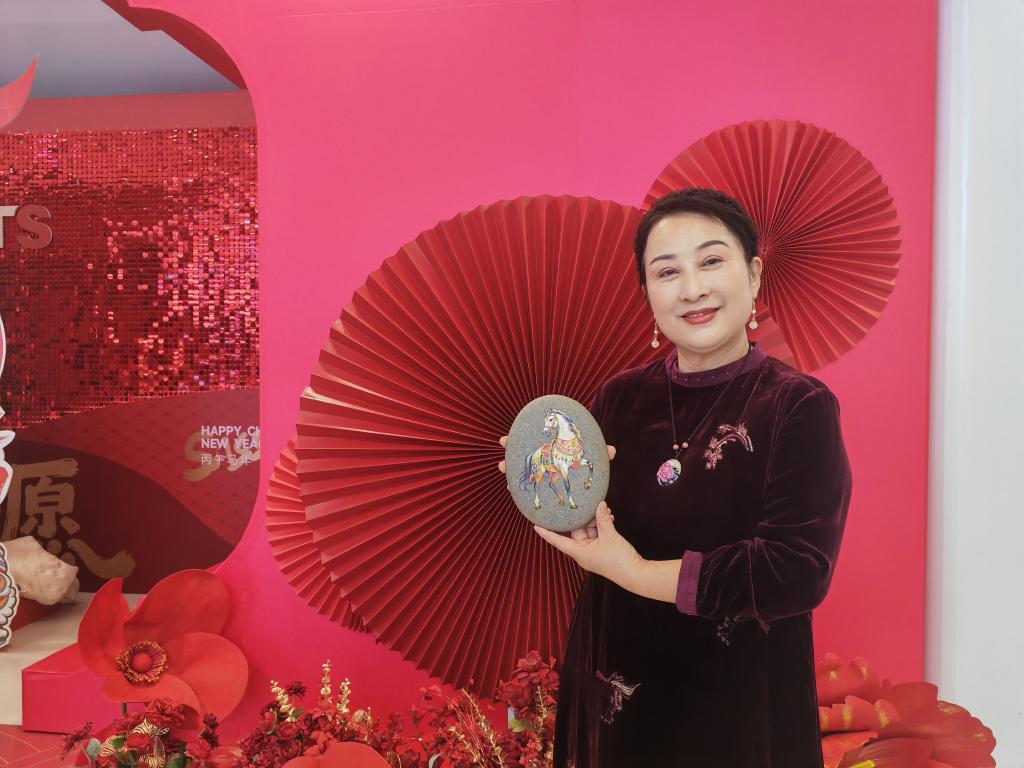
Group 1 - The core viewpoint of the articles highlights the integration of traditional cultural heritage with modern economic activities, particularly through the promotion of intangible cultural heritage (ICH) in Ningxia, which is becoming a significant driver for local economic growth and cultural preservation [2][4] - Song Xiaozhen, a representative inheritor of ICH, creatively uses Yellow River stones as canvases for her flower and bird paintings, merging local cultural elements and attracting interest and sales from the public [1][2] - The "Ningxia ICH New Year" event has been held for several years, featuring over 200 themed activities aimed at enriching the cultural life of the community during the New Year period, showcasing the region's unique cultural heritage [2][4] Group 2 - Ningxia's ICH projects, such as Huai'er and Qinqiang, not only preserve cultural attributes but also enhance economic opportunities, directly creating jobs for 12,000 people through 140 ICH workshops, with annual sales exceeding 10 billion yuan [2][4] - The event includes a market for ICH products and cultural goods, providing an immersive shopping experience, and features performances that resonate well with the audience, indicating a growing public interest in traditional crafts [2][4] - Ningxia has launched 10 new ICH food tourism routes, connecting various cultural and culinary experiences, aimed at enhancing the tourism appeal during the Spring Festival [4]
【渭南】去年98家非遗工坊实现收益4.55亿元
Shan Xi Ri Bao· 2026-02-06 00:19
Core Insights - The article highlights the successful integration of intangible cultural heritage (ICH) in Weinan City, which has generated revenue of 455 million yuan and created 3,056 job opportunities by 2025, contributing to rural revitalization and cultural prosperity [1] Group 1: Economic Impact - Weinan City has achieved a revenue of 4.55 billion yuan from 98 ICH workshops, demonstrating a positive cycle of "protection—inheritance—income generation" [1] - The ICH initiatives have led to the creation of 3,056 job opportunities, showcasing the economic benefits of cultural heritage [1] Group 2: Cultural Heritage Development - Weinan City possesses 17 national-level, 151 provincial-level, and 361 municipal-level ICH projects, indicating a well-established protection system [1] - The city has been actively promoting the overall protection of ICH through systematic surveys, catalog construction, and training of inheritors [1] Group 3: Technological Integration and Market Expansion - The city is advancing digital protection initiatives and has established a city-level expert database to support the sustainable transmission of cultural heritage [1] - Weinan is expanding the integration of ICH with tourism and education, conducting over 280 events under the "Hua Mountain Skills" initiative and launching four unique ICH workshop experience routes [1] Group 4: Future Development Plans - The Weinan Cultural and Art Center plans to deepen systematic protection and enhance digital applications and talent development, aiming for deeper integration of ICH with tourism, education, and rural revitalization [2]
绵竹非遗好物抱团“出圈”
Xin Lang Cai Jing· 2026-02-04 22:38
Core Viewpoint - The exhibition "Welcoming Spring - The Customs and New Rhythms of Mianzhu New Year Paintings" is being held from February 4 to March 20 at the China Intangible Cultural Heritage Museum in Beijing, showcasing Mianzhu New Year paintings, which are among China's four major New Year paintings and recognized as a national intangible cultural heritage [1] Group 1 - Mianzhu New Year Painting Museum has selected over 100 representative works for the exhibition, including classics and new pieces such as "Welcoming Spring," "Double Whip," "Three Stars High," and "Lady on Bicycle," highlighting the artistic lineage and innovative achievements of this traditional art form [1] - The exhibition features a special section titled "Customs of the Qing Dynasty in 'Welcoming Spring,'" which utilizes a national first-class cultural relic, the "Welcoming Spring" scroll, to vividly recreate the folk customs of welcoming spring during the Qing Dynasty, allowing visitors to experience the rich connotations of traditional festival culture [1] Group 2 - Concurrently, the "Intangible Cultural Heritage Goodies Collection" organized by Mianzhu City is also showcased, focusing on four main categories: good-looking, good-smelling, good-tasting, and good-using, featuring specialty products from 16 local intangible cultural heritage enterprises, providing an immersive experience of Mianzhu's diverse intangible cultural heritage [1]
(新春走基层)太行山上非遗闹春:针线绣马、纸上生花、宫灯迎春
Xin Lang Cai Jing· 2026-02-03 04:22
Core Viewpoint - The article highlights the vibrant traditional craftsmanship in Shanxi's Jin City, particularly focusing on the creation of unique embroidery and paper-cutting artworks to celebrate the upcoming Year of the Horse, showcasing the integration of traditional techniques with modern designs [1][3]. Group 1: Embroidery Craft - The Ma Liang Embroidery Factory in Shanxi has created notable pieces like "Ma Dao Cheng Gong" and "Han Xue Ba Ma" to celebrate the Year of the Horse, featuring dynamic horse imagery that embodies traditional charm and vitality [1][3]. - The "Ma Dao Cheng Gong" embroidery utilizes an innovative technique called "Zai Rong Xiu," developed in 2025, which involves 96 types of yarn and over 30 stitching methods, resulting in a piece that took over three months to complete with 857,000 stitches [1][3]. - The "Han Xue Ba Ma" piece combines over 30 traditional stitching methods, conveying the energy and spirit of horses in motion, aiming to inspire viewers to embrace the new year with vigor [3]. Group 2: Paper Cutting and Lanterns - The article also features Ji Xiuqin, a representative inheritor of intangible cultural heritage, who creates zodiac-themed paper-cutting artworks that enhance the festive atmosphere and convey good wishes for the new year [6]. - Ji Xiuqin's paper cuts incorporate auspicious symbols like the character for fortune and clouds, aiming to bring blessings and good luck in the Year of the Horse [6]. - Additionally, Ji Xiuqin crafts traditional lanterns using iron wire and silk, embedding auspicious patterns to convey festive joy and hopes for a prosperous new year [6].
【渭南】非遗作品亮相中国非物质文化遗产馆
Shan Xi Ri Bao· 2026-02-02 00:00
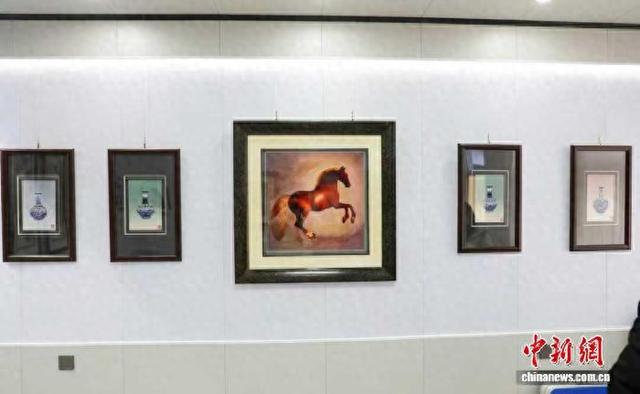
Core Viewpoint - The article highlights the participation of Weinan's intangible cultural heritage projects, including Linwei paper-cutting and Chengcheng dough flower, in national exhibitions, showcasing the unique charm of Weinan's cultural heritage [1]. Group 1: Exhibition Details - Weinan's intangible cultural heritage projects are featured in the "New Year - Year of the Horse Spring Festival Series Theme Exhibition" and "Decorating for the New Year" activities at the China Intangible Cultural Heritage Museum, running until March 20 [1]. - The Linwei paper-cutting works include pieces such as "Fortune Comes Soon," "Abundance of Fortune and Prosperity," and "Longevity and Many Blessings," created by representative inheritors Cao Jing, Gao Cunmei, and Li Yizhi, focusing on the themes of the Year of the Horse [1]. - Eight works incorporate elements like galloping horses and the character for fortune, blending traditional patterns such as peonies, pomegranates, auspicious clouds, and gourds to convey wishes for prosperity and national flourishing [1]. Group 2: Chengcheng Dough Flower - The Chengcheng dough flower exhibit features a piece titled "Big Drum Jujube Mountain," created by a team of 18 from the Hongyun Flower Cake Farmers' Professional Cooperative, taking one month to complete [1]. - The installation stands 4.5 meters tall and has a diameter of 3.6 meters, showcasing the craftsmanship and cultural significance of dough flower art [1]. Group 3: Future Plans - The Weinan Cultural Art Center (City Intangible Cultural Heritage Center) plans to explore innovative paths combining intangible cultural heritage with tourism and industry to inject new cultural momentum into local economic and social development [1].