场景大模型

Search documents
程实:智能增强+人工提质,人工智能重构经济活动基本单元
Di Yi Cai Jing· 2025-05-27 12:19
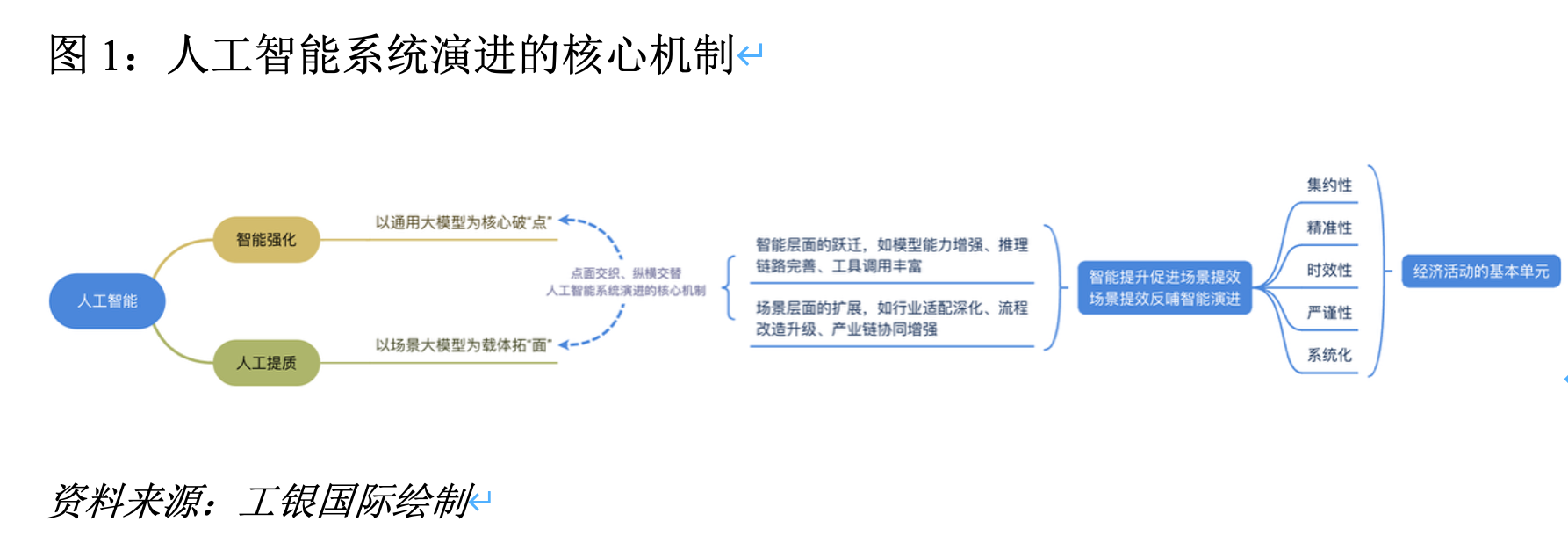
Core Insights - The evolution of artificial intelligence (AI) is characterized by a combination of "point" breakthroughs and "surface" expansions, driven by the integration of AI with the real economy through "AI+" pathways [1][6][11] - AI's future relies on both "intelligent enhancement" through general large models and "human quality improvement" via industry-specific models, reshaping economic activities and resource allocation [1][4][6] Group 1: Intelligent Enhancement - The rise of general large models (e.g., ChatGPT, Claude) marks a critical phase in AI development, providing a foundational platform for cross-domain applications and enhancing AI's capabilities [2][3] - Significant improvements in general large models, such as the transition from GPT-3.5 to GPT-4, demonstrate enhanced performance in standardized tests, indicating a leap in logical reasoning and cognitive tasks [2][3] Group 2: Human Quality Improvement - The emergence of scenario-specific large models broadens the application of AI in the real economy, emphasizing the need for deep integration of AI capabilities into specific industry tasks [4][5] - Vertical models tailored to specific industries show improved accuracy and stability in professional tasks compared to general models, as evidenced by various case studies in sectors like education and manufacturing [5][6] Group 3: Systematic Evolution - The interplay between "point" breakthroughs and "surface" expansions enhances the efficiency of economic activities, leading to a significant increase in overall productivity [7][10] - AI's role is shifting from being a mere tool to becoming an embedded capability within economic systems, fundamentally altering resource allocation and organizational structures [11][12]