城市智能体

Search documents
浪潮软件人事“地震”:核心管理层集体离任,新帅能否力挽狂澜?
Xin Lang Cai Jing· 2026-01-20 08:35
Core Insights - The sudden resignation of key executives at Inspur Software, including Chairman Zhao Shaoxiang and Vice Presidents Huang Lei and Xiao Shouming, has raised concerns about the company's future amidst significant financial losses [1][2][3] - The company reported a revenue decline of 29.61% year-on-year to 727 million yuan for the first three quarters of 2025, with a net loss of 211 million yuan, marking a 122.78% increase in losses compared to the previous year [1][3] - The third quarter alone saw a revenue drop of 36.16% to 298 million yuan, with a net loss of 63.19 million yuan, further exacerbating the company's financial challenges [1][3] Company Overview - The management shake-up is described as a comprehensive overhaul affecting decision-making, execution, and client relations, despite the company's claim that it will not impact daily operations [2][5] - New board candidate Xue Junli, aged 48, has a background in product management and market operations, but it remains to be seen if he can effectively address the strategic and execution gaps left by the departing executives [2][5] Industry Context - The challenges faced by Inspur Software reflect broader issues within the traditional software industry, particularly as tech giants like Huawei and Alibaba Cloud aggressively enter the digital government sector with standardized products [3][6] - Increased competition has led to a price war among traditional players, compounded by stretched local government budgets and elongated project payment cycles, which have intensified cash flow pressures for Inspur Software [3][6] - The company is under pressure to undergo a difficult transformation in its technology architecture, product models, and business strategies to navigate the rapidly changing industry landscape [3][6]

新华视点|AI融合·产业跃升:2025“人工智能+”行动纪实
Xin Hua She· 2025-09-11 06:44
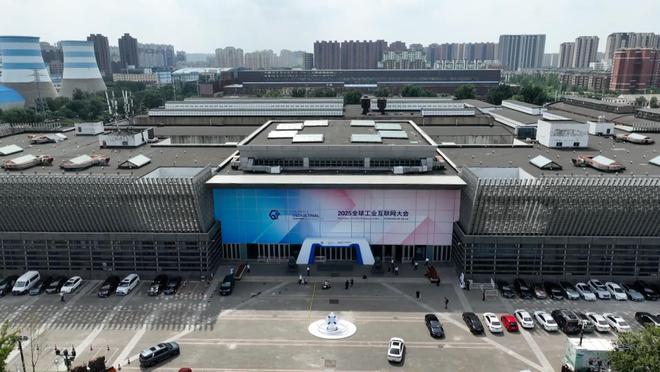
Group 1 - The State Council has issued an opinion on the in-depth implementation of the "Artificial Intelligence +" initiative, focusing on technology, industry, consumption, livelihood, governance, and global cooperation [2] - Recent international events, such as the 2025 Global Industrial Internet Conference and the 2025 Marine Cooperation Development Forum, have highlighted the integration of artificial intelligence across various fields [2][4][6] - The 2025 Global Industrial Internet Conference aims to inject strong momentum into China's new industrialization by focusing on the integration of artificial intelligence and industrial internet [4] Group 2 - The "Artificial Intelligence + Marine" theme was a major highlight at the recent marine cooperation forum, showcasing various intelligent equipment and new application scenarios in the marine sector [6][9] - Companies are collaborating on the development of embodied intelligent robots, gradually promoting these robots into corresponding life scenarios [7] - The exhibition featured a self-developed intelligent flying buoy that can avoid capsizing in water and transmit hydrological data in real-time [9] Group 3 - At the recent China International Big Data Industry Expo, over 1,300 new products, technologies, and solutions were showcased, attracting 91,000 visitors [12] - iFLYTEK launched the "Urban Intelligent Body" at the Big Data Expo, aiming to create a digital transformation foundation for cities by breaking down data barriers and enabling data flow for decision-making [11] - The deep integration of data infrastructure and artificial intelligence is reshaping various industries and driving high-quality development [14]

中国“人工智能+”加速赋能千行百业
Xin Hua She· 2025-08-30 09:24
Core Insights - The article highlights the rapid integration of "Artificial Intelligence +" across various industries in China, showcasing its transformative impact on daily life and economic activities [1][3][8] Group 1: Event Overview - The 2025 China International Big Data Industry Expo was held in Guiyang, featuring over 375 participating companies, with more than 60% of the exhibits related to "Artificial Intelligence +" [1][3] - The event showcased advanced technologies such as humanoid robots, facial recognition devices, and digital twin technology, illustrating the future of AI in everyday life [1] Group 2: Government and Industry Initiatives - The Chinese government has implemented policies like the "New Generation Artificial Intelligence Development Plan" and established a 60 billion yuan national AI fund to support the integration of AI with the economy [8] - The government aims to accelerate the "Artificial Intelligence +" initiative, focusing on six key areas: scientific technology, industrial development, consumption enhancement, public welfare, governance capability, and global cooperation [8] Group 3: Regional Developments - Guizhou, as China's first national big data comprehensive experimental zone, is actively promoting the synergy of computing power, data, applications, and industries, with nearly 100 AI model application scenarios developed across 24 key industries [7] - The province has introduced a tourism smart assistant named "Huang Xiaoxi" to enhance visitor experiences, reflecting the application of AI in the tourism sector [5] Group 4: Broader Impacts and Applications - AI's influence extends to various sectors, such as the use of intelligent inspection robots in Daqing Oilfield for pipeline maintenance and AI education terminals in Shanghai for real-time homework correction [7] - China holds 60% of the world's AI patents and has 302 generative AI services registered, with 9.4 million software developers actively contributing to technological advancements [7][8]
数字中国AI+CITY高峰论坛:AI时代城市智能体架构迭代升级
Huan Qiu Wang· 2025-04-30 05:40
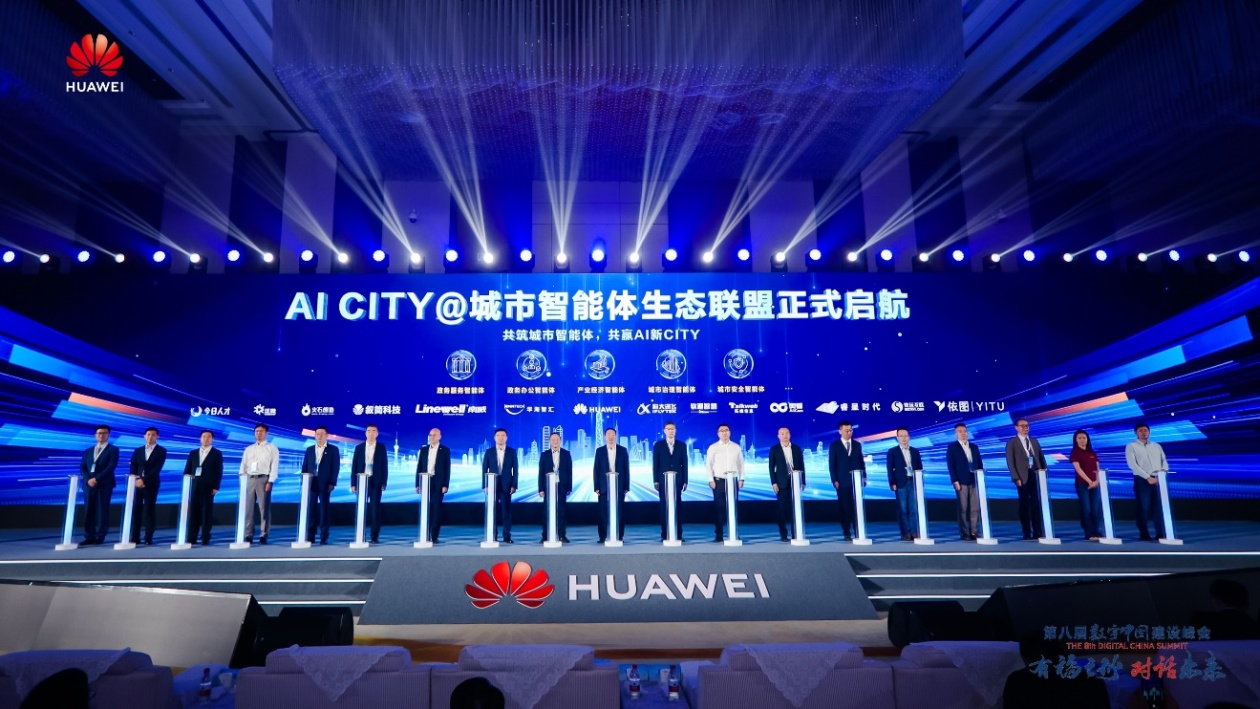
Core Viewpoint - The event "AI CITY Summit" hosted by Huawei emphasizes the importance of AI in the development of smart cities, marking a new phase in urban digital transformation and collaboration among various stakeholders [1][5][8]. Group 1: AI CITY Ecosystem - Huawei, along with partners including cities like Wuhan and Yixing, established the "AI CITY@Urban Intelligent Body Ecological Alliance" to accelerate the application of intelligent solutions in governance, urban management, and economic sectors [1]. - The alliance aims to promote the integration of AI technologies into urban infrastructure, enhancing the overall efficiency and quality of urban services [1][10]. Group 2: Digital Transformation and AI - The Deputy Director of the National Data Bureau highlighted that AI serves as a foundational capability for urban digital transformation, with data being the essential fuel for AI development [3]. - The integration of AI into various industries is seen as crucial for enhancing productivity, refining management, and significantly improving user experiences [7]. Group 3: Technological Advancements - Huawei's Senior Vice President stated that AI has evolved from a mere supportive tool to a key driver of high-quality urban development, emphasizing the need for continuous innovation in digital infrastructure [5]. - The "123N" urban intelligent body architecture is expected to facilitate the realization of AI CITY, transforming urban environments into intelligent, self-evolving systems [8]. Group 4: Successful Case Studies - Cities like Wuhan and Hong Kong shared their successful experiences in digital transformation, showcasing advancements in digital infrastructure and governance through AI applications [10]. - The establishment of the "Urban Intelligent Body Computing Power Base" in Pingtan marks a significant step towards enhancing urban intelligence and supporting the construction of AI CITY [10].