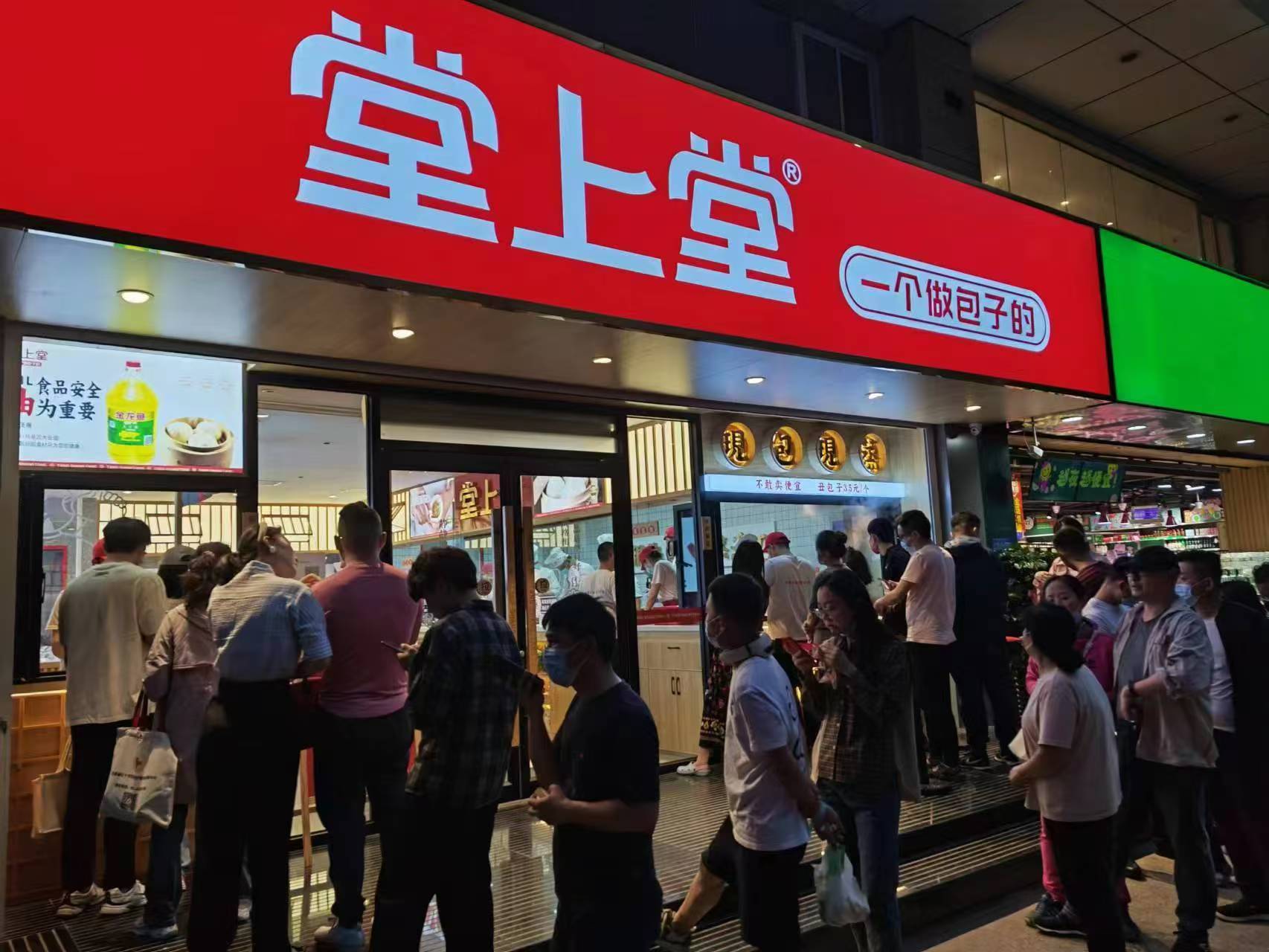
堂上堂包子

Search documents
决心开放联营合伙制,现制包子连锁品牌「堂上堂」完成数百万元Pre-A轮融资丨早起看早期
36氪· 2025-07-31 00:26
Core Insights - The core viewpoint of the article is that the baozi chain brand "Tangshangtang" is expanding its business model by focusing on quality ingredients and a unique operational strategy, which includes a shift from direct management to a partnership model for store expansion [1][4]. Group 1: Business Model and Expansion - Tangshangtang has completed a Pre-A round financing of several million yuan, which will be used for supply chain development and team building [1]. - The brand plans to open 100 new stores in Hefei and prioritize expansion in surrounding provinces like Jiangsu and Hubei [8]. - The company has decided to adopt a partnership model for store operations, which allows for better quality control compared to traditional franchise models [4]. Group 2: Product Offering and Market Position - Tangshangtang's baozi are priced higher than average, with pork buns at 3.5 yuan and stir-fried beef buns at 6 yuan, yet they have successfully positioned themselves as an all-day dining option [3]. - The company uses high-quality ingredients, including first-class fresh pork from listed companies and premium seasonings, which differentiates them from traditional baozi shops [3][4]. - The current sales distribution shows that breakfast accounts for 50%, lunch 10%, and dinner 40% of total sales, indicating a successful penetration into dinner service [3][10]. Group 3: Operational Efficiency and Supply Chain - The company has established a new supply chain factory in Hefei, which will support the needs of 200 stores, streamlining the preparation of ingredients [7]. - The investment cost for a small dining store is around 300,000 yuan, with an average monthly revenue of 200,000 yuan [5]. - The operational model includes three types of store layouts, with a focus on small dining spaces that enhance customer experience while maintaining quality [5].


36氪首发 | 决心开放联营合伙制,现制包子连锁品牌「堂上堂」完成数百万元Pre-A轮融资
3 6 Ke· 2025-07-28 02:30
Core Insights - The core viewpoint of the article is that the baozi chain brand "Tangshangtang" has successfully completed a multi-million Pre-A round financing, which will be used for supply chain development and talent team formation, indicating strong growth potential in the fast-casual dining sector [1] Company Overview - Tangshangtang has opened over 20 stores in Hefei, Anhui, and is the only baozi brand to be listed on the must-eat list for three consecutive years on Dazhong Dianping, as well as being a popular choice on Meituan [1] - The brand offers a simplified menu with 9 baozi SKUs, emphasizing fresh, made-to-order products with a 1:1 meat-to-dough ratio, and sells baozi within 2 hours of being made [1][3] Pricing and Market Position - The retail price of Tangshangtang's baozi is relatively high, with pork baozi priced at 3.5 yuan each and stir-fried beef baozi at 6 yuan, which challenges the traditional perception of baozi as a low-cost breakfast item [3] - The brand has successfully expanded its market by offering baozi for all meal times, with breakfast accounting for 50%, lunch 10%, and dinner 40% of sales, often resulting in queues during dinner hours [3] Quality and Supply Chain - Unlike traditional baozi shops that use frozen or minced meat, Tangshangtang uses first-class chilled meat from listed companies and high-quality seasonings from well-known brands [4] - The company has established a new supply chain factory in Hefei, which will support the expansion from 30 to 200 stores, ensuring quality control and efficient production [4][8] Business Model and Expansion Strategy - Tangshangtang is transitioning from a direct operation model to a partnership model to manage costs and maintain quality, as the high labor requirements for fresh baozi production make traditional franchising challenging [4][5] - The company plans to open 100 new stores in Hefei and subsequently expand into surrounding provinces like Jiangsu and Hubei, leveraging the broad appeal of baozi across different regions [9] Future Outlook - The company is focusing on small dining formats with an investment cost of around 300,000 yuan per store, aiming for monthly revenues of approximately 200,000 yuan [6] - The management believes that the baozi market has significant growth potential, especially given its versatility compared to other products like dumplings, which require dining in [9]