外卖餐盒

Search documents
湖北省市场监管局发布外卖餐盒产品质量安全消费提示
Zhong Guo Zhi Liang Xin Wen Wang· 2026-01-30 07:47
附原文: 二、结合使用场景选择材质,重视结构与密封性能。不同材质的餐盒适用条件各异,消费者应根据所盛装食物的特性(如温度、酸碱度、含油量等)合理 选择材料无毒、无害,符合食品安全标准的产品。例如,PP材质耐高温,适合盛装热食;PS材质不宜盛装酸性或油脂食物;盛装汤汁类食物时应优先选用密封 性好、耐温性强的餐盒等。选购时应注意检查盒盖与盒身是否扣合紧密,有无明显缝隙、裂纹或毛刺,避免因密封不良导致渗漏或污染。建议首次使用前进 行清洗与检查,确保产品完好、清洁。 外卖餐盒产品质量安全消费提示 三、严格按照说明使用,防范误用风险。一次性餐盒不宜重复使用,尤其是塑料类产品易因老化而滋生细菌或发生迁移。使用微波炉加热前,必须确认 餐盒是否标明"可微波",并严格按照说明操作(如去除盒盖)。特别注意:铝箔餐盒、普通纸质餐盒等不可直接用于微波炉,以免引发火灾或有害物质释放。 外卖餐盒作为中国在线外卖产业链中的重要一环,是保障食品从厨房安全抵达消费者手中的关键载体。市场上主流的外卖餐盒按材质可分为数类:性能 均衡的塑料类(如PP、PS)、便于印刷的纸质类、擅长保温的铝箔类、环境友好的生物降解类(如PLA)及天然材质的植物纤维类 ...

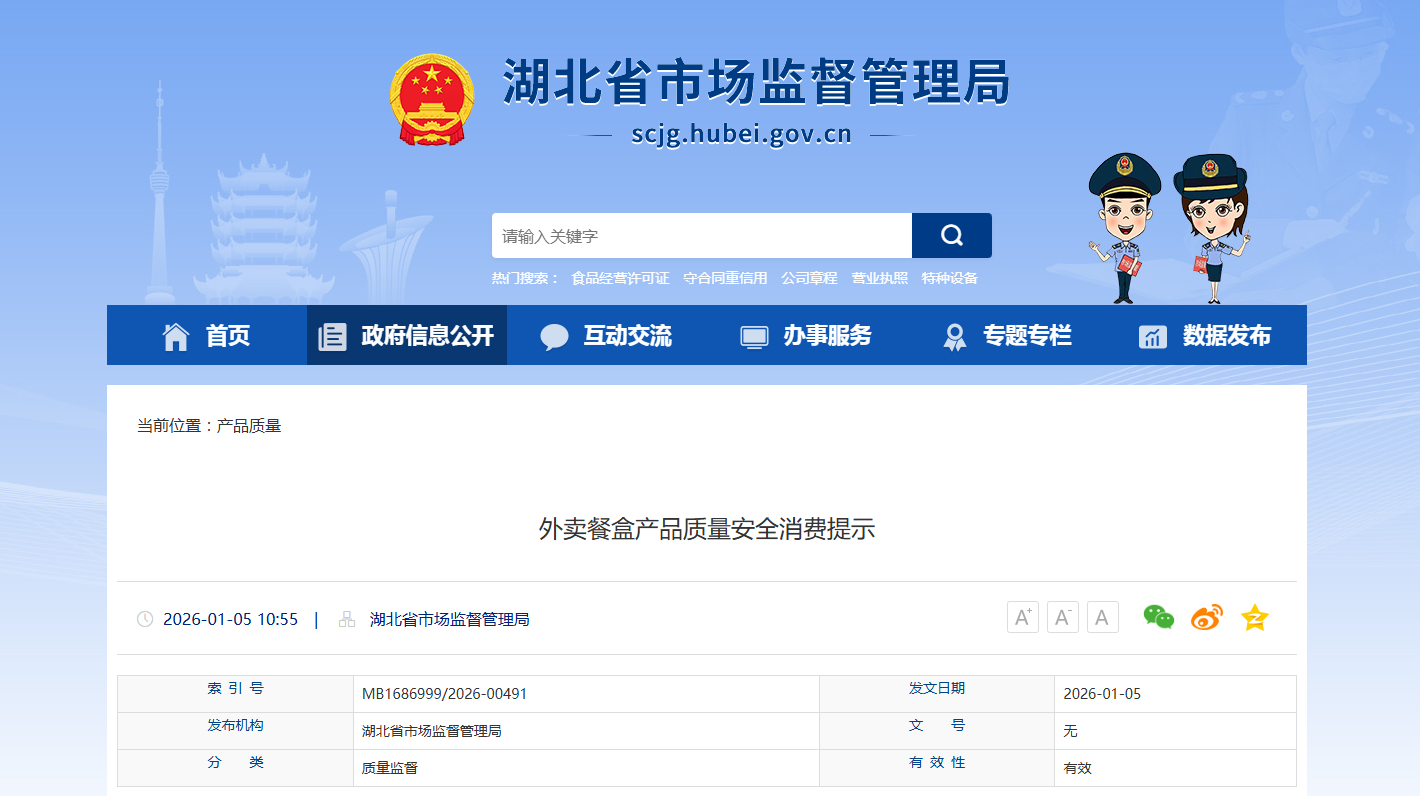
奶盒回收“走进”深圳校园 城市发展向“绿”转型
Sou Hu Cai Jing· 2025-12-07 14:59
Core Viewpoint - The article emphasizes the importance of green and low-carbon development in urban renewal, highlighting the implementation of waste classification in cities across China since 2019, with a specific focus on Shenzhen's initiatives in recycling milk cartons and promoting environmental awareness among students [1]. Group 1: Waste Classification Initiatives - The city of Shenzhen has implemented a milk carton recycling program in over 1800 out of 2200 primary and secondary schools, which has led to the recycling of approximately 763 tons of milk cartons last year, resulting in a carbon reduction of 1232 tons through carbon trading [10]. - The recycling process involves students collecting, cleaning, and preparing milk cartons for recycling, which fosters environmental consciousness and financial literacy among them [3][6][8]. Group 2: Collaboration and Expansion - The Shenzhen Municipal Waste Classification Management Center has identified challenges in recycling takeout containers in office buildings, leading to partnerships with delivery platforms and property management to enhance the collection of recyclable materials [12]. - The overall waste classification system is expanding beyond schools, indicating a broader commitment to improving recycling rates and reducing waste in urban environments [10].