
外晓通

Search documents
数智赋能外语学科革新 全国百余位专家聚鲁献策创新发展
Xin Lang Cai Jing· 2025-12-27 13:35
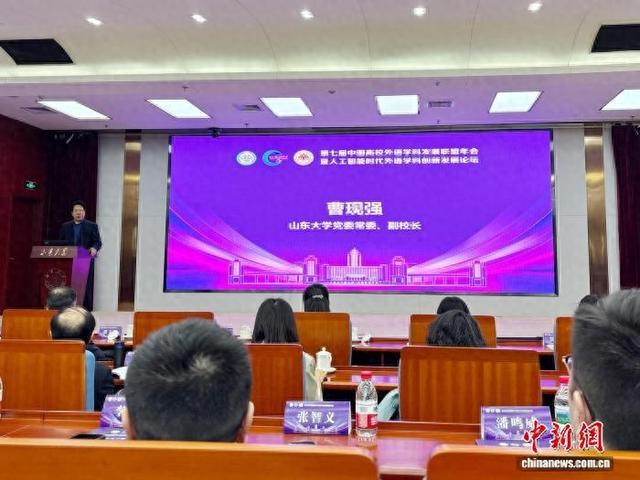
作为会议主办方,上海外国语大学党委书记尹冬梅回顾了中国高校外语学科发展联盟的发展历程。她指 出,高校应深化数智赋能改革、强化跨学科协同、创新教材设计思路、推动课程设计与教学模式创新、 夯实外语教师的专业素养。"希望通过本次大会,共同探索中国特色外语学科建设的新理论、新方法、 新路径。" 山东大学 党委常委、副校长曹现强在开幕式上致辞。高艺芯摄 上海外国 中新网济南12月27日电(高艺芯)第七届中国高校外语学科发展联盟年会12月27日在山东大学中心校区开 幕。来自全国近百所知名院校的200余位外语学科专家汇聚一堂,围绕人工智能时代外语学科的创新发 展路径展开深入探讨。 山东大学党委常委、副校长曹现强在致辞中表示,近年来,学校顺应人工智能发展趋势,深化新文科建 设,创新"外语+"复合培养模式,现已开设英法、英政双学位项目,建设多语数字实验室、语言与心理 健康研究中心。未来,学校将打造"外语+AI+区域国别"发展路径、创新人才培养模式,推动科研成果 向现实生产力转化。 语大学党委书记尹冬梅在开幕式上致辞。高艺芯摄 在主旨发言中,尹冬梅指出,上海外国语大学坚持守正创新、数智赋能,着力处理好"变"与"不 变"、"内"与 ...

瞭望 | AI进高校 治理需同步
Xin Hua She· 2025-07-01 08:03
Core Viewpoint - The integration of AI technologies, specifically DeepSeek, into higher education is transforming teaching, research, and management practices, while also presenting challenges related to academic integrity and data security [1][3][4]. Group 1: AI Empowerment in Education - Multiple universities, including Beihang University and Nankai University, have adopted DeepSeek to enhance teaching, research, and management, creating personalized intelligent learning systems [3][4]. - AI applications in education include academic planning, knowledge Q&A, concept explanation, writing guidance, and assignment feedback, which students find convenient and innovative [4][5]. - AI is seen as a tool to improve educational quality and modernize management practices, enhancing collaboration and decision-making within universities [5]. Group 2: Risks Associated with AI Implementation - The use of AI in academic settings raises concerns about academic misconduct, as students may misuse AI tools for tasks like essay writing, leading to a decline in critical thinking and innovation [6][9]. - Data security risks are highlighted, with concerns about the potential for sensitive information to be compromised if not properly managed [7][12]. - The reliability of AI-generated content is questioned, as instances of fabricated references have been reported, indicating a need for rigorous verification of AI outputs [6][8]. Group 3: Governance and Regulation - Institutions are encouraged to establish academic integrity detection platforms to combat AI-related misconduct, with varying levels of technology adoption across universities [11]. - There is a call for the development of comprehensive data security regulations to protect sensitive information in educational contexts [12]. - Universities should provide guidance on the appropriate use of AI tools, promoting a balance between technology and human capability, and fostering independent thinking among students [13].
