外汇套利交易

Search documents
美元走弱助推外汇套利交易开门红 华尔街押注新兴货币涨势延续
Zhi Tong Cai Jing· 2026-01-26 15:45
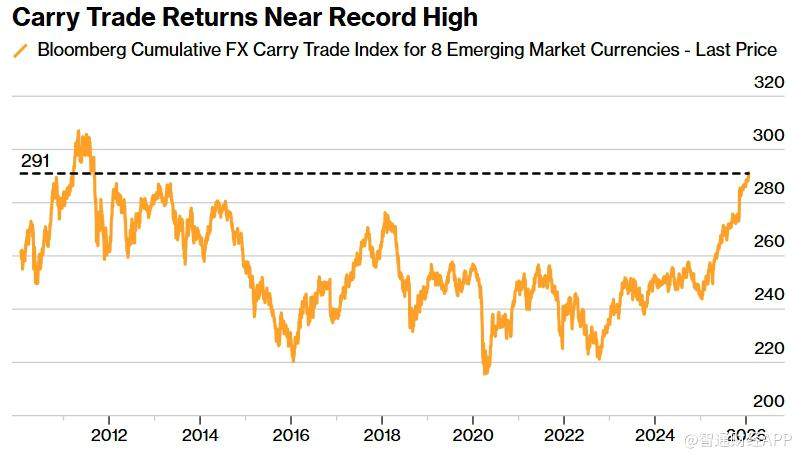
Core Viewpoint - Investors have achieved significant returns through "arbitrage trading" by selling dollars and buying high-yield emerging market currencies, with expectations for continued gains amid ongoing pressure on the dollar from Trump-era policies [1] Group 1: Market Performance - The index tracking returns from eight emerging market currencies has risen by 1.3% year-to-date [1] - As of Monday, the index reached 291 points, just about 5% shy of its historical high set in 2011 [4] - The Brazilian real has accumulated a return of 4.3% since the beginning of 2026, building on a 23.5% increase from the previous year [4] Group 2: Economic Factors - The attractiveness of arbitrage trading stems from both currency appreciation and the high real interest rates in developing countries [4] - Many emerging market central banks are cautiously advancing easing policies, maintaining a high interest rate environment despite signs of slowing inflation [4] Group 3: Investment Strategies - Morgan Stanley's emerging markets strategy head, James Lord, is optimistic about currencies from countries with tight monetary policies and high central bank credibility, including the Brazilian real, Turkish lira, and Czech koruna [4] - Citigroup strategists also recommend going long on the Brazilian real against the dollar and see potential in the Turkish lira [4] Group 4: Risks and Considerations - Not all emerging market currencies are benefiting; the Indian rupee, which was the worst performer last year, has continued to decline, down approximately 2% in arbitrage returns this year [4] - The Indonesian rupiah has also put investors at a loss [4] - Historical data shows that the strongest year for arbitrage trading was in 2003, with a return of 25%, but a repeat of such a "harvest year" requires a sustained weakening of the dollar and stable emerging market currency fluctuations [5]