
大容量储能系统

Search documents
四川内江首个电网侧独立储能电站投运 助力川渝能源结构优化升级
Yang Shi Wang· 2025-12-26 08:36
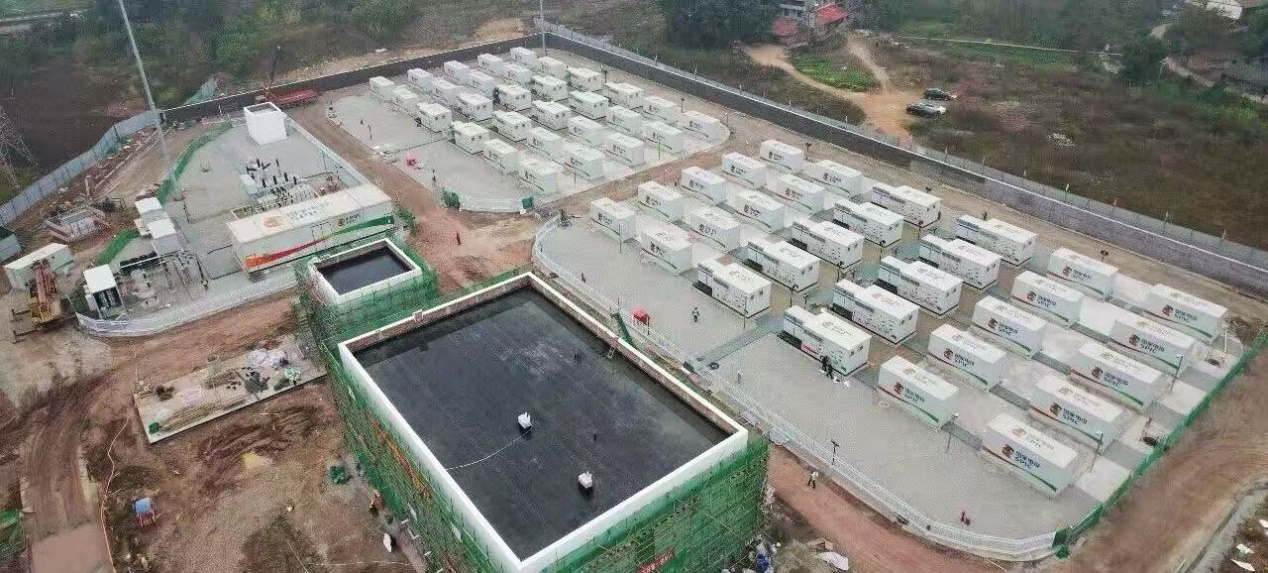
Core Insights - The first batch of new energy storage demonstration projects in Sichuan Province has successfully launched the 100MW/200MWh vanadium-lithium energy storage station in Neijiang Economic Development Zone, marking it as the first independent energy storage station on the grid side in Neijiang [1] - This project, invested and constructed by State Power Investment Corporation, is a key component of the "Chuan-Yu Energy Integration Emergency Peak Regulation Base" [1] Group 1 - The energy storage project utilizes a large-capacity storage system with advantages such as high safety, long cycle life, high efficiency, and economic viability, making it well-suited for peak regulation and emergency response needs on the grid side [1] - The equipment has undergone multiple rigorous tests to ensure stable operation under complex working conditions, providing solid infrastructure support for optimizing the energy structure and ensuring power supply in the Chuan-Yu region [1] Group 2 - To ensure high standards for project implementation, the Trina Storage project team optimized the energy storage system configuration based on regional grid characteristics and climate conditions [3] - A dedicated service team was established to respond to logistics supply, installation, and debugging needs throughout the project lifecycle, promoting seamless project construction with a "customized and full-service" approach [3] - Once operational, the project is expected to achieve an annual discharge of 36.5 million kWh, equivalent to the annual electricity supply for 20,000 urban households, significantly enhancing the peak regulation capacity of the Sichuan power grid and the level of clean energy consumption [3]


政策红利“退潮”后,储能产业怎么走
Ke Ji Ri Bao· 2025-05-13 00:56
Core Viewpoint - The end of the mandatory energy storage policy marks a significant shift in the energy storage industry, prompting companies to adapt to market-driven dynamics rather than relying on policy incentives [1][4]. Market Transition - The new policy allows for a market-driven approach, with existing projects benefiting from a price guarantee while new projects will determine prices through competition [2][3]. - A "rush to install" is observed as companies expedite project completions to secure expected returns before the policy changes take full effect [2]. - Predictions indicate that China's new energy storage installations may exceed 30 GW this year, with cumulative capacity projected to reach between 236.1 GW and 291.2 GW by 2030 under different scenarios [3]. Technological Innovation - The removal of mandatory energy storage requirements necessitates that companies demonstrate their value in market-driven scenarios, focusing on technological advancements [4]. - Significant advancements in energy storage systems are evident, with standard container capacities exceeding 6 MWh, and some high-end products reaching over 9 MWh, doubling the capacity compared to 2023 [5]. - Innovations in battery cell technology, such as the introduction of 700 Ah long-cycle cells, enhance system efficiency and lifespan, with some systems achieving over 15,000 cycles [5][6]. AI Integration - The integration of AI into energy storage systems is emerging as a critical trend, with companies showcasing AI-driven management systems at industry events [7][8]. - AI technologies are enhancing operational efficiency, predictive maintenance, and safety monitoring, transforming energy storage systems into intelligent entities capable of autonomous decision-making [7][8]. - Challenges remain in data processing capabilities, which hinder the full potential of AI applications in the energy storage sector [8].