大模型服务平台

Search documents
“AI独角兽”无问芯穹夏立雪:从科学家到企业家,如何跨越“三重门”?
混沌学园· 2026-03-13 09:08
Core Viewpoint - The article discusses the evolution of top technology workers into powerful entrepreneurs in the AI-driven era, highlighting the unique advantages and challenges faced by scientists transitioning into entrepreneurship [2][6][18]. Group 1: Company Overview - Wunwen Xinqiong, founded in 2023, is an AI-native infrastructure company aimed at providing high-efficiency collaborative deployment and intelligent routing between various large model algorithms and chip hardware [9][10]. - The company aspires to create a universal operating system akin to Windows or Android, enabling seamless operation across diverse models and hardware in the Chinese market [9][10]. - Wunwen Xinqiong has achieved over 100 million in revenue within a short span, indicating a robust commercial progress and a solid technological foundation [11][13]. Group 2: Entrepreneurial Insights - The transition from scientist to entrepreneur involves recognizing the inseparable link between AI development and industry needs, as pure research often limits exposure to real-world applications [17][18]. - The article emphasizes the importance of systematic thinking developed through scientific training, which aids in solving complex problems in entrepreneurship [19][21]. - Critical thinking and perseverance are highlighted as essential traits for entrepreneurs, derived from the rigorous demands of scientific research [21][22]. Group 3: Challenges in Entrepreneurship - Key challenges identified include the transition from technology to product, shifting from supply-side to demand-side thinking, and balancing ideals with market realities [27][38]. - The first challenge involves moving from theoretical research (papers) to practical engineering and ultimately to marketable products, which requires addressing numerous technical issues [29][31]. - The second challenge is understanding customer needs rather than focusing solely on technological capabilities, which can lead to misalignment with market demands [34][37]. - The third challenge is the necessity to establish a market presence and influence before pursuing unique value propositions, highlighting the dual journey of meeting immediate market needs while striving for long-term innovation [40][41].


政观长三角|科创聚势,风起临平
Xin Lang Cai Jing· 2025-06-24 07:00
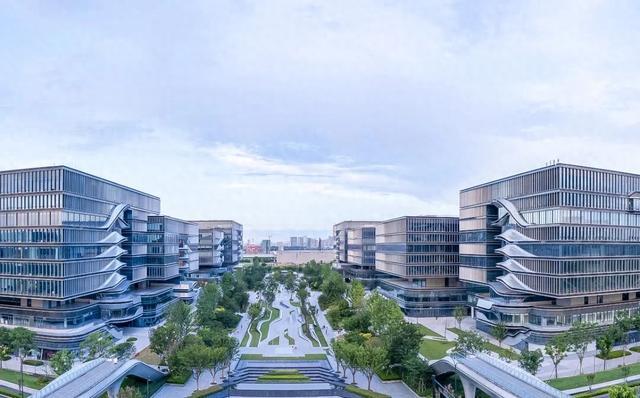
Core Viewpoint - Linping District in Hangzhou is transforming into a hub for technological innovation and advanced manufacturing, aiming to become a model for common prosperity and a highland for digital transformation in the Yangtze River Delta region [1][14]. Group 1: Technological Innovation - Linping has seen significant growth in technological innovation, with 24 enterprises recognized as provincial-level R&D institutions, including 5 key enterprise research institutes, ranking first in the province [1]. - The district's R&D investment accounted for 3.79% of its GDP, with 1,498 new invention patents filed, marking a 60.6% increase [15]. - Linping has added 3 new "little giant" enterprises and 12 national-level specialized "little giant" enterprises [1][15]. Group 2: Industry Development - The China (Hangzhou) Computing Power Town, the first of its kind in the country, has attracted over 2,400 companies across various sectors, including AI algorithms, chip design, and software services [4]. - The Computing Power Town hosts 50 national high-tech enterprises and 127 provincial technology-based SMEs, benefiting from the surge in artificial intelligence [4]. - The establishment of the Hangzhou Data Element Operation Center in the Computing Power Town aims to create a collaborative innovation center for data elements [11]. Group 3: Policy Support and Ecosystem - Linping offers a comprehensive policy support system for enterprises, including rent reductions, R&D subsidies, and talent introduction, facilitating growth from startup to maturity [8]. - The district has implemented a one-stop service center that provides 100% coverage for enterprise needs, including talent recruitment and financial connections [11]. - Companies like Mude Micro-Nano and Zhizhen Technology have benefited from local policies, enabling them to innovate and reduce operational costs significantly [8][10]. Group 4: Strategic Location - Linping serves as a natural "bridgehead" for Hangzhou's integration with Shanghai and the Yangtze River Delta, supported by a well-developed transportation network [12]. - The district is strategically located at the intersection of major innovation corridors, enhancing its role in regional economic development [12][14]. Group 5: Future Outlook - Linping is expected to continue attracting innovative enterprises, with over 100 companies in the artificial intelligence sector already established [14]. - The district's focus on digital economy and intelligent manufacturing positions it as a key player in the future industrial landscape of Hangzhou and the Yangtze River Delta [16].