大熊猫观赏服务

Search documents
大熊猫龙凤胎将首次亮相 “芊然”文静 “芊逸”活泼
Jie Fang Ri Bao· 2026-02-11 01:43
Core Viewpoint - The Shanghai Wild Animal Park announced that the giant panda "Qianjin" and her twin cubs "Qianran" and "Qianyi" will officially meet the public starting February 15, showcasing the successful breeding of giant pandas in the park [1] Group 1: Panda Birth and Growth - "Qianjin" gave birth to her first cubs, a female weighing 200 grams and a male weighing 160 grams, on August 22 last year, marking the second pair of giant panda twins born at the Shanghai Wild Animal Park [1] - The twin cubs are the first "second generation" giant pandas born in Shanghai, following the previous twin birth of "Yuyou" in October 2016 [1] - The cubs are reported to be healthy, active, and have developed skills such as climbing and running independently [1] Group 2: Public Interaction and Visitor Guidelines - The family of pandas will be displayed daily from 10 AM to 4 PM, with visitors allowed in batches and a time limit of 3 minutes per group in the exhibit area [3] - The park encourages visitors to check announcements in advance and to follow on-site guidance to ensure a safe and respectful environment for the animals [3]
光阴的故事|从乡音呼唤到一餐一饭 他们与大熊猫温柔相伴
Yang Shi Wang· 2026-02-08 18:30
Core Viewpoint - The arrival of five giant pandas from Chengdu to Fuzhou Panda World marks a significant event, highlighting the dedication of caretakers and the emotional connection between the pandas and the local community [1][6][12] Group 1: Caretaker Interaction - Caretakers are learning Sichuan dialect to communicate effectively with the pandas, which helps in building trust and easing their transition to the new environment [2][3] - The daily responsibilities of caretakers include meticulous tasks such as cleaning, feeding, and monitoring the pandas' health through their waste [3][4][5] Group 2: Health Monitoring - Caretakers weigh and analyze the pandas' feces daily to assess their health and adjust their diet accordingly, ensuring optimal nutrition [4][5] - The quality of bamboo, a primary food source, is crucial for the pandas' health, and caretakers adapt their feeding strategies based on the pandas' preferences [5] Group 3: Community Engagement - The reopening of Fuzhou Panda World has attracted thousands of visitors, many of whom are returning to relive childhood memories associated with the pandas [7][8] - Long-time volunteers and local residents, including retired medical professionals, have a deep-rooted connection with the pandas, showcasing the community's long-standing affection for these animals [9][11] Group 4: Cultural Significance - The pandas serve as a living link to the community's history, with many individuals visiting to reconnect with their past experiences [8][10] - The emotional narratives surrounding the pandas reflect a broader cultural significance, emphasizing the bond between the city and its beloved animals [12]
“直到大熊猫离开,才体会到失去有多可怕”,日媒关注:“大熊猫失落症”或冲击当地经济
Huan Qiu Wang· 2026-01-29 10:18
Core Viewpoint - The return of giant pandas "Xiaoxiao" and "Leilei" from Ueno Zoo in Japan to China is expected to negatively impact the local economy in Ueno, which has long regarded these pandas as a significant attraction [1][5]. Economic Impact - The presence of giant pandas directly influences the local economy, as evidenced by past experiences when the absence of pandas led to a significant drop in visitor numbers and economic activity [5]. - After the death of panda "Lingling" in April 2008, Ueno Zoo experienced a three-year period without pandas, resulting in a drastic decline in visitor numbers to 2.89 million in 2008, a decrease of approximately 590,000 from the previous year [5]. - Although there was a slight recovery in 2009, visitor numbers fell again to about 2.67 million in 2010, leading to a cold atmosphere in the local economy [5]. - The situation improved in 2011 when pandas "Bili" and "Xian Nu" were brought to the zoo, resulting in a rapid increase in visitor numbers to approximately 4.7 million that year, revitalizing the Ueno area [5]. Future Considerations - Experts predict that the absence of giant pandas will lead to a "panda loss syndrome," impacting the local economy in the short term, and emphasize the need for long-term planning for the area [5]. - The Japanese government has expressed a continued willingness to welcome Japanese citizens to visit pandas in China, indicating ongoing interest in panda tourism [5].

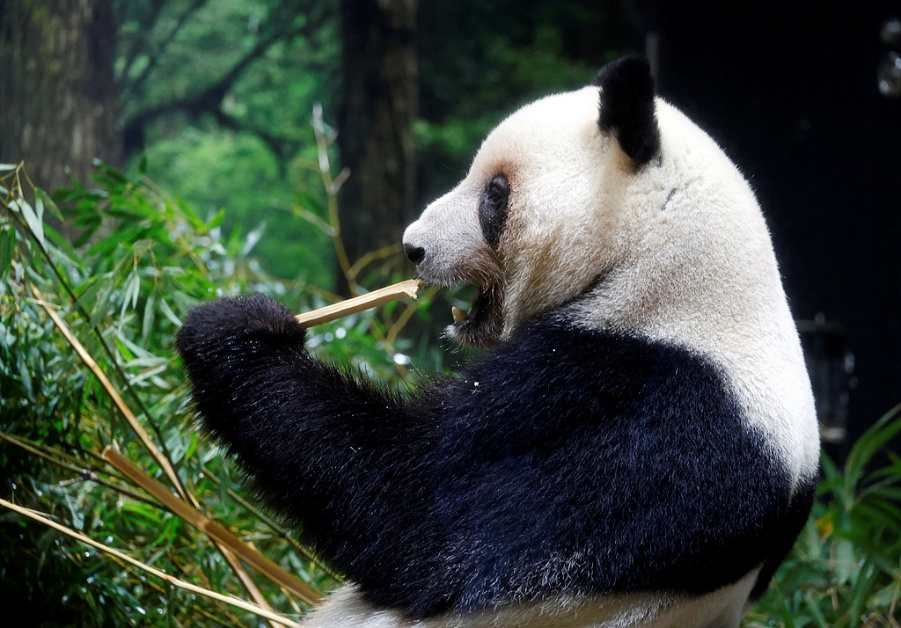
2只旅日大熊猫今日回国 日本将迎无熊猫时代
Xin Lang Cai Jing· 2026-01-27 00:10
Core Viewpoint - The return of two giant pandas, "Xiaoxiao" and "Leilei," from Japan to China marks the end of an era for Japan, which will have no pandas for the first time since 1972, impacting both the economy and public sentiment [1] Economic Impact - The two pandas were estimated to generate an economic benefit of 30.8 billion yen (approximately 1.5 billion RMB) annually for Japan [1] - This economic contribution highlights the significant financial value that giant pandas bring to their host countries [1] Emotional and Cultural Significance - Beyond economic benefits, the presence of giant pandas provided emotional comfort and joy to the Japanese public, which cannot be quantified in monetary terms [1]
旅法大熊猫“欢欢”“圆仔”回到成都熊猫基地 进入隔离阶段
Yang Shi Xin Wen· 2025-11-26 13:59
Core Viewpoint - The two giant pandas, "Huan Huan" and "Yuan Zai," have been transferred back to the Chengdu Research Base of Giant Panda Breeding after living in France for 13 years, initiating a mandatory quarantine period of at least one month before they can be displayed to the public [1]. Group 1 - "Huan Huan" (female) and "Yuan Zai" (male) were born in August and September 2008, respectively [1]. - They were sent to France's Beauval Zoo in January 2012 under a cooperation agreement between China and France [1]. - "Huan Huan" successfully gave birth to "Yuan Meng" in August 2017 and to a pair of twins, "Huan Li Li" and "Yuan Du Du," in August 2021, who will remain in France until January 2027 [1]. Group 2 - "Yuan Meng" returned to the Chengdu Research Base in July 2023 [1]. - After the quarantine period for "Huan Huan" and "Yuan Zai" is completed, visitors will have the opportunity to see the family together at the base [1].
这只刚满月的大熊猫宝宝是个“西北娃”
Xin Hua Wang· 2025-10-20 14:37
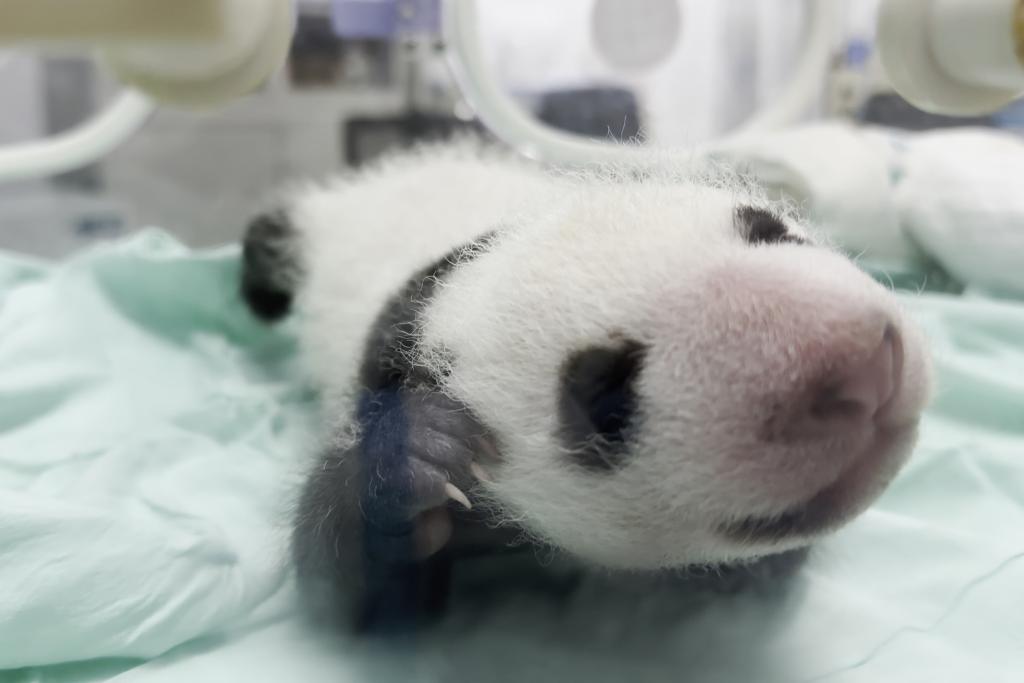
Core Points - The male giant panda cub born at Lanzhou Wildlife Zoo on September 19 has reached its one-month milestone [1] - The cub was born weighing over 100 grams and has now grown to over 1200 grams [8] - This is the first cub for the female panda "Manlan," and the zoo has established a professional team for 24-hour monitoring [2][4] Group 1 - The cub was born in Lanzhou, Gansu Province, and is described as a "Northwest baby" [1] - The cub's physical features are developing, with its characteristic black eye patches and black vest starting to appear [1] - The zoo currently has five giant pandas following the birth of the cub, with four pandas moving into a newly constructed panda house in April 2024 [2] Group 2 - "Manlan" is the only female giant panda at the Lanzhou Wildlife Zoo, and she has received comprehensive guidance from the China Giant Panda Protection and Research Center since her pregnancy [4] - The cub is currently living in an incubator, and the zoo is helping it gradually adapt to its environment [2] - Gansu Province is a major habitat for wild giant pandas, with 132 wild pandas recorded in the fourth national survey [8]
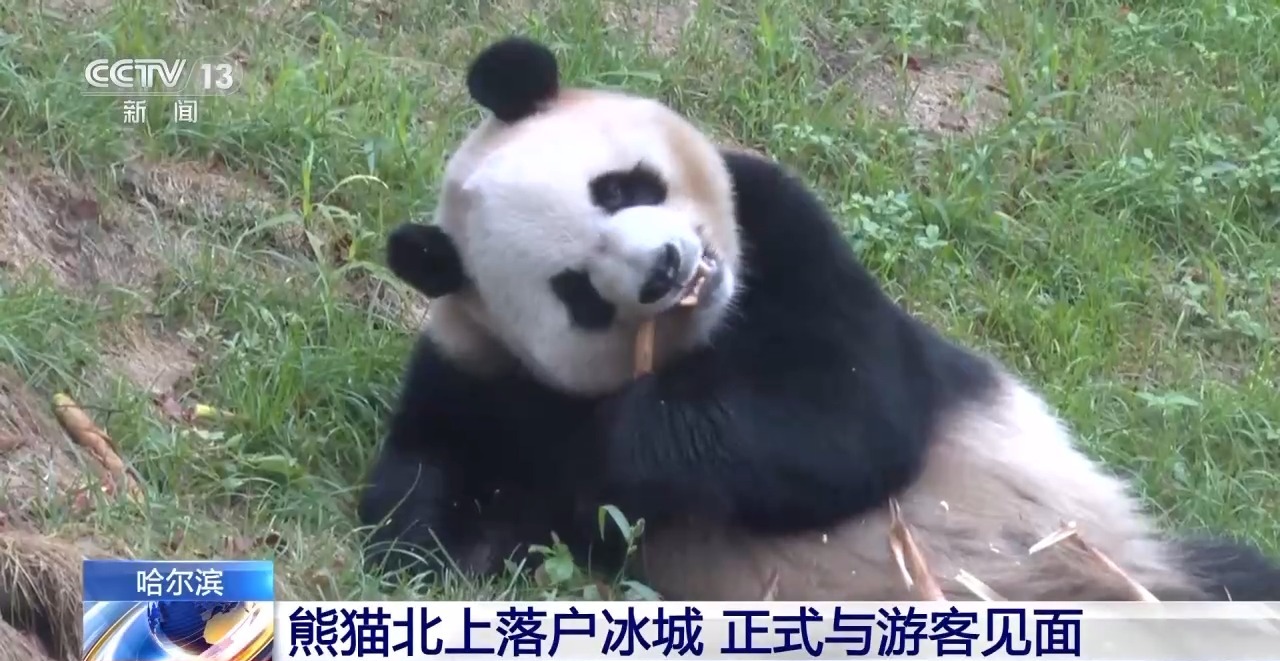
冰城迎萌主 大熊猫“芝士”“芝麻”正式营业啦
Yang Shi Wang· 2025-08-23 16:45
Group 1 - The Harbin Sun Island Panda Pavilion officially opened on the 23rd, showcasing the twin pandas "Cheese" and "Sesame" to the public [1][2] - "Cheese" and "Sesame" are 8 years old, representing the "young adult" stage of giant pandas, with distinct physical characteristics [2][4] - The pandas are lively and enjoy climbing trees and playing in water, indicating their active nature [4] Group 2 - To address the local bamboo supply issue, the Sun Island Scenic Area established a stable air transport supply chain for bamboo shoots and incorporated additional food according to the Chengdu base's formula [6] - A professional team, including dedicated caretakers and veterinarians, has been formed to oversee the daily care and health of the pandas [6] - The Sun Island Panda Pavilion has been designed to simulate the pandas' natural habitat, ensuring a comfortable living environment [7][8] Group 3 - The pavilion incorporates a "habitat replication" design concept, taking into account Harbin's temperate continental monsoon climate to create a suitable environment for the pandas [8] - An air circulation and filtration system has been implemented to maintain air quality, while lighting conditions are controlled to mimic natural sunlight and moonlight, reducing stress on the pandas [10] - These measures have created a comprehensive environmental control system, verified by experts from the National Forestry and Grassland Administration, to ensure the pandas' comfort in Harbin's cold climate [10]