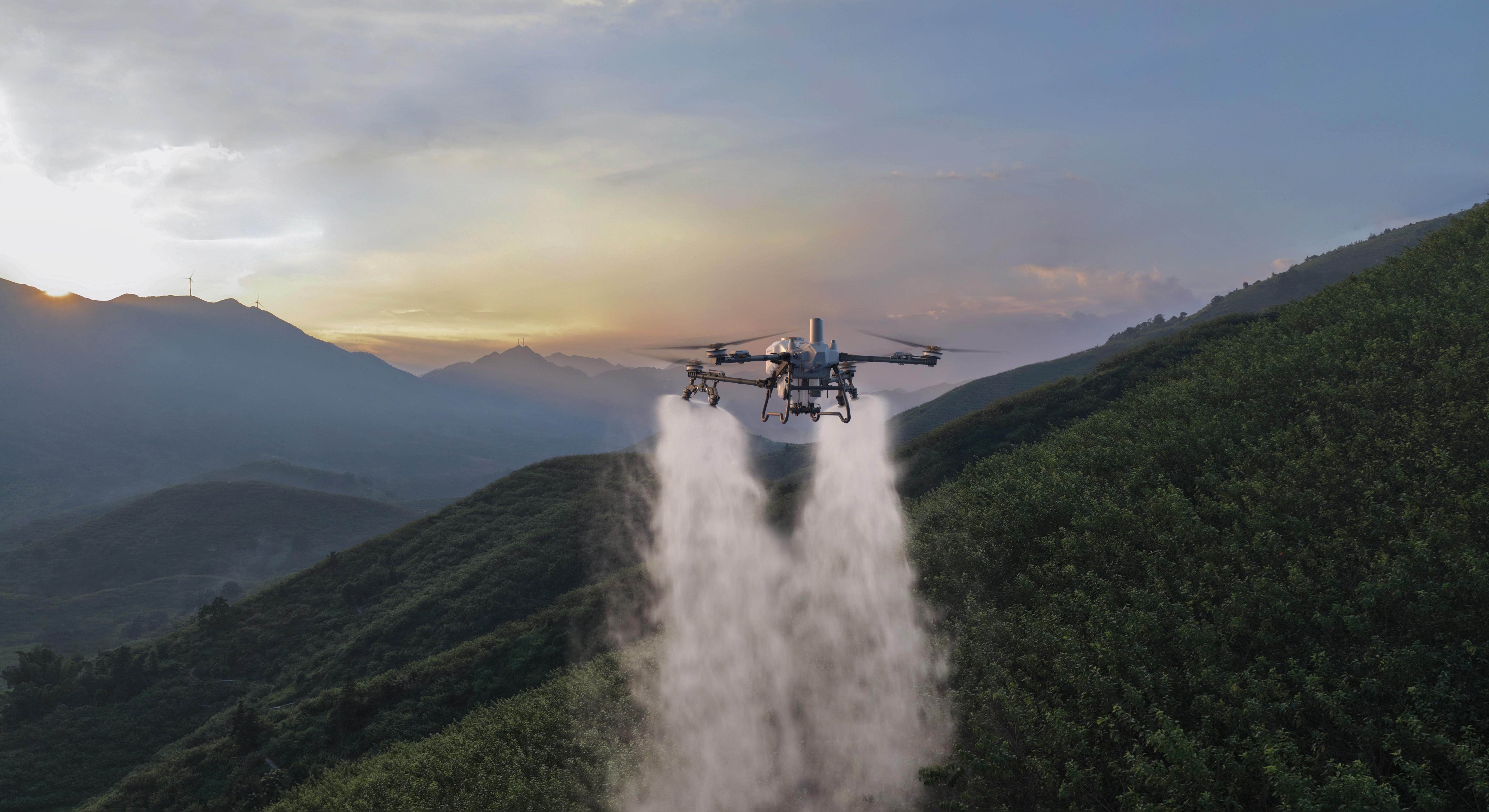
大疆T100S

Search documents
大疆打响农业无人机“价格战”,极飞科技等对手如何应对?
Mei Ri Jing Ji Xin Wen· 2025-11-24 12:55
Core Insights - DJI's agricultural drone segment has seen significant growth, with operational acreage increasing from less than 500 million acres in 2019 to 3.2 billion acres in 2023, representing a substantial transformation in traditional agricultural practices [1] - The global agricultural drone market is dominated by two Chinese companies, DJI holding a 59% market share and XAG with 17.1% [1] - XAG has submitted a prospectus for its IPO, showing a turnaround to profitability with a net profit of 134 million yuan in the first half of 2023, compared to the previous year's total [1][2] Market Dynamics - DJI has launched new models at competitive prices, with the T100S starting at 40,999 yuan, aiming to capture market share amid XAG's IPO efforts [2] - The agricultural drone market is evolving from reliance on manual labor to automated solutions, significantly improving efficiency and reducing labor costs [3][4] - The average price of agricultural drones has decreased significantly, with XAG's average selling price dropping to 37,500 yuan, a 10% reduction from the previous year [4][5] Technological Advancements - The introduction of advanced sensors in DJI's new models enhances obstacle detection, addressing challenges in complex agricultural environments [7] - The ability to operate in challenging conditions, such as night or adverse weather, is crucial for expanding the market for agricultural drones [7] International Expansion - Both DJI and XAG are targeting international markets, with XAG's overseas revenue growing significantly from 1.46 billion yuan in 2022 to an expected 3.71 billion yuan in 2024 [8] - Entering foreign markets presents challenges, including regulatory hurdles and varying agricultural practices, necessitating tailored approaches for each region [8]
大疆打响农业无人机价格战,极飞科技等如何应对?
Mei Ri Jing Ji Xin Wen· 2025-11-20 14:37
Core Insights - DJI's agricultural drone segment has seen significant growth, with operational acreage increasing from less than 500 million acres in 2019 to 3.2 billion acres in 2023, representing a substantial transformation in traditional agricultural practices [1] - DJI holds a dominant market share of 59% in the global agricultural drone market, while its main competitor, XAG, has a 17.1% share [1] - XAG has submitted a prospectus for its IPO, reporting a net profit of 134 million yuan in the first half of 2023, a significant improvement from previous losses [1][2] Market Dynamics - The introduction of new DJI models at competitive prices has intensified the price war in the agricultural drone market, with models priced significantly below market expectations [2] - The average selling price of agricultural drones has decreased, with XAG's average price dropping to 37,500 yuan, a 10% reduction from the previous year [4][5] Technological Advancements - Agricultural drones have evolved from being a novelty to becoming essential tools in farming, significantly improving efficiency and reducing labor costs [3][4] - DJI's agricultural drones have improved their spraying capacity from 3.6 liters per minute in 2016 to a maximum of 50 liters per minute in 2023 [4] - The integration of advanced sensors in new models allows drones to navigate complex environments, addressing previous challenges related to obstacles like power lines [6][7] Competitive Landscape - The agricultural drone market is increasingly competitive, with both DJI and XAG targeting international markets for growth, as evidenced by XAG's rising overseas revenue [7][8] - DJI's strategy for entering new markets involves adapting products to local agricultural practices and regulatory requirements, focusing initially on regions with similar crop types [8]

农业无人机走向自动驾驶
第一财经· 2025-11-18 23:58
Core Viewpoint - The article discusses the advancements in agricultural drones, particularly focusing on DJI's new products that have reached L3 (conditional automation) levels, highlighting the integration of AI and sensor technologies in enhancing automation and market penetration in agriculture [3][4][7]. Group 1: Technological Advancements - DJI's agricultural drones have achieved L3 automation, allowing for fully automated operations in specific scenarios [7]. - The new T100S drone can carry loads of 90 kg and 95 kg, with production capabilities of 400-500 units per day [6]. - The flight hours of agricultural drones now account for 98% of the entire drone industry, indicating a significant increase in usage [6]. Group 2: Market Penetration and Challenges - DJI's annual shipments of agricultural drones have increased from 2,000 units a decade ago to 200,000 units this year, with a domestic subsidy of approximately 62,000 units out of 70,000 [6][11]. - The penetration rates for different crops show that rice has a 60% penetration, while orange trees have only 40%, primarily due to obstacles like power lines [11][12]. - The average operational frequency for corn in Inner Mongolia is only 1.8 times, significantly lower than the 9.5 times for rice and wheat, indicating a need for increased usage [12]. Group 3: Sensor Technology and AI Integration - The integration of multiple sensors, including visual sensors, laser radar, and millimeter-wave radar, is essential for navigating complex agricultural environments [8]. - AI has been incorporated into mobile applications for pest identification and medication recommendations, enhancing the operational efficiency of drones [9]. Group 4: International Market Expansion - DJI's primary market remains domestic, with significant potential in Latin America and East Asian countries, but faces regulatory challenges in Europe regarding chemical spraying and pilot certification [13]. - The need for adaptation to local regulations and practices presents a barrier to expanding into international markets [13].
大疆农业今日发布三款新品 向“空中智驾”演进
Zheng Quan Shi Bao Wang· 2025-11-18 10:02
Core Insights - DJI Agriculture has launched three new agricultural drones: T100S, T70S, and T55, with T100S being the flagship model, emphasizing safety and intelligence in design [1][2] Product Features - The T100S has undergone significant design changes, reducing its weight from 60 kg to 46 kg, a decrease of over 23%, allowing for easier handling by operators [1][2] - The T100S features an 85-liter pesticide tank and supports a payload of 90 kg, an increase of approximately 10 kg compared to the previous T100 model [2] - The T100S incorporates a new single-layer propeller design, enhancing propulsion efficiency while maintaining a balance between load capacity and portability [2] - The T100S is equipped with a new generation laser radar system, achieving a point cloud density of 760,000 points, a 153% increase from the previous model, significantly improving environmental perception and operational precision [2] Market Positioning - The T70S retains the safety systems and core functionalities of the T100S, targeting users with smaller plots or lower annual operational volumes [3] - The T55 is designed for lightweight operation and ease of use, featuring a 50-liter spray capacity and a dual nozzle design that increases flow rate by 33% [3] User Demographics - The customer base for DJI Agriculture drones has shifted, with over half of the buyers now being ordinary farmers, necessitating simpler operation and smaller equipment [3][4] - DJI's agricultural equipment accounts for nearly 90% of the market share in China, highlighting its leadership position in the industry [4] Production Capacity - DJI has opened a new production line in Heyuan, Guangdong, with a capacity of approximately 500 units, indicating potential for future expansion [4]
大疆农业无人机发布三款新产品|最前线
3 6 Ke· 2025-11-18 08:04
Core Insights - DJI has launched three new agricultural drone models: T100S, T70S, and T55, aimed at enhancing agricultural efficiency and meeting diverse farming needs [10][11]. Product Details - The flagship model T100S has a maximum takeoff weight of 149.9 kg, with a spraying system capacity of 85 liters, a seeding load of 90 kg, and a lifting capacity of 95 kg, suitable for large fields and various agricultural tasks [10]. - The T70S features a spraying capacity of 50 liters, a seeding load of 70 kg, and a lifting capacity of 70 kg, designed for medium-sized farms and small orchards [10]. - The entry-level T55 has a spraying capacity of 50 liters, a seeding capacity of 80 liters, and a lifting capacity of 40 kg, allowing for easy operation by a single user [6][10]. Pricing and Promotions - The standard prices for the new models are set at 48,999 yuan for T100S, 43,999 yuan for T70S, and 36,999 yuan for T55, with promotional discounts available until January 31, 2026 [10]. Technological Advancements - The new models feature enhanced safety systems, including a new 256-line laser radar on T100S, which improves point cloud density by 153% and increases detection range for small obstacles by five times [10]. - The drones are now capable of L3 level autonomous operation, allowing for fully automated tasks under specific conditions [11]. Market Position and Sales - DJI holds a dominant position in the agricultural drone market, with nearly 90% of the agricultural drone equipment purchased being produced by the company [11]. - By October 2025, DJI's cumulative global sales of agricultural drones are expected to exceed 500,000 units, with over 320,000 units operating annually in China [11]. User Demographics - The ratio of self-use users to service providers has shifted from 1:9 to 5:5, indicating a growing trend of individual farmers using drones for their own agricultural needs [14].