大疆T100

Search documents
市场洞察:中国低空飞行应用在农林植保各场景下的经济性如何?
Tou Bao Yan Jiu Yuan· 2026-03-06 12:24
Investment Rating - The report does not explicitly state an investment rating for the agricultural drone industry Core Insights - Agricultural drones demonstrate significant economic advantages over traditional farming methods, particularly in scenarios such as crop spraying, sowing, fertilization, pollination, and logistics [2][5][10][15][18] Summary by Relevant Sections Crop Spraying - Agricultural drones can operate on 2,000 acres per year compared to 1,000 acres for manual labor and 20,000 acres for tractors - The cost per acre for drones is 8 yuan, significantly lower than 25 yuan for manual labor and 18 yuan for tractors, saving 10-17 yuan per acre - Drones increase pesticide utilization efficiency to 58.9% and reduce crop damage to less than 1% [2] Sowing and Fertilization - Drones can cover 2,000 acres per year, while manual methods cover only 500 acres - The cost per acre for drones is 6 yuan, compared to 18 yuan for manual labor and 10 yuan for mechanical methods, saving 4-12 yuan per acre - Fertilizer utilization efficiency improves from 35% to 65% with drone usage [5][6] Crop Monitoring - Drones can monitor 2,000 acres per year, with costs at 4 yuan per acre, compared to 12 yuan for manual monitoring and 6 yuan for satellite monitoring - Drones achieve a pest detection accuracy of 92%, significantly higher than the 60%-70% accuracy of traditional methods [10][11] Pollination - Drones can operate on 2,000 acres per year, with costs at 10 yuan per acre, compared to 40 yuan for manual methods and 18 yuan for mechanical methods - Drones reduce pollen usage by 60% and increase fruit set rates by 20%-30% [15] Logistics - Drones can transport materials over 2,000 acres per year, with costs at 6 yuan per ton, compared to 25 yuan for manual labor and 12 yuan for three-wheeled vehicles - Drones reduce transportation losses from 20% to below 5% and improve transportation efficiency significantly [18][19]
市场洞察:中国低空飞行应用在农林植保各场景下的经济性如何?
Tou Bao Yan Jiu Yuan· 2026-03-06 12:08
Investment Rating - The report provides a positive investment outlook for the agricultural drone industry, highlighting its economic advantages over traditional farming methods [2][5][10][15][18]. Core Insights - Agricultural drones significantly reduce operational costs and improve efficiency in various farming scenarios, including crop spraying, sowing, fertilization, crop monitoring, and pollination [2][5][10][15][18]. - The economic benefits of using drones include lower costs per acre, increased productivity, and enhanced resource utilization, such as reduced pesticide and fertilizer waste [2][5][10][15][18]. Summary by Sections Crop Spraying - Traditional methods (manual and tractor) have higher costs and lower efficiency compared to drones, which can cover 2,000 acres per year at a cost of 8 CNY per acre, saving 10-17 CNY per acre [2]. - Drones increase pesticide utilization rates to 58.9% and reduce crop damage rates to less than 1% [2]. Sowing and Fertilization - Drones can operate on 2,000 acres per year at a cost of 6 CNY per acre, compared to traditional methods costing 10-18 CNY per acre [5]. - The fertilizer utilization rate improves to 65%, and seed waste is reduced to less than 3% [5][6]. Crop Monitoring - Drones can monitor 2,000 acres per year at a cost of 4 CNY per acre, significantly lower than traditional methods [10]. - The accuracy of pest and disease detection is improved to 92%, allowing for timely interventions [10][11]. Pollination - Drones can cover 2,000 acres per year at a cost of 10 CNY per acre, with a significant reduction in pollen waste and an increase in fruit set rates [15]. - The economic benefits include increased yields and higher market prices for fruits due to improved quality [15]. Material Transport - Drones can transport materials over 2,000 acres per year at a cost of 6 CNY per ton, significantly reducing transport losses and improving efficiency in challenging terrains [18][19]. - The return on investment for drone transport is the fastest among all scenarios, with a payback period of approximately 1.32 years [18][19].
大疆打响农业无人机“价格战”,极飞科技等对手如何应对?
Mei Ri Jing Ji Xin Wen· 2025-11-24 12:55
Core Insights - DJI's agricultural drone segment has seen significant growth, with operational acreage increasing from less than 500 million acres in 2019 to 3.2 billion acres in 2023, representing a substantial transformation in traditional agricultural practices [1] - The global agricultural drone market is dominated by two Chinese companies, DJI holding a 59% market share and XAG with 17.1% [1] - XAG has submitted a prospectus for its IPO, showing a turnaround to profitability with a net profit of 134 million yuan in the first half of 2023, compared to the previous year's total [1][2] Market Dynamics - DJI has launched new models at competitive prices, with the T100S starting at 40,999 yuan, aiming to capture market share amid XAG's IPO efforts [2] - The agricultural drone market is evolving from reliance on manual labor to automated solutions, significantly improving efficiency and reducing labor costs [3][4] - The average price of agricultural drones has decreased significantly, with XAG's average selling price dropping to 37,500 yuan, a 10% reduction from the previous year [4][5] Technological Advancements - The introduction of advanced sensors in DJI's new models enhances obstacle detection, addressing challenges in complex agricultural environments [7] - The ability to operate in challenging conditions, such as night or adverse weather, is crucial for expanding the market for agricultural drones [7] International Expansion - Both DJI and XAG are targeting international markets, with XAG's overseas revenue growing significantly from 1.46 billion yuan in 2022 to an expected 3.71 billion yuan in 2024 [8] - Entering foreign markets presents challenges, including regulatory hurdles and varying agricultural practices, necessitating tailored approaches for each region [8]
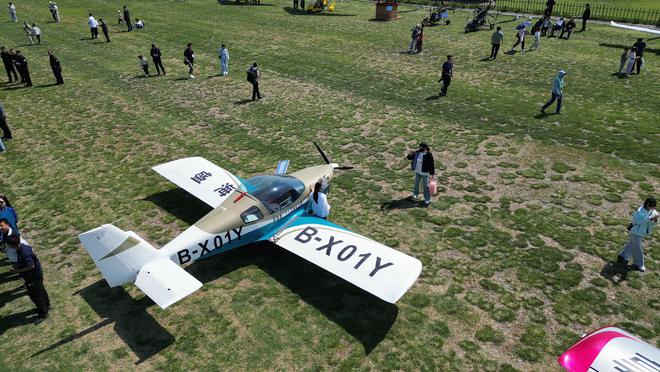
河北衡水:赛事展会搭台赋能低空经济
Xin Hua She· 2025-05-07 06:27
Core Insights - The "Aviation China" National Low-altitude Unmanned Flight Grand Prix and the first "Beijing-Tianjin-Hebei" Low-altitude Aircraft Exhibition were held in Hebei Province, showcasing innovations in low-altitude aircraft technology and promoting the integration of the low-altitude economy in the region [1] Group 1: Event Overview - The event featured competitions, exhibitions, and cultural tourism integration, highlighting the broad prospects for low-altitude aircraft technology and industry applications [1] - A total of 16 teams from 13 provinces and cities participated, with 330 pilots operating over 100 low-altitude aircraft [1] - The competition simulated complex scenarios such as forest fire monitoring and emergency material delivery, enhancing pilots' flying control and emergency response skills [1] Group 2: Exhibition Highlights - The exhibition showcased 24 advanced flying devices, attracting over 20,000 visitors [1] - Local enterprises accounted for over 50% of the 30 cooperation intentions reached on the first day of the exhibition, indicating strong local industry advantages and regional collaboration potential [1] - The event facilitated deep business exchanges between companies and buyers, transitioning from merely selling products to building an ecosystem [1] Group 3: Economic Impact - The event provided a platform for low-altitude aircraft companies and research institutions in the Beijing-Tianjin-Hebei region to strengthen cooperation and promote technological innovation [3] - During the "May Day" holiday, the airport attracted over 100,000 visitors, with an average daily reception exceeding 10,000 in special sections [3]