
大语言模型DeepSeek

Search documents
【环时深度】西方国家对华新认知呈现两个趋势
Huan Qiu Shi Bao· 2025-11-30 22:48
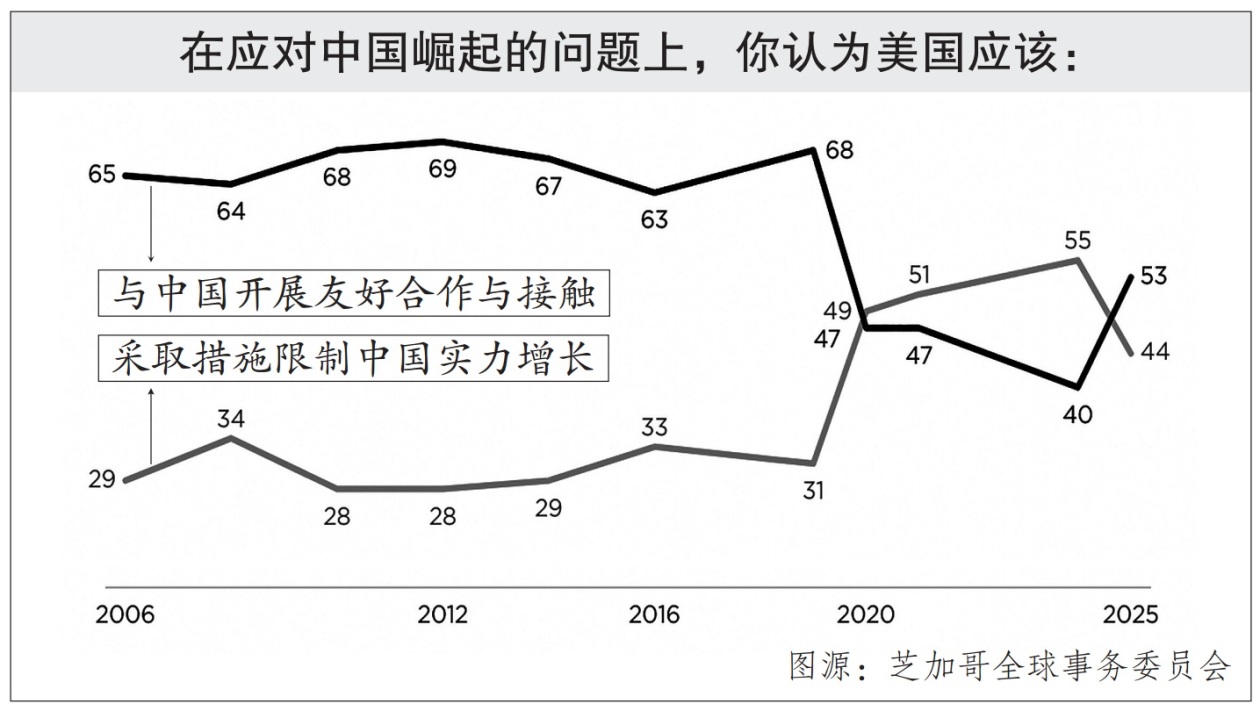
Core Insights - The article discusses the evolving perceptions of China in Western countries, highlighting a trend of more nuanced and diversified understanding, alongside increasing polarization in opinions about China [1][2][9]. Group 1: Perceptions in France - In France, there is a growing dichotomy in perceptions of China, with more people viewing China positively due to its advanced technology and services, while simultaneously, a significant number of individuals express concerns about a "China threat" [2]. - The number of French citizens holding both positive and negative views about China is increasing, indicating a more pronounced division in public opinion [2]. Group 2: Perceptions in the United States - Polling data shows that from 2023 to 2025, the percentage of Americans with negative views of China remains high, with 81% and 77% expressing dislike in 2024 and 2025, respectively [3]. - Despite government narratives promoting "decoupling" from China, over half of Americans (53%) believe in the importance of friendly cooperation with China, reflecting a complex relationship between public sentiment and political discourse [3]. Group 3: Research Trends in the U.S. - The study of China in the U.S. is shifting from "engagement" to "strategic competition," with a focus on national security issues and a reliance on open-source intelligence for research [5]. - Young scholars are increasingly moving towards policy-oriented roles rather than traditional academic paths, indicating a shift in career trajectories within the field of China studies [6]. Group 4: Australia’s Understanding of China - A recent report from an Australian think tank critiques the misinterpretation of China's actions in the South China Sea, highlighting a polarized debate within Australia regarding its relationship with China [7]. - The report emphasizes the need for Australia to develop independent knowledge about China to balance security and diplomatic relations [8]. Group 5: Recommendations for Improved Understanding - Scholars suggest that both Europe and China should take steps to enhance mutual understanding, such as increasing educational exchanges and promoting cultural cooperation [13]. - The article advocates for using personal experiences to counteract macro-level narratives about China, emphasizing the importance of non-political connections and grassroots exchanges [12].

夏季达沃斯论坛解读发展中国家发展之道
Zhong Guo Xin Wen Wang· 2025-06-24 12:08
Group 1 - The core viewpoint of the article emphasizes that industrialization and technological innovation are crucial for the development of emerging and developing economies [1][2] - According to the International Monetary Fund, in 2023, the GDP of emerging and developing economies accounted for 58.9% of the global economy [1] - Experts at the forum highlighted that many developing countries face challenges in implementing industrialization despite having the necessary strategies, particularly in the context of globalization [1] Group 2 - The Chairman of the Hong Kong Stock Exchange stated that the future of industrialization is focused on innovative technologies, with significant investments made by China in this area [2] - An example was provided regarding the development of large language models, indicating that substantial funding is not a prerequisite for success, as demonstrated by China's DeepSeek model [2] - The Chairman of Angola's Unitel emphasized the importance of diversifying technology sources and sending students and workers abroad to better utilize foreign technologies [2]