天籁·鸿蒙座舱版

Search documents
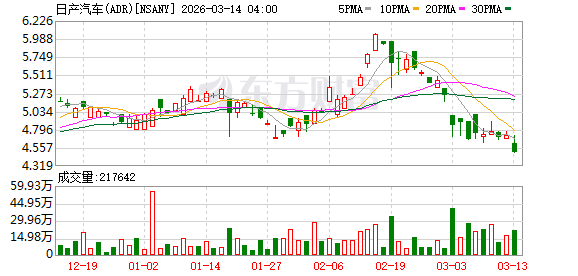
日产汽车首席财务官“换将” Re:Nissan转型计划初见成效
Zhong Guo Jing Ying Bao· 2026-03-15 14:07
Core Insights - Nissan Motor has announced a change in its Chief Financial Officer position, with Jeremie Papin stepping down for personal reasons and George Leondis taking over effective April 1. This change comes at a critical time as Nissan advances its Re:Nissan transformation plan [2][3] Financial Performance - For the first three quarters of the fiscal year 2025 (April to December 2025), Nissan reported a consolidated net revenue of 8.6 trillion yen (approximately 371.32 billion RMB) and narrowed its operating loss to 101 billion yen (approximately 4.26 billion RMB), a significant improvement from a loss of 277 billion yen (approximately 11.96 billion RMB) in the first half of the fiscal year [5] - In the third quarter of fiscal year 2025 (October to December 2025), Nissan achieved an operating profit of 175 billion yen (approximately 7.56 billion RMB), exceeding market expectations. The company revised its full-year forecast, expecting a net revenue of 11.9 trillion yen (approximately 513.81 billion RMB) and an operating loss of 600 billion yen (approximately 25.9 billion RMB), an improvement of 215 billion yen (approximately 9.28 billion RMB) from previous estimates [5][6] Cost Management - Nissan has identified a cost reduction potential of 240 billion yen (approximately 10.36 billion RMB) in variable costs and has already achieved over 80 billion yen (approximately 3.45 billion RMB) in fixed cost reductions in the first half of fiscal year 2025. The company aims to exceed its original target of 250 billion yen (approximately 10.79 billion RMB) in fixed cost reductions by fiscal year 2026 [6] - The company is also working to improve its development processes to lower engineering costs and complexity, with a goal of reducing average hourly costs by 20%. Currently, the engineering cost per hour has already been reduced by 15% [6] Strategic Focus - Nissan's Re:Nissan transformation plan is focused on three core priorities: rigorous execution of strategies, enhancing product competitiveness, and achieving sustainable growth. The company is committed to ensuring a smooth transition in management and maintaining the momentum of the transformation plan [4][8] - The new CFO, George Leondis, brings extensive experience in financial and strategic transformation, having held key positions in major markets, which is expected to provide continuity and professional execution in Nissan's strategy [3][4] Market Position and Product Strategy - Nissan has launched several successful new products in China, including the N7 electric vehicle, which has achieved sales of over 50,000 units by the end of December 2025. The company also plans to introduce new models like the N6 and the Tianlai Hongmeng cockpit version in the second half of 2025 [9] - Despite facing challenges such as U.S. tariff policies and intense competition in the Chinese market, Nissan is focusing on core operations and leveraging its new product lineup to drive growth [7][10]

2025中国汽车行业十大年度品牌热点 | 精进2025——汽车行业10个十大年度盘点
Jing Ji Guan Cha Wang· 2026-01-09 09:33
Core Insights - The automotive industry in China experienced significant changes in 2025, characterized by a mix of opportunities and challenges, with a focus on innovation and collaboration among companies [2][4] - The report highlights the "Top Ten" annual reviews across various categories, reflecting the industry's evolving landscape [2] Group 1: Market Dynamics - The Chinese automotive market is undergoing accelerated differentiation and reshuffling, with leading companies expanding their ecosystems while some brands face pressure [4] - The competition has intensified, leading to a survival-of-the-fittest scenario, where some brands are on the brink of elimination [4][22] Group 2: Brand Influence - Chinese automotive brands are gaining global influence, with eight companies making it to the Fortune Global 500 list, marking a significant increase from previous years [5] - BYD, Geely, and Chery have notably improved their rankings, reflecting the rising global presence of Chinese brands [5] Group 3: Brand Strategy and Integration - Many automotive brands are restructuring their business architectures, with notable mergers and acquisitions, such as Geely's acquisition of Lynk & Co [7][8] - The trend of integrating brand operations is seen as a response to market pressures and a strategy to enhance competitiveness [9] Group 4: Technological Advancements - Companies are launching unique smart technology brands to keep pace with rapid advancements in intelligent technology, with several brands unveiling new systems and platforms [10] - The establishment of these technology brands is aimed at enhancing market perception and showcasing core competencies in smart mobility [11] Group 5: Foreign Brand Strategies - Foreign joint venture brands are initiating a "Localization 2.0" strategy, enhancing collaboration with local suppliers and adapting to the Chinese market [12] - This shift includes a focus on electric and intelligent vehicle development, indicating a more proactive approach to market integration [13] Group 6: Reputation Management - In response to negative online narratives, many automotive companies are taking legal action to protect their brand reputations, indicating a shift towards more aggressive reputation management strategies [19][20] - The industry is witnessing a rise in legal actions against misinformation, reflecting the importance of brand integrity in the digital age [21] Group 7: Market Exit and Brand Survival - Weaker automotive brands are facing significant challenges, with some declaring bankruptcy or undergoing restructuring to survive [22] - The industry is experiencing a natural selection process, where only the most adaptable brands are likely to thrive [23] Group 8: Sales Channel Evolution - The once-popular "supermarket store" model for car sales is losing traction, with many brands reassessing their sales strategies in favor of more traditional dealership models [24] - This shift indicates a move towards more sustainable and efficient sales practices in the automotive sector [25] Group 9: Luxury Brand Performance - The ultra-luxury automotive segment is facing declining sales in China, with several brands reporting significant drops in their sales figures [26] - The overall market conditions and changing consumer preferences are contributing to the challenges faced by these high-end brands [27]