问界

Search documents
蓝电科技控股权反转:国资退出,赛力斯重获100%股权
经济观察报· 2026-03-27 13:41
Group 1 - The core point of the article is the rapid change in the ownership structure of Chongqing Blue Electric Technology Co., Ltd. (Blue Electric Technology), where Sairisi regained 100% control just over a month after state-owned enterprises exited the shareholder sequence [2][3]. - On March 20, Blue Electric Technology completed a business change, with Qingfeng Technology and Yuan Investment Warehouse officially withdrawing, allowing Sairisi to regain control [2]. - Sairisi had previously signed a cooperation agreement with the Shapingba District Government on February 9, which involved the separation of existing assets related to Blue Electric, resulting in Sairisi losing control over the new company and the Blue brand's future development [2]. Group 2 - The Blue brand, launched by Sairisi in March 2023, aims to penetrate the mainstream new energy vehicle market priced between 100,000 to 150,000 yuan, enhancing self-development capabilities and reducing reliance on Huawei [4]. - The first model, Blue E5, features BYD's Fudi battery and Huawei's HiCar 3.0 system, but its market performance has not met expectations, with cumulative sales of 20,096 vehicles from January to November 2025, and an annual forecast of over 20,000 vehicles [4]. - The return of Blue Electric's ownership to Sairisi may indicate a strategic shift to continue leading this budget brand to cultivate new growth points, despite previous plans to divest [4]. Group 3 - Following the ownership change, Blue Electric Technology's management team was adjusted, with new members from Sairisi's core team taking over, indicating a consolidation of control [5]. - Sairisi reported significant revenue growth, achieving 110.534 billion yuan in revenue and a net profit of 5.312 billion yuan for the first three quarters of 2025, reflecting a year-on-year increase of 31.56% due to the success of the AITO brand [5].


1月乘用车市场销量分析:开年遇冷呈短期波动 合资表现相对稳健
Zhong Guo Zhi Liang Xin Wen Wang· 2026-02-25 03:22
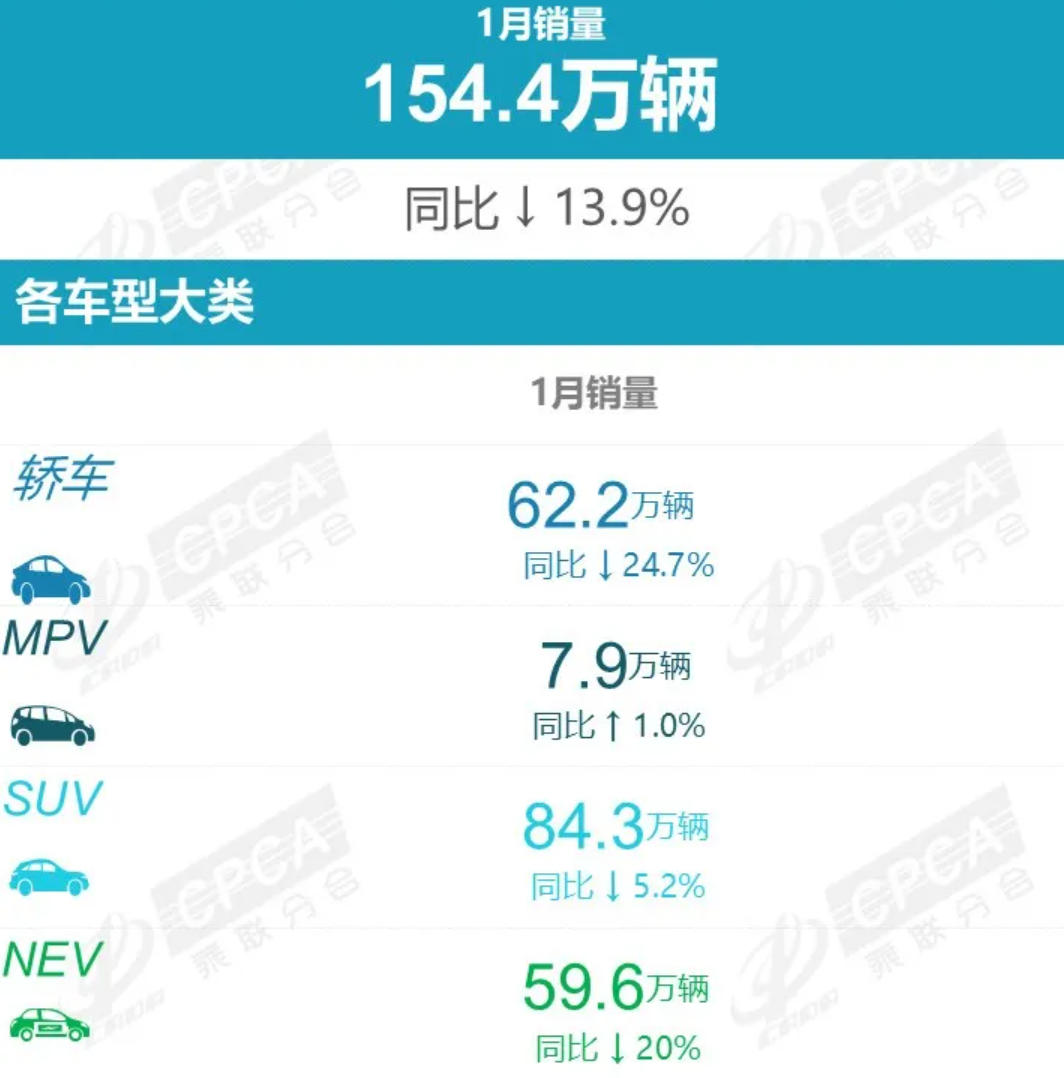
Core Viewpoint - The domestic passenger car market in China experienced a significant decline in January 2026, with retail sales dropping by 13.9% year-on-year to 1.544 million units, influenced by policy adjustments and consumer demand exhaustion [1]. Market Performance Summary - The overall retail sales of narrow passenger cars in January reached 1.544 million units, a year-on-year decrease of 13.9% [1]. - The sedan market saw the most substantial decline, with sales of 622,000 units, down 24.7% year-on-year [3]. - The SUV market, while also under pressure, performed better than sedans, with sales of 843,000 units, down 5.2% year-on-year [3]. - The MPV market showed a slight increase of 1.0%, reaching 79,000 units [3]. - The new energy vehicle (NEV) market faced a significant drop, with sales of 596,000 units, down 20.0% year-on-year, attributed to the end of the tax exemption policy [3]. Brand Performance Summary - Domestic brands faced considerable pressure, with retail sales of 890,000 units in January, down 18% year-on-year, and a market share of 57.5%, a decrease of 3.5 percentage points [4]. - In contrast, joint venture brands showed relative stability, with retail sales of 470,000 units, down 4% year-on-year, significantly less than domestic brands [5]. - Luxury car sales totaled 180,000 units, down 15% year-on-year, with a market share of 11.6%, a decline of 0.5 percentage points [5]. Key Players in the Market - Leading domestic brands such as Geely, BYD, Changan, and Chery all experienced declines, with BYD's sales dropping by 53% [7]. - In the joint venture sector, FAW-Volkswagen sold 132,300 units, down 3.5%, while Toyota brands showed positive growth, with FAW Toyota and GAC Toyota achieving year-on-year increases of 8.3% and 0.3%, respectively [9]. - The top ten sales list included Hongmeng Zhixing and Brilliance BMW, with Hongmeng Zhixing achieving a remarkable 65.5% year-on-year growth, selling 57,915 units [10][12]. New Energy Vehicle Market Insights - BYD maintained its position as the leading NEV manufacturer with sales of 94,176 units, but experienced a significant year-on-year decline of 53% [13]. - Geely followed closely with sales of 92,135 units, down 21.6% [12]. - Notable performers included Xiaomi Auto, which saw a 70.3% increase in sales, reaching 39,002 units, and NIO, which grew by 95.2% to 27,061 units [15][17]. Future Market Outlook - The passenger car market is expected to enter a low point in February 2026 due to the seasonal impact of the Spring Festival, with sales likely to remain subdued [17]. - However, the introduction of trade-in policies in some regions may lead to a recovery in the market post-Spring Festival [17].
让智能化汽车“越开越增值”,鸿蒙智行的春节实践
Feng Huang Wang· 2026-02-24 08:47
Core Insights - The article highlights a significant transformation in the automotive industry, particularly through the OTA upgrade by Hongmeng Zhixing, which aims to enhance user experience during the Spring Festival travel period [1][2][3]. Group 1: Technological Advancements - Hongmeng Zhixing's OTA upgrade includes 63 new features and 31 experience optimizations, focusing on safety and user interaction for the Spring Festival travel scenario [1]. - The upgrade enhances the WEWA architecture for smoother lane changes and improves obstacle recognition with eAES 2.0, introducing defensive driving features for proactive intervention [1][4]. - The integration of ADS, Tuling platform, and Xiaoyi model showcases a cross-domain technology advantage, particularly in diverse road conditions during the Spring Festival [3][11]. Group 2: User Experience Enhancement - The upgrade addresses user needs by providing features like real-time multi-car interaction and thematic decorations to create a festive atmosphere [1][3]. - The introduction of the three-point turn feature exemplifies the focus on user experience, ensuring safer and more comfortable maneuvers in challenging situations [6]. - The "Spring Festival Anxin Travel" service offers comprehensive support, including 24-hour roadside assistance and winter tire services, enhancing the overall user experience [9][10]. Group 3: Industry Impact - The automotive industry is shifting from a focus on functionality to an emphasis on user experience, as evidenced by the increasing penetration of NOA features and varying user satisfaction levels [3][11]. - Hongmeng Zhixing's approach signifies a move towards a "software-defined car" era, where continuous software upgrades redefine the automotive value chain and user relationships [11][12]. - The successful implementation of advanced driving features during the Spring Festival reflects the growing importance of technology in enhancing everyday travel experiences, marking a significant milestone for the Chinese smart automotive industry [13].
问界卖爆百万辆,股民哭晕:81万满仓亏掉15万
Sou Hu Cai Jing· 2026-02-17 04:41
Core Viewpoint - The article discusses the paradox where a company, AITO Wenjie, achieves significant sales milestones while its stock price declines, highlighting the disconnect between strong fundamentals and market performance [1][3][5]. Group 1: Company Performance - AITO Wenjie reached its 1 millionth vehicle production milestone in just 46 months, setting a record for luxury brands and new forces in the automotive industry [3]. - The M9 model has dominated the luxury SUV market for 21 consecutive months, with over 270,000 units delivered, while the M7 and M8 models have also seen substantial sales [3]. - Despite these impressive sales figures, the stock price of Seres has dropped over 30% from a peak of 174.33 yuan, leading to significant losses for investors [3][4]. Group 2: Market Dynamics - The market's expectations were overly optimistic, leading to a situation where the stock price had already factored in future growth, resulting in a sell-off once positive news was released [4]. - Investors are more focused on future growth potential rather than current performance, causing concerns about increased competition and profit growth slowing down, which can lead to premature selling [4]. - Retail investors often attempt to buy at perceived lows, while institutional investors may use positive news to offload shares, creating a disconnect that results in further declines in stock prices [4][5]. Group 3: Investor Sentiment - The article illustrates the emotional turmoil faced by investors who bought shares expecting a rise in stock price due to strong sales, only to experience significant losses instead [4][5]. - It emphasizes the lesson that good sales do not guarantee stock price increases, and that the stock market operates on expectations, valuations, and capital dynamics rather than straightforward sales performance [5].
青岛李沧全场景智慧生活新地标启幕 打造有科技温度的“城市会客厅”
Sou Hu Cai Jing· 2026-02-11 19:59
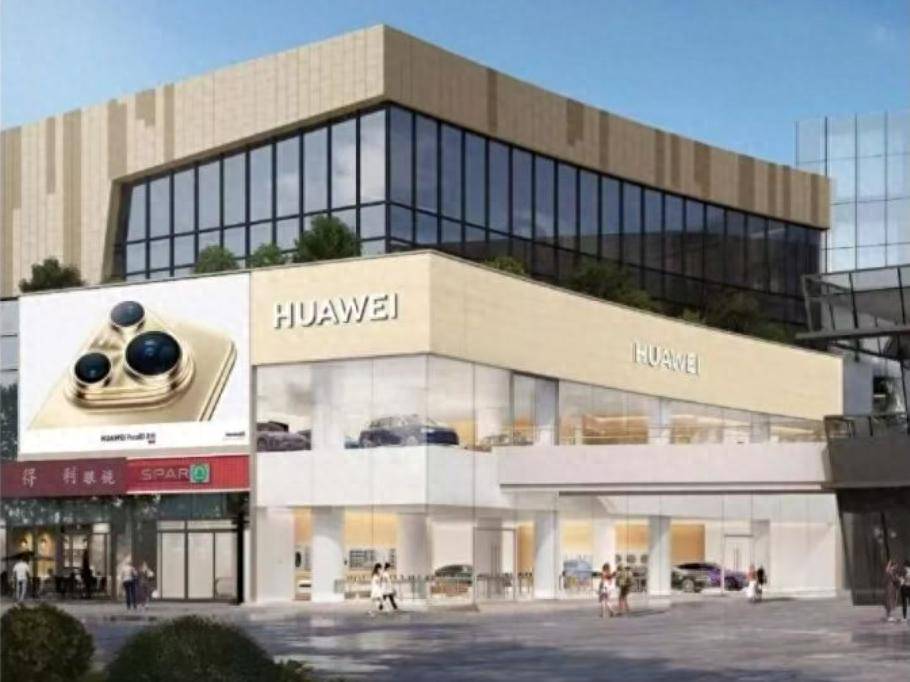
Core Insights - Huawei's Smart Living Center in Qingdao, covering approximately 1317 square meters, aims to become a new hub connecting technology and daily life, evolving into a cultural and technological "living room" for the city [1][4] Group 1: Store Features - The store is designed as a one-stop smart experience center, featuring five key areas: smart office, smart home, health and fitness, smart travel, and audio-visual entertainment [4] - It includes a dedicated area for smart office solutions showcasing devices like MatePad and laptops, enhancing productivity through multi-screen collaboration [4] - The smart home section features products like smart locks and Huawei's smart screens, making daily life more convenient [4] - The health and fitness area is equipped with Huawei WATCH series and other devices for real-time health monitoring [4] - The smart travel section is notable for being the first in Shandong with 10 parking spaces for Huawei-enabled vehicles, offering immersive experiences [4] - The audio-visual entertainment area utilizes smart screens and VR devices to create an exceptional viewing experience [4] Group 2: Community Engagement - The living center aims to foster interaction among people, technology, and the city, planning to host regular events like tech salons and creative workshops [5] - It is positioned to become a public space for Qingdao residents to explore digital living and experience the warmth of technology [5] Group 3: Strategic Importance - The opening of the Smart Living Center signifies Huawei's deeper commitment to the Shandong region, providing a platform for consumers to engage with cutting-edge technology [6] - The center is expected to enhance Qingdao's appeal as a commercial and cultural hub, contributing to the development of a vibrant smart city [6]
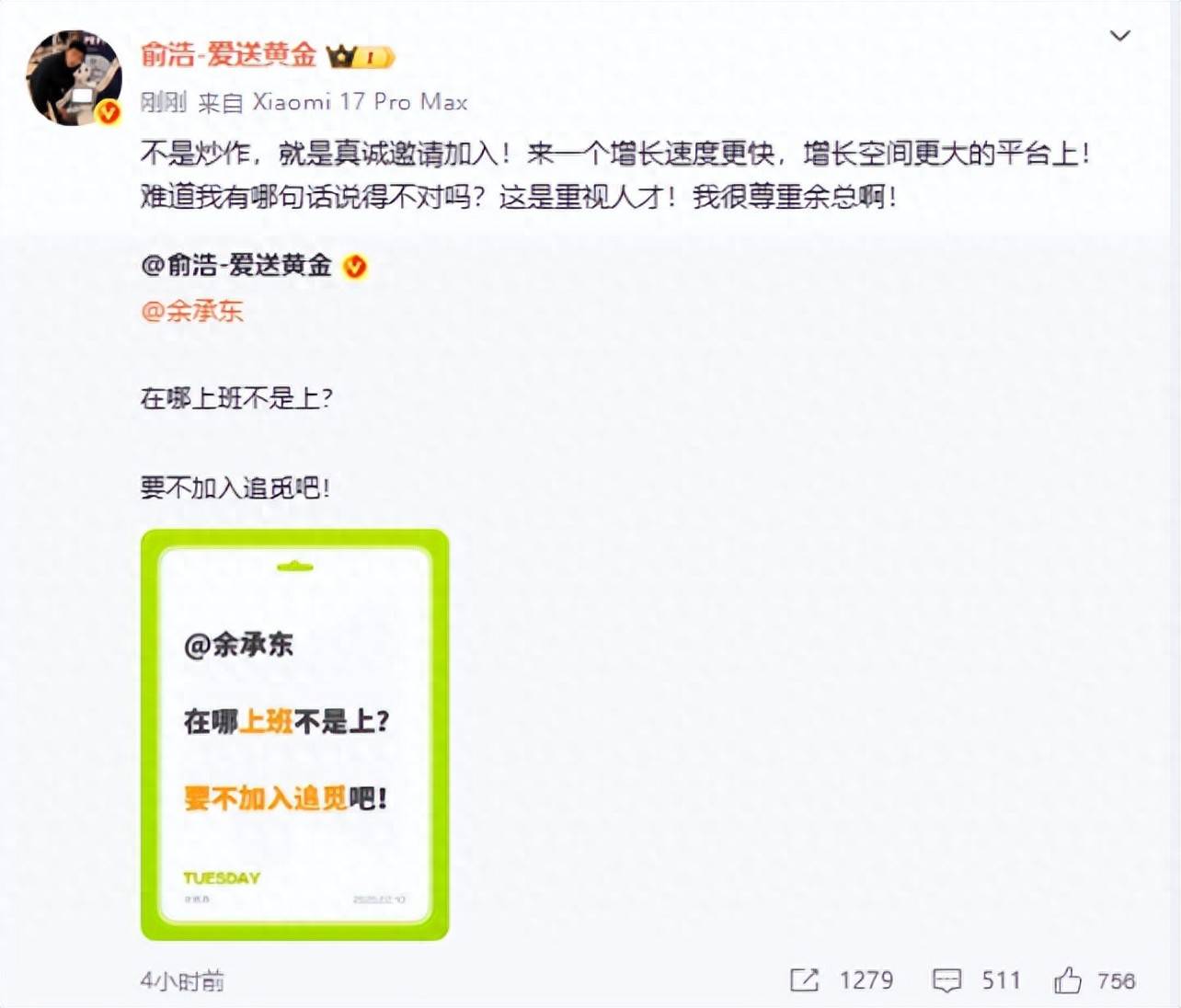
俞浩喊话余承东加入追觅,不是炒作真诚邀约,现已删除相关博文
Sou Hu Cai Jing· 2026-02-11 16:03
Group 1 - The core figure in the tech industry recently is Yu Hao from Zhaomi, who has made headlines with bold statements, including a challenge to Huawei's Yu Chengdong and aspirations to become the world's richest person [1][3] - Yu Hao's invitation to Yu Chengdong to join Zhaomi is framed as a sincere offer, emphasizing the importance of talent and growth opportunities within the company [1][3] Group 2 - Zhaomi Technology, founded in 2017 by Yu Hao, has rapidly established itself in the cleaning appliance market, achieving a 22.5% market share in China, making it the leader in the sector [4] - The company has expanded its product line to include vacuum cleaners, robotic vacuums, and floor washing machines, and holds the number one market share in 22 countries and regions, with a global share of 12.3% [4] - Zhaomi plans to release 30 smart home appliances by 2025, covering categories such as air conditioning and refrigeration, and is also venturing into smartphones, automobiles, astronomical equipment, and humanoid robots [4]
“我是大彬同学”被判赔偿鸿蒙智行150万
新华网财经· 2026-02-11 07:20
Core Viewpoint - The article discusses the legal actions taken by Hongmeng Zhixing against the self-media account "I am Da Bin Classmate" for defamation, resulting in a court ruling that requires the defendant to delete defamatory statements, publicly apologize, and pay 1.5 million yuan in damages [2][5]. Group 1: Legal Actions and Court Ruling - Hongmeng Zhixing has received a first-instance court ruling in its lawsuit against the self-media account "I am Da Bin Classmate," which includes the deletion of defamatory statements and a public apology [2]. - The court found that the defendant's statements were not based on objective facts and constituted an infringement of the plaintiff's reputation [2]. - The ruling mandates a compensation of 1.5 million yuan for the damages caused to Hongmeng Zhixing's reputation [2]. Group 2: Background of the Case - The lawsuit was initiated in March of the previous year, based on evidence collected from various online platforms indicating that the self-media account had been spreading false information and derogatory remarks about Hongmeng Zhixing [5]. - Hongmeng Zhixing's legal team emphasized that the internet is not a lawless space and that they will continue to protect the brand's reputation through legal means [6]. Group 3: Industry Context - The article highlights the increasing competition in the new energy vehicle industry, where some self-media accounts resort to fabricating false information to gain traffic and profit, leading to a chaotic industry environment [7]. - Multiple new energy vehicle companies have faced malicious defamation from self-media and are pursuing legal actions to defend their rights [7]. - In September of the previous year, a joint initiative by six departments, including the Ministry of Industry and Information Technology, was launched to address online chaos in the automotive industry, focusing on illegal profit-making and malicious attacks [8].
赛力斯宣布剥离蓝电,问界或成公司“唯一”核心
Guo Ji Jin Rong Bao· 2026-02-10 13:16
Core Viewpoint - Company Cyres has chosen to divest its electric vehicle brand Blue Electric in favor of focusing on its AITO brand, which has shown significant sales growth and improved financial performance [1][8]. Group 1: Company Strategy - Cyres signed a cooperation agreement with the Shapingba District People's Government to divest Blue Electric's existing assets and establish a new company with diversified ownership [1][6]. - After the capital increase, Cyres will hold only 32% of the new company, losing control over Blue Electric, which will no longer be included in Cyres' consolidated financial statements [6][8]. - The new ownership structure will include 33.5% held by the Shapingba District government, 32% by Cyres and designated entities, 18.5% by other investors, and 16% by an employee stock ownership platform [6]. Group 2: Financial Performance - The AITO brand has achieved significant sales, with a cumulative delivery of over 420,000 units in 2025 and a single vehicle average price of 386,000 yuan, contributing over 92% of Cyres' revenue [8]. - Cyres reported a revenue of 110.53 billion yuan for the first three quarters of 2025, a year-on-year increase of 3.67%, and a net profit of 5.31 billion yuan, up 31.56% [8]. - The gross profit margin for AITO remains stable at 21%-24%, marking it as the only source of profit growth for the company [8]. Group 3: Industry Context - The Chinese electric vehicle market is experiencing intense competition, characterized by a "high-end breakthrough and low-end internal competition" dynamic, with traditional luxury brands accelerating their electric transformation [9]. - The decision to divest Blue Electric is seen as a proactive adjustment by Cyres in response to industry trends and its current development status, rather than a passive contraction [9]. - The ongoing price war in the low-end market has compressed profit margins, and the divestment aims to isolate Blue Electric's operational risks from the listed company, thereby improving overall financial health [9].
赛力斯剥离蓝电汽车,全力押注问界高端赛道
Xin Lang Cai Jing· 2026-02-10 12:40
Core Viewpoint - The separation of Blue Electric Vehicles from Seres Group marks a strategic shift towards focusing on the high-end market, particularly the AITO brand, while the new entity will be managed by local government and private investors [3][4][7]. Group 1: Company Overview - Blue Electric Vehicles was established in March 2023 as a new brand under Seres Group, with its first model, the Blue Electric E5, launched in the same month, targeting the mainstream new energy vehicle market priced between 100,000 to 150,000 yuan [2][6]. - The market performance of the Blue Electric E5 has been underwhelming, with monthly sales remaining around 1,000 units for the first 11 months of 2025, and a slight increase to over 2,600 units in December [2][6]. Group 2: Strategic Decisions - Seres Group has officially relinquished control over Blue Electric Vehicles to concentrate resources on the AITO brand, which aims to achieve a second delivery target of 1 million vehicles within two years and has begun expanding into overseas markets [3][7]. - The divestiture of the low-volume and profit-challenged Blue Electric business is seen as a move to optimize Seres' financial structure and avoid the negative impact of low-end market competition on overall profit margins [3][7]. Group 3: Ownership Structure Post-Divestiture - Following the separation, the local government will lead the operation of the newly formed Blue Electric company, with employee stock ownership accounting for approximately 16%, and Seres will hold about 32% as a minority shareholder without control [4][8].
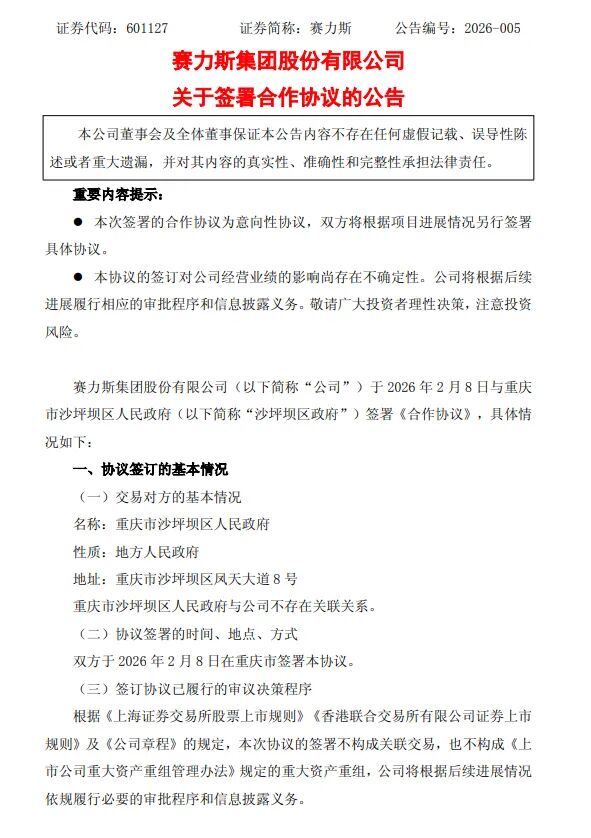
赛力斯剥离蓝电汽车资产 后者交由政府主导控股
Jing Ji Guan Cha Wang· 2026-02-09 12:56
Core Viewpoint - The announcement by Seres Group regarding the signing of a cooperation agreement with the Shapingba District Government indicates a strategic shift, focusing on asset optimization and long-term development by divesting the Blue Electric brand assets [2][3]. Group 1: Asset Divestiture - Seres Group will establish a new company by divesting its Blue Electric assets, with the Shapingba District Government and other investors contributing capital [2]. - Post-divestiture, Seres will hold approximately 32% of the new company, losing its controlling stake and influence over the Blue Electric brand's future [2][3]. - The collaboration aims to enhance the company's asset structure and aligns with its current development strategy [2]. Group 2: Blue Electric Brand Performance - The Blue Electric brand, launched in March 2023, aims to penetrate the mainstream electric vehicle market priced between 100,000 to 150,000 yuan [3]. - Despite initial expectations, Blue Electric's market performance has been underwhelming, with projected sales of over 20,000 units for the year 2025 [3]. - The decision to divest Blue Electric is seen as a rational move to allow Seres to concentrate on its more successful brand, AITO, which has significantly outperformed Blue Electric [3]. Group 3: AITO Brand Success - AITO brand has delivered over 420,000 vehicles by November 2025, accounting for 89% of Seres' total electric vehicle sales [4]. - The brand's high pricing strategy has positively impacted Seres' financial performance, with a reported revenue of 110.53 billion yuan and a net profit of 5.31 billion yuan for the first three quarters of 2025 [5]. - The divestiture of Blue Electric is expected to further improve Seres' financial metrics by eliminating the underperforming asset from its balance sheet [5]. Group 4: Future Developments - The Shapingba District Government will take the lead in the future development of the Blue Electric brand, although specific plans have not been disclosed [5]. - Seres is also expanding into robotics, having established a joint venture for this purpose, indicating a diversification strategy beyond electric vehicles [5][6].