奕境

Search documents
广汽想借华为“摸鱼”,不过还是有四个难题
虎嗅APP· 2026-03-17 14:03
Core Viewpoint - The article discusses the strategic collaboration between GAC and Huawei in the niche market of shooting brake vehicles, highlighting the challenges and potential opportunities in this segment as GAC aims to leverage Huawei's technology to enhance its brand and product offerings [6][9][37]. Market Overview - The shooting brake market in China is currently small, with an expected market share of less than 3% by 2026 [2]. Despite its niche appeal, GAC has decided to enter this market with the launch of the Envision GT7, which is set to debut on March 17 and is equipped with advanced technologies from Huawei [4][10]. Strategic Intent - GAC's decision to collaborate with Huawei is seen as a strategic move to address its financial challenges, with projected net losses of 8-9 billion yuan in 2025 [6][17]. GAC Chairman Feng Xingya emphasized the importance of the Envision project for the company's long-term development, prioritizing it as a key initiative [6][9]. Competitive Landscape - The market for shooting brake vehicles is becoming increasingly competitive, with several new models expected to launch in the 20-35 million yuan price range [7]. Existing models like NIO ET5T and Zeekr 007GT have shown stable market performance, but the overall segment remains under pressure due to low resale values and supply chain issues [8][31]. Challenges Faced - GAC faces several challenges in the shooting brake market, including pricing strategies, user experience, brand perception, and internal reform processes [32][35]. The pricing of the Envision GT7 is critical, as exceeding 350,000 yuan may lead to competitive pressure, while pricing it too low could result in reduced features [32]. Collaboration Dynamics - The partnership between GAC and Huawei is characterized by a deep integration of teams, with over 200 Huawei engineers working alongside GAC's staff to ensure collaborative decision-making and product development [22][23]. This embedded approach aims to combine GAC's manufacturing expertise with Huawei's technological capabilities [20][21]. Future Outlook - The success of the Envision GT7 will depend on its ability to meet market expectations for quality and performance, especially as the automotive industry shifts focus towards reliability and traditional manufacturing standards [38]. The upcoming launch will be a critical test for both GAC and Huawei in establishing their presence in the shooting brake segment [38].


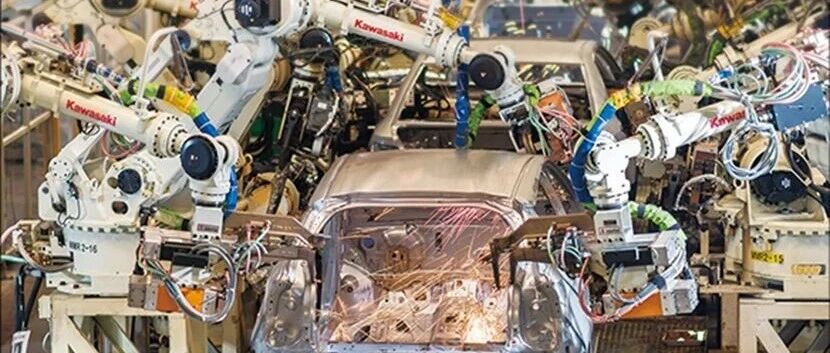
拟首超50%!东风汽车“借东风”
Zhong Guo Ji Jin Bao· 2026-02-06 15:20
Core Viewpoint - Dongfeng Motor aims to achieve a significant milestone in 2026, with annual sales targets of 3.25 million vehicles, including 1.7 million new energy vehicles (NEVs) and 600,000 exports, leading to a NEV penetration rate exceeding 50% for the first time at 52.31% [2][4]. Group 1: Sales and Market Strategy - Dongfeng Motor's sales target for 2026 is ambitious, with a focus on both scale and efficiency as it transitions from an investment phase to a harvest phase [4]. - The company plans to launch strategic new models, including the Mengshi U series and the Lantu H series, alongside key products from Yipai and Fengshen in 2026 [12]. - The company aims to have a strong presence in every market segment with models that can win customer acclaim [14]. Group 2: Technological Advancements - 2026 is designated as the "Year of Technology Realization" for Dongfeng, with plans to implement advanced technologies such as the next-generation high-efficiency Maher engine and the Tianyuan intelligent driving system [6][8]. - Dongfeng's R&D investment intensity reached 7.9% in 2025, and it has maintained the highest number of invention patent authorizations among Chinese independent vehicle manufacturers for four consecutive years [7]. - The company has achieved a 67% localization rate for chips in its self-owned brand vehicles, emphasizing the importance of foundational technology and self-control in competitiveness [9]. Group 3: Organizational Structure and Innovation - Dongfeng is deepening its "One Dongfeng" strategy to create synergy among its various brands, which include Mengshi, Lantu, and Yipai Technology [10]. - The company is enhancing its organizational structure to allow greater autonomy for frontline business units, enabling quicker decision-making and responsiveness to market changes [14]. - Dongfeng is building a comprehensive innovation system from exploration to mass production, including the establishment of a significant integrated die-casting production line and a key laboratory for automotive intelligent technology [9].

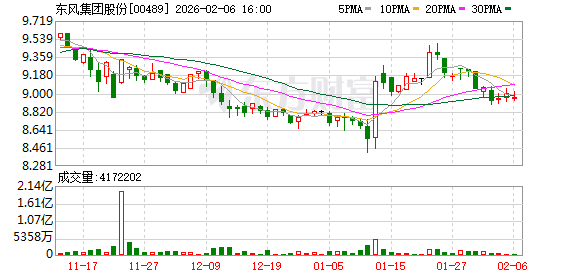
东风汽车:2026年加速迈向智能化、绿色化、融合化
Zheng Quan Ri Bao Wang· 2026-02-06 07:15
Group 1 - Dongfeng Motor's new energy vehicle sales reached 1.05 million units in 2025, a year-on-year increase of 21%, with self-owned brand sales exceeding 1.5 million units, accounting for over 60% of total sales, marking a transition from the "investment phase" to the "harvest phase" [1] - The company's R&D investment intensity reached 7.9%, with the number of invention patents granted ranking first among Chinese independent vehicle manufacturers for four consecutive years; the DF30 automotive-grade high-end MCU chip has entered mass production, achieving full-stack domestic control [1] - Dongfeng's Mahle hybrid engine has achieved a thermal efficiency of over 48%, setting a new industry record, and the largest 16,000-ton integrated die-casting production line has been completed and put into operation [1] Group 2 - Dongfeng Motor aims to achieve overall annual sales of 3.25 million units, 1.7 million new energy vehicles, and 600,000 exports by 2026, focusing on "intelligent, green, and integrated" transformation [2] - The company plans to transition from "technical realization" to "value resonance," with the new generation Mahle power system and high-performance DF30 chip set for large-scale deployment [2] - The "Yijing" brand, co-created with Huawei, will make its global debut in March 2026, while various new models across different segments are set to launch, including the Dongfeng Mengshi U series and Dongfeng Lantu's high-end offerings [3]
成都打响“下半场”逆袭战
Si Chuan Ri Bao· 2026-01-14 19:17
Core Insights - The establishment of Jetta Sichuan marks a significant milestone for Chengdu's automotive industry, allowing for local market-oriented research and rapid decision-making, which is crucial for adapting to the electric vehicle (EV) market [2][3] - Chengdu aims to transform its automotive industry from assembly-based operations to a more integrated model that includes R&D, manufacturing, and sales, thereby enhancing its competitiveness in the EV sector [2][3] Industry Overview - Chengdu has over 10 automotive manufacturers, primarily functioning as assembly plants, lacking headquarters and R&D capabilities, which hindered its response to the EV wave [2] - In 2025, Chengdu's automotive production reached 821,000 units, a year-on-year increase of 26.6%, with EV production at 205,000 units, reflecting a remarkable growth of 198.3% [2] Strategic Developments - Jetta Sichuan, with a registered capital of 3 billion yuan, is positioned to lead the development of smart electric vehicles tailored to local needs, supported by local government and strategic partnerships with major automotive players [3] - The collaboration between local governments and automakers like FAW and Dongfeng aims to create "city partners" and "industry partners," fostering a supportive ecosystem for the automotive sector [3] Future Goals - Jetta Sichuan plans to produce 400,000 to 500,000 vehicles annually, with five new models, four of which will be EVs, expected by 2028 [3] - Chengdu targets to exceed 1.5 million vehicles in production and 300 billion yuan in output by 2030, aiming to reclaim its position among the top automotive cities in China [3]
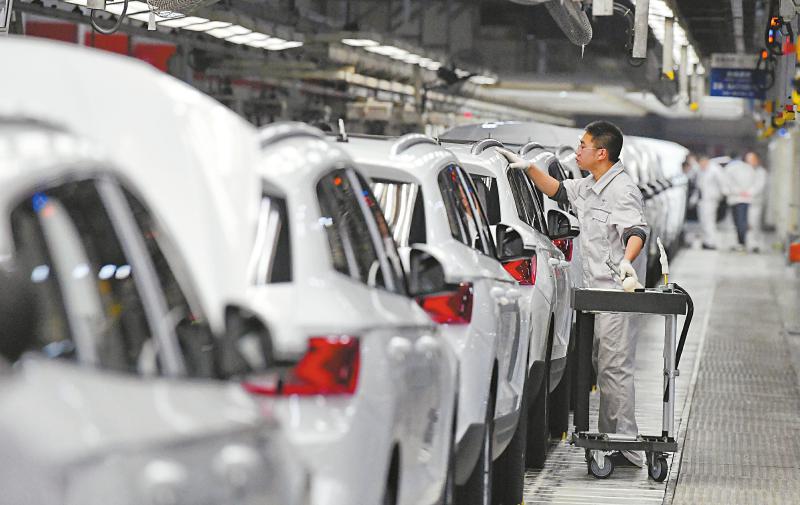
2025中国汽车行业十大年度品牌热点 | 精进2025——汽车行业10个十大年度盘点
Jing Ji Guan Cha Wang· 2026-01-09 09:33
Core Insights - The automotive industry in China experienced significant changes in 2025, characterized by a mix of opportunities and challenges, with a focus on innovation and collaboration among companies [2][4] - The report highlights the "Top Ten" annual reviews across various categories, reflecting the industry's evolving landscape [2] Group 1: Market Dynamics - The Chinese automotive market is undergoing accelerated differentiation and reshuffling, with leading companies expanding their ecosystems while some brands face pressure [4] - The competition has intensified, leading to a survival-of-the-fittest scenario, where some brands are on the brink of elimination [4][22] Group 2: Brand Influence - Chinese automotive brands are gaining global influence, with eight companies making it to the Fortune Global 500 list, marking a significant increase from previous years [5] - BYD, Geely, and Chery have notably improved their rankings, reflecting the rising global presence of Chinese brands [5] Group 3: Brand Strategy and Integration - Many automotive brands are restructuring their business architectures, with notable mergers and acquisitions, such as Geely's acquisition of Lynk & Co [7][8] - The trend of integrating brand operations is seen as a response to market pressures and a strategy to enhance competitiveness [9] Group 4: Technological Advancements - Companies are launching unique smart technology brands to keep pace with rapid advancements in intelligent technology, with several brands unveiling new systems and platforms [10] - The establishment of these technology brands is aimed at enhancing market perception and showcasing core competencies in smart mobility [11] Group 5: Foreign Brand Strategies - Foreign joint venture brands are initiating a "Localization 2.0" strategy, enhancing collaboration with local suppliers and adapting to the Chinese market [12] - This shift includes a focus on electric and intelligent vehicle development, indicating a more proactive approach to market integration [13] Group 6: Reputation Management - In response to negative online narratives, many automotive companies are taking legal action to protect their brand reputations, indicating a shift towards more aggressive reputation management strategies [19][20] - The industry is witnessing a rise in legal actions against misinformation, reflecting the importance of brand integrity in the digital age [21] Group 7: Market Exit and Brand Survival - Weaker automotive brands are facing significant challenges, with some declaring bankruptcy or undergoing restructuring to survive [22] - The industry is experiencing a natural selection process, where only the most adaptable brands are likely to thrive [23] Group 8: Sales Channel Evolution - The once-popular "supermarket store" model for car sales is losing traction, with many brands reassessing their sales strategies in favor of more traditional dealership models [24] - This shift indicates a move towards more sustainable and efficient sales practices in the automotive sector [25] Group 9: Luxury Brand Performance - The ultra-luxury automotive segment is facing declining sales in China, with several brands reporting significant drops in their sales figures [26] - The overall market conditions and changing consumer preferences are contributing to the challenges faced by these high-end brands [27]
百万交付之后 鸿蒙智行迎来“成长烦恼”
Zhong Guo Zheng Quan Bao· 2025-12-25 21:11
Core Insights - The company achieved a record of delivering one million vehicles in 43 months, marking the fastest milestone for new energy vehicle companies in China, with November deliveries reaching 81,864 units, a year-on-year increase of 89.61% [1] - The "Five Realms" matrix, consisting of multiple brands, is taking shape, with significant growth in the smart automotive ecosystem projected for 2025 [1][9] - Despite rapid growth, structural challenges are emerging within the new brands, particularly in sales adaptation and brand reputation [1][2] Brand Performance - The "Wenjie" brand remains dominant, with November sales of 51,677 units, accounting for 63% of total sales, while models M7, M8, and M9 are leading in their respective segments [2] - "Zun Jie" has surpassed the delivery volume of Porsche's Palamera in China, despite lower monthly sales of 2,000 units, indicating a strong reputation in the high-end market [2] - "Zhi Jie" has faced fluctuations in sales, with a peak of 12,000 units in November after a significant drop earlier in the year, highlighting the need for stable sales performance [2][3] Internal Challenges - The company needs to optimize product iteration and align with market demand, as evidenced by the delayed upgrades and inconsistent brand experiences across models [3][4] - "Xiang Jie" has a narrow market focus with only two models, leading to dependency on the performance of the S9T model, which has shown volatility in delivery numbers [4] - The internal resource allocation and market positioning between the "Five Realms" and the emerging "Jing" brands present challenges for ecosystem collaboration [6][9] Competitive Landscape - The rise of Huawei's "Jing" brands poses new challenges for the company's ecosystem, requiring effective resource distribution and differentiation in market positioning [6][7] - The competitive environment is intensifying, with rivals like Tesla and BYD optimizing their pricing strategies, while new entrants like Xiaomi and Zeekr accelerate product iterations [8] - The company plans to launch at least 11 new models by 2026, raising concerns about internal competition and resource coordination among multiple brands [8][9]
汽车业务利润暴涨,华为越生越有?
3 6 Ke· 2025-12-04 10:26
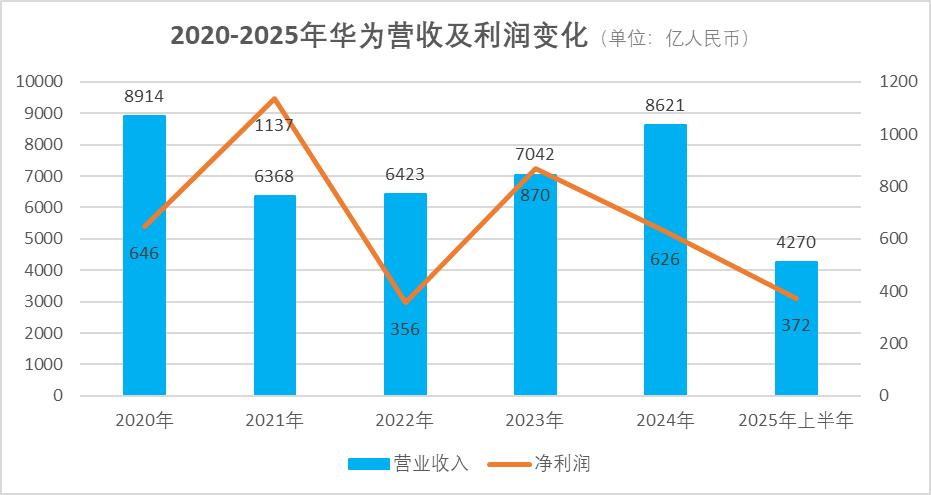
Core Insights - Huawei's collaboration with GAC and Dongfeng has led to the launch of the "Qijing" and "Yijing" brands, showcasing a competitive spirit among partners [1] - The monthly sales data for Hongmeng Zhixing reached 81,900 units, marking a record high and surpassing the monthly delivery ceiling for new car manufacturers [2] - Huawei's overall revenue for the first half of the year was 427.039 billion yuan, with a net profit of 37.195 billion yuan, reflecting a 3.95% year-on-year increase in revenue despite a 32% decline in net profit [4] Group 1: Huawei's Performance - The cumulative delivery of Hongmeng Zhixing surpassed one million units in October, achieving the fastest record among new forces in the automotive sector [4] - The automotive business unit (BU) reported a revenue of 27 billion yuan in the first half of the year, a 110% year-on-year increase, marking its first profitable period [4][5] - Huawei's strategy to enter the automotive market was aimed at compensating for declining smartphone sales, which appears to have been successful [4] Group 2: Competitive Dynamics - The introduction of the "Jing" series has intensified competition among Huawei's various brands, leading to concerns about internal competition and resource allocation [5][11] - The collaboration models between Huawei and car manufacturers vary, with Huawei taking on different roles from product definition to being a full-stack solution provider [7] - As more car manufacturers join Huawei's ecosystem, the resources and attention each brand receives may diminish, necessitating unique positioning to capture market share [11] Group 3: Challenges for Partner Car Manufacturers - Car manufacturers like BAIC Blue Valley and Jianghuai have seen their losses widen since partnering with Huawei, despite some achieving high gross margins [9] - The financial burden of sales service fees paid to Huawei impacts the net profit margins of these manufacturers, creating a paradox in their financial performance [9] - The competitive landscape is shifting as more traditional car manufacturers adopt Huawei's smart components, reducing the uniqueness of each brand [12]
鸿蒙智行珠玉在前,华为“境”字系能否超越“五界”?
Nan Fang Du Shi Bao· 2025-12-04 04:04
Core Viewpoint - Huawei is expanding its presence in the electric vehicle market through its new "Jing" series in collaboration with automotive companies, aiming to differentiate itself from its existing "Jie" series while leveraging its technological strengths in the industry [1][6]. Group 1: New Product Launches - On November 20, Huawei and Dongfeng Motor officially launched the new electric vehicle brand "Yijing," with the first SUV model expected to be released in Q3 2026, available in both pure electric and range-extended versions [1]. - In September, the "Qijing" brand was announced, developed in partnership with GAC Group, targeting the high-end smart electric vehicle market, with its first model, a shooting brake, set to launch in June 2026 [1]. Group 2: Competitive Landscape - The "Jing" series faces significant pressure as the "Jie" series has already established a strong market presence, covering a price range from 150,000 to 1.5 million yuan [2]. - Huawei's internal debate centers around two distinct approaches to vehicle manufacturing: one focusing on direct vehicle production and the other on providing technological support to existing car manufacturers [2][3]. Group 3: Business Models - Huawei's collaboration with car manufacturers includes three main models: component supplier, Huawei Inside (HI) model, and the "Jie" series, which involves deeper engagement in vehicle development and sales [2][4]. - The "Jing" series is seen as an upgrade to the HI model, emphasizing collaboration in product definition, development, and marketing, breaking traditional industry practices [4][5]. Group 4: Market Performance - Huawei's smart automotive solutions business reported revenue of 26.353 billion yuan in 2024, marking a 474.4% year-on-year increase and achieving profitability for the first time [6]. - The "Jie" series has achieved a cumulative delivery of over 1 million units in just 43 months, setting a record for new force brands in the electric vehicle market [6][7]. Group 5: Future Outlook - The competition between the "Jie" and "Jing" series will determine the future landscape of the electric vehicle market, with the need for differentiation becoming increasingly critical [5][7]. - As more automotive companies embrace Huawei's technology, the pressure on new entrants in the electric vehicle sector is expected to intensify [7].
华为乾崑携奕境品牌,探索家庭出行新答案
3 6 Ke· 2025-11-29 13:47
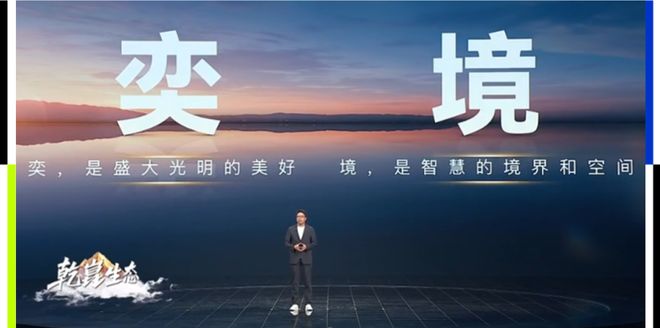
Core Insights - The collaboration between Huawei and Dongfeng has led to the launch of a new electric vehicle brand called "Yijing," which aims to redefine family travel experiences [3][5][9] - The partnership signifies a deep integration of technology and manufacturing capabilities, moving beyond traditional cooperation to a full-chain collaboration [5][23] - Yijing targets the high-quality family travel market, focusing on safety, intelligent experiences, and comprehensive care for all family members [12][24] Group 1: Brand and Collaboration - The Yijing brand was officially launched at the Huawei QianKun Ecological Conference on November 20, 2023, marking a significant milestone in the collaboration between Huawei QianKun and Dongfeng [3][5] - The partnership has evolved from initial smart networking cooperation to a comprehensive joint effort in product definition, project development, supply chain, and manufacturing [5][23] - The name "Yijing" was co-created with user input, reflecting a commitment to user-centric design and collaboration [16][19] Group 2: Product Features and Safety - Yijing's first model is set to debut at the Beijing Auto Show in April 2026, with plans for at least one new model to be launched annually thereafter [9][24] - The vehicles will incorporate advanced safety features, including a comprehensive collision avoidance system and a battery safety plan that has undergone over 80 validations [14][23] - Huawei QianKun's intelligent driving system has accumulated 5.811 billion kilometers of driving data, significantly enhancing safety and user experience [7][14] Group 3: Market Positioning and User Needs - The family travel market is highly competitive, with a focus on meeting unmet needs such as enhanced safety, intelligent features, and overall quality [12][24] - Yijing aims to address three key concerns for family users: comprehensive safety, exceptional intelligent experiences, and comfort for all passengers [12][24] - The collaboration emphasizes a systematic approach to vehicle development, integrating various aspects of research, supply chain, and manufacturing to create vehicles that meet family users' core demands [23][24]
华为乾崑携奕境品牌,探索家庭出行新答案
36氪· 2025-11-29 13:35
Core Viewpoint - The collaboration between Huawei QianKun and Dongfeng has led to the launch of a new electric vehicle brand, "Yijing," aimed at the high-quality family travel market, emphasizing safety, intelligence, and user experience [3][12][28]. Group 1: Brand and Collaboration - The "Yijing" brand was officially launched at the Huawei QianKun Ecological Conference on November 20, marking a significant partnership between Dongfeng, a state-owned automotive enterprise, and Huawei QianKun, a leader in intelligent driving [3][4]. - The collaboration has evolved from initial smart networking projects to a comprehensive partnership covering product definition, project development, supply chain, and manufacturing [6][28]. - The brand name "Yijing" was created through user engagement, reflecting a commitment to co-creation with consumers [20][25]. Group 2: Market Positioning and User Needs - "Yijing" targets the family travel market, which is highly competitive, focusing on unmet needs such as comprehensive safety, advanced intelligent experiences, and care for all family members [15][16][28]. - The brand aims to exceed user expectations by providing a vehicle that prioritizes safety, intelligence, and quality, moving beyond basic transportation needs [12][16]. Group 3: Technological Advancements - The latest version of Huawei QianKun's intelligent driving system has achieved significant milestones, including a cumulative driving distance of 5.811 billion kilometers, equating to 145,000 laps around the Earth [9][18]. - The safety features of the Yijing brand include a comprehensive collision avoidance system capable of addressing various driving conditions and scenarios, enhancing overall vehicle safety [18][28]. Group 4: Development and Design Process - The development teams from Huawei QianKun and Dongfeng have been working closely since June 2024, fostering a collaborative environment to address challenges and enhance product quality [23][24]. - User feedback has been integral to the design process, with multiple surveys conducted to ensure the vehicle's aesthetics meet consumer preferences [24]. Group 5: Industry Context and Future Outlook - The automotive industry is undergoing a transformation where success relies on integrated capabilities across research, organization, supply chain, manufacturing, software, and distribution [27][28]. - The launch of "Yijing" is seen as a timely response to the evolving demands of the automotive market, positioning itself as a leader in the next phase of industry competition [26][28].