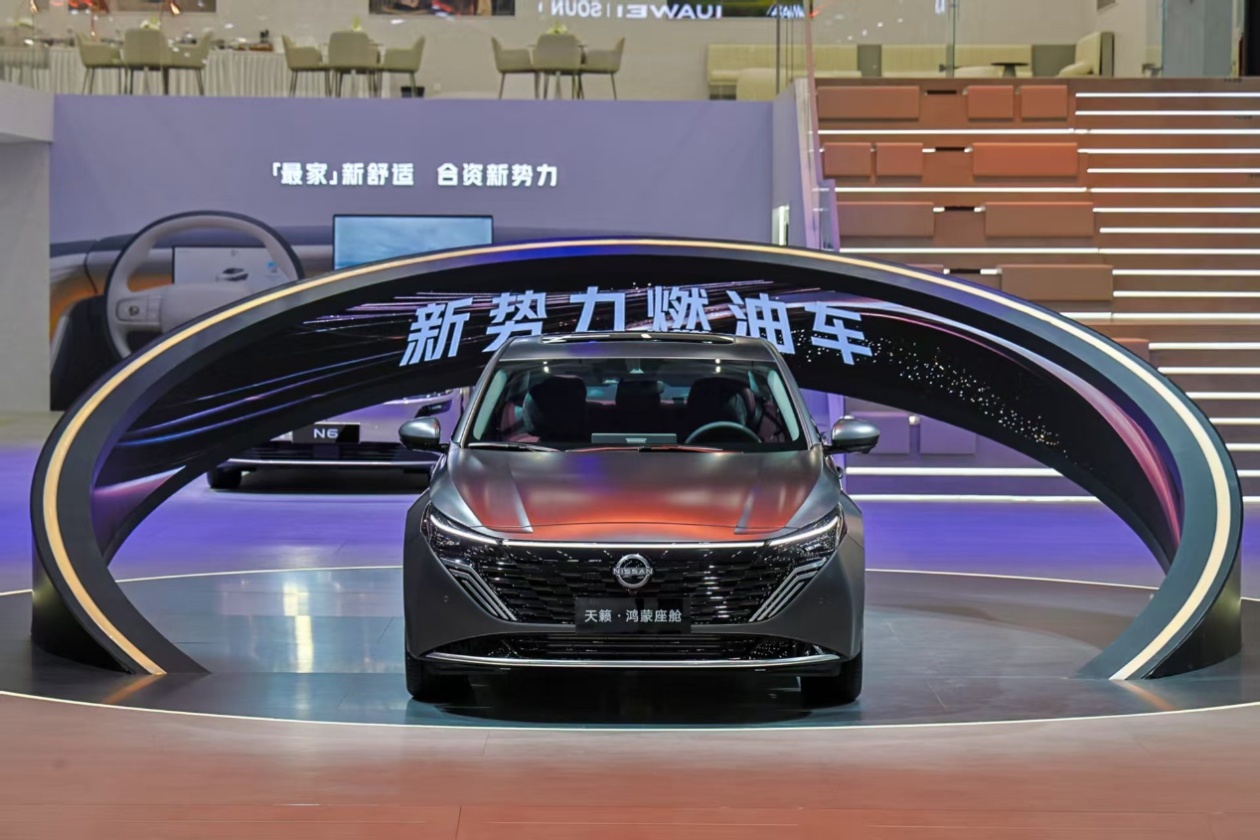
天籁·鸿蒙座舱车型

Search documents
超长车贷成车企标配“低月供”之下隐忧浮现
Jing Ji Wang· 2026-02-11 02:55
Core Viewpoint - The automotive industry is experiencing an intense competition with the introduction of "7-year ultra-low interest" car loans by companies like Tesla, NIO, and Xiaomi, alongside Nissan's "0 down payment, 8-year loan" scheme, reflecting the anxiety and strategic shifts in the market as the penetration rate of new energy vehicles exceeds 54% [1][3]. Group 1: Loan Offerings - Dongfeng Nissan has launched a "0 down payment, 8-year ultra-long low-interest loan" for its Tianlai model, with a total cost of approximately 140,000 yuan and a monthly payment of around 55 yuan [2]. - The 8-year loan option has been extended to all models in Dongfeng Nissan's lineup, with the lowest daily payment for the Xuan Yi model being 27 yuan [2]. - Other automotive companies, including Tesla, NIO, and Xiaopeng, have also begun offering similar long-term loan options, breaking away from the traditional 1 to 5-year loan terms [2][3]. Group 2: Market Dynamics - The shift to ultra-long-term low-interest loans is a response to fierce market competition and reflects traditional automakers' anxiety during the critical transition to new energy vehicles [3]. - By 2025, new energy vehicles are projected to account for 50.8% of domestic car sales, indicating a significant market shift [3]. - The regulatory environment has also facilitated longer loan terms, allowing banks to extend personal consumption loans from a maximum of 5 years to 7 years for long-term consumers [3]. Group 3: Risks and Concerns - The ultra-long car loans are primarily offered through financing leasing companies rather than traditional bank loans, which raises potential legal and financial risks for consumers [5][6]. - Consumers may not legally own the vehicle until all payments are made, leading to a situation where they could lose both the vehicle and their payments if they default [6]. - The depreciation of electric vehicles poses a risk, as the residual value may fall below the outstanding loan balance, creating a "negative equity" situation for consumers [6][7].




超长车贷成车企标配 “低月供”之下隐忧浮现
Shang Hai Zheng Quan Bao· 2026-02-10 18:09
Core Viewpoint - The automotive industry is experiencing an intense competition with companies like Tesla, NIO, and Xiaomi launching "7-year ultra-low interest" car loan schemes, while Dongfeng Nissan has introduced a "0 down payment, 8-year loan" plan, reflecting the anxiety and strategic shifts in the market as the penetration rate of new energy vehicles exceeds 54% [1][3]. Group 1: Loan Offerings - Dongfeng Nissan announced a "0 down payment, 8-year ultra-long low-interest loan" for its Tianlai model, with a price of 129,900 yuan and an interest rate of 4.88%, resulting in a monthly payment of approximately 55 yuan [2]. - The ultra-long loan scheme has been extended to all models in Dongfeng Nissan's lineup, with the lowest daily payment for the Xuan Yi model being 27 yuan [2]. - Other companies, including Tesla, NIO, and Xiaopeng, have also begun offering similar 7-year low-interest loan options, breaking away from the traditional 1 to 5-year loan terms [2][3]. Group 2: Market Dynamics - The shift to ultra-long low-interest loans is a response to fierce market competition and reflects traditional automakers' anxiety during the critical transition to new energy vehicles [3]. - Data from the China Automobile Industry Association indicates that by 2025, new energy vehicles will account for 50.8% of domestic car sales, highlighting the growing importance of this segment [3]. - The regulatory environment has also facilitated longer loan terms, allowing banks to extend personal consumption loans from a maximum of 5 years to 7 years for customers with long-term consumption needs [3]. Group 3: Risks and Concerns - The majority of ultra-long loan schemes are not traditional bank mortgages but rather financing leases, which introduce unique legal and financial risks [5]. - Consumers under financing leases do not legally own the vehicle until all payments are made, which can lead to potential loss of both the vehicle and the money paid if payments are missed [6]. - The depreciation of electric vehicles poses a significant risk, as the residual value may fall below the outstanding loan balance, leading to financial difficulties for consumers and asset security concerns for financial institutions [6][7].
东风日产天籁·鸿蒙座舱广州车展上市
Huan Qiu Wang· 2025-11-21 14:42
Core Viewpoint - Dongfeng Nissan officially launched the Tianlai Hongmeng cockpit model at the Guangzhou Auto Show, aiming to explore the deep integration of fuel vehicles and intelligent technology with a price range of 139,900 to 167,900 yuan [1] Group 1: Product Features - The Tianlai Hongmeng cockpit model is available in four configurations: Comfort, Super Comfort, Intelligent Super Comfort, and Flagship [1] - The vehicle features a "Flowing Light and Beauty" design language, equipped with a贯穿式 LED headlight and two exclusive body color options [4] - The interior boasts a 90% coverage of soft materials and offers three interior color choices [4] Group 2: Intelligent Configuration - The entire series is equipped with the Hongmeng Cockpit 5 system, featuring a 15.6-inch central control screen, mobile and vehicle interconnectivity, and OTA upgrades [6] - The voice assistant supports fuzzy semantic recognition and includes offline navigation capabilities [6] - The audio system, in collaboration with HUAWEI SOUND, comes standard with 15 speakers, with high-end models upgraded to 17 speakers, and features multi-layer soundproof glass for enhanced quietness [6] Group 3: Powertrain and Safety - The vehicle continues to use a 2.0T VC-Turbo variable compression ratio turbocharged engine, delivering a maximum power of 243 horsepower and a maximum torque of 371 Nm [6] - It is equipped with an L2-level intelligent driving assistance system and multiple active safety features [6] Group 4: Industry Context - The launch of the Tianlai Hongmeng cockpit reflects Dongfeng Nissan's exploration in the intelligentization of fuel vehicles [6] - As the automotive industry transitions towards intelligence and electrification, mainstream automakers are actively applying smart technology to fuel models to meet the needs of fuel vehicle users, who still represent a significant portion of the market [6]