
奔驰 S 级

Search documents
江淮汽车20260211
2026-02-11 15:40
Summary of the Conference Call for Jianghuai Automobile Company Overview - **Company**: Jianghuai Automobile - **Key Product**: ZunJie S800, a luxury sedan priced between 708,000 to 1,018,000 RMB, launched in May 2026 with significant market performance [2][3] Industry Insights - **Market Performance**: The ZunJie S800 has successfully captured market share from competitors such as BMW 7 Series, Audi A8, and Mercedes-Benz S-Class, leading to an increase in overall sales in the 700,000 to 1,000,000 RMB segment from approximately 3,000-4,000 units to over 8,000 units [2][3] - **Luxury MPV Market**: There is a notable lack of quality supply in the luxury MPV market, particularly for extended-range models. The penetration rate of new energy vehicles in the market above 600,000 RMB is only 21%, all of which are fully electric [6][7] Key Points and Arguments - **Customer Demographics**: The primary customers for the ZunJie S800 are high-net-worth males aged 40-50, with 80% being repeat buyers. These customers are less sensitive to price and prioritize comprehensive driving experiences [5] - **Sales Projections**: The company conservatively estimates monthly sales of 2,000 units for sedans and 5,000 units for the new hybrid luxury MPV, contributing an annual profit of between 2.3 billion to 5.18 billion RMB [2][9] - **Profitability Outlook**: Jianghuai Automobile expects to turn a profit by 2026, driven by reduced losses from Anhui Volkswagen and contributions from the ZunJie brand. Projected net profit for 2026 is 1.86 billion RMB, increasing to 7.51 billion RMB in 2027 [10][13] Future Product Launches - **Product Launch Timeline**: The ZunJie sedan series is currently at a peak delivery phase, with the MPV expected to launch in mid-2026 and achieve mass delivery by late summer [4][12] - **Sales Forecast**: The company anticipates selling 25,000 units each of sedans and MPVs in 2026, with total sales projected to reach 50,000 units. By 2027, total sales could approach 140,000 to 150,000 units [12] International Expansion - **Global Market Strategy**: Domestic high-end brands are increasingly expanding overseas, leveraging Jianghuai's established sales networks in over 132 markets and 1,200 service points to enhance profitability abroad [11] Financial Projections and Valuation - **Earnings Forecast**: The company is expected to achieve profitability in 2026, with a projected net profit of 1.86 billion RMB, and further growth to 7.51 billion RMB in 2027. The company is rated favorably based on comparable company PE ratios [13] - **R&D Impact**: R&D expenditures are expected to enhance per-vehicle profitability, with projected net profit per vehicle reaching approximately 50,000 RMB under stable conditions [14] Conclusion - Jianghuai Automobile is positioned for significant growth in the luxury vehicle market, with strong product offerings and a strategic focus on international expansion. The anticipated profitability turnaround and robust sales forecasts indicate a positive outlook for the company in the coming years.

奔驰140岁,正是闯的年纪!
电动车公社· 2026-01-31 16:02
Core Viewpoint - The article celebrates the 140th anniversary of Mercedes-Benz, marking the birth of the automotive industry, and highlights the brand's historical significance and its ongoing transformation towards electric vehicles. Group 1: Historical Significance - January 29, 1886, is recognized as the birth date of the automobile, with Karl Benz submitting the patent for the first vehicle [5][6] - Mercedes-Benz has a rich history, being a witness to all major events and technological changes in the automotive industry over the past 140 years [19] - The brand's legacy includes the establishment of the Daimler-Benz company in 1926, which solidified the Mercedes-Benz brand as we know it today [17] Group 2: Impact in China - 2026 marks the 40th anniversary of Mercedes-Benz's entry into the Chinese market, starting with the establishment of a subsidiary in Hong Kong [20] - The S-Class W140 series, produced from 1991 to 1998, became a symbol of luxury in China, despite being one of the least successful models in terms of sales [25] - Mercedes-Benz has maintained a leading position in the luxury car market in China, with 339,000 units sold in the first eleven months of 2025, despite overall sales declines [35] Group 3: Electric Transformation - The automotive industry is currently undergoing a significant shift towards electric vehicles, with Mercedes-Benz aiming for comprehensive electrification [51] - The new electric GLC model showcases advanced technology, including an 800V high-voltage platform and a range of 713 kilometers [54] - Mercedes-Benz is preparing for a competitive future in the electric vehicle market, with high demand for the new GLC model already leading to increased production efforts [56] Group 4: Technological Advancements - The upcoming new generation S-Class will feature over 50% new or optimized components, emphasizing a blend of historical legacy and modern technology [62] - The integration of advanced technology, such as AI virtual assistants and enhanced entertainment systems, reflects the brand's commitment to innovation [64] - Balancing historical significance with modern advancements is crucial for Mercedes-Benz as it navigates through different historical cycles [66]

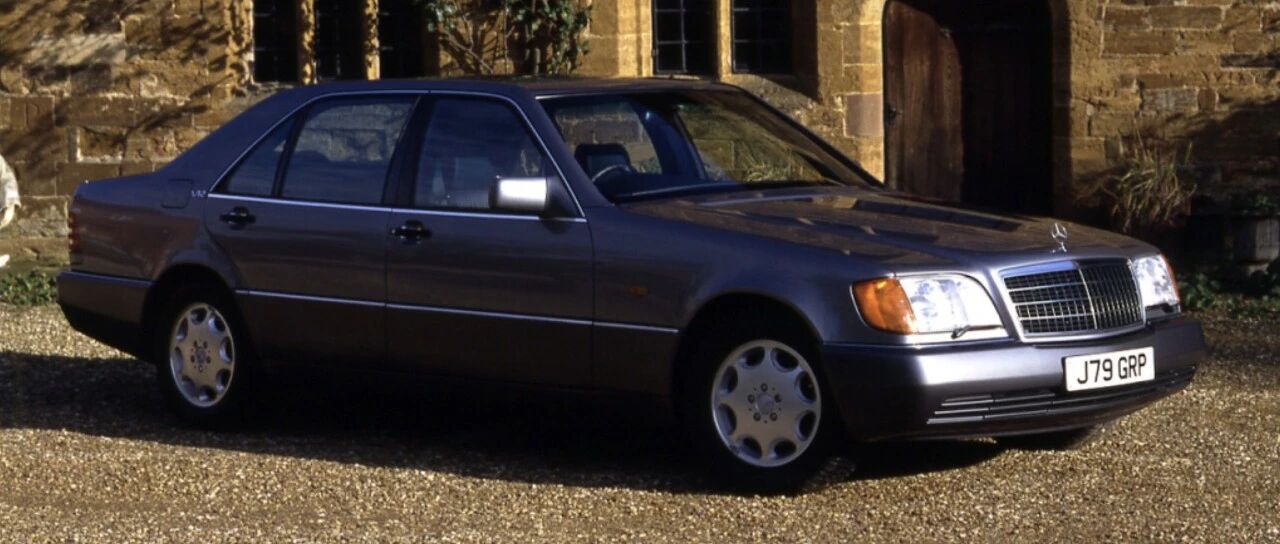
奔驰 S 级将迎“史上幅度最大改款”,新车 1 月 29 日发布
Xin Lang Cai Jing· 2026-01-14 14:09
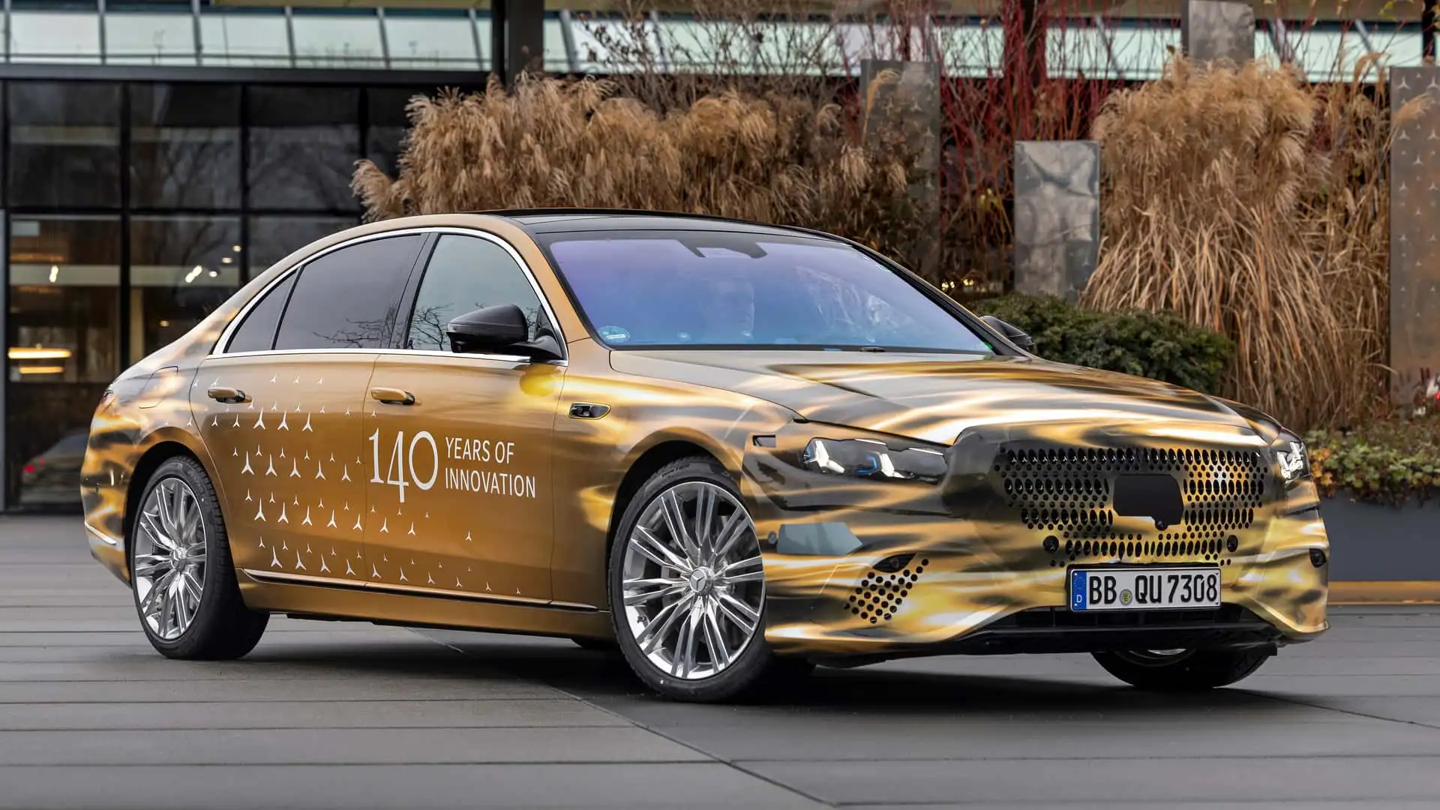
Core Insights - The Mercedes-Benz S-Class mid-cycle facelift will be officially launched on January 29, featuring the most extensive update in the model's history with approximately 2,700 new or redesigned components [1][7]. Powertrain Enhancements - The S450 and S500 models will be upgraded to the "M256 Evo" inline-six engine, with maximum torque increased to 600Nm, and a temporary boost to 640Nm via overboost [4][10]. - The higher-end S580 version will feature the "M177 Evo" flat-crank V8 engine, delivering 530 horsepower and 750Nm of torque, representing a significant improvement over the previous generation [6][10]. - The plug-in hybrid S580e will also see an upgrade, with system power increased by 74 horsepower and an expected electric range of over 100km under WLTP conditions [6][10]. - All gasoline versions will incorporate particulate filters and upgraded fuel systems, while diesel models will meet stricter emissions standards with the "OM 656 Evo" engine and will be the first to use electric heating catalysts for improved cold-start emissions [10]. Chassis and Suspension Improvements - The new model will feature rear-wheel steering as standard, with a steering angle of 4.5 degrees, and an optional 10 degrees to significantly reduce the turning radius of the long-wheelbase version [11]. - The air suspension system has been further optimized, allowing for pre-adjustment of damping based on cloud-based road condition data to enhance comfort [11].
豪车税收政策调整,国产新能源品牌如何“弯道超车”?
Haitong Securities International· 2025-07-20 12:28
Investment Rating - The report does not explicitly provide an investment rating for the automotive industry or specific companies within it. Core Insights - The adjustment of the ultra-luxury vehicle consumption tax aims to promote rational consumption and optimize the tax structure, with the threshold lowered from Rmb1.3 million to Rmb900,000, affecting both new energy vehicles (NEVs) and traditional luxury vehicles [1][9]. - The new tax policy is expected to significantly increase the purchase cost of ultra-luxury vehicles, dampening demand in the Rmb900,000–1.3 million price range, which accounted for only about 20,000 units sold in the first half of 2025 [2][10]. - Domestic NEV brands are presented with a historical opportunity to capture market share in the high-end segment, while imported brands like Porsche face significant challenges due to their reliance on models priced within the affected range [3][12]. Summary by Sections Tax Policy Changes - The consumption tax for ultra-luxury vehicles has been adjusted to include a 10% tax at the retail stage, while NEVs remain exempt from production-stage taxes, leading to a lower overall tax burden for NEVs compared to traditional fuel vehicles [2][11]. - Second-hand ultra-luxury vehicles are exempt from the consumption tax, which may stimulate the used car market and encourage consumers to opt for these vehicles to avoid new tax burdens [2][11]. Market Impact - The new tax policy is expected to further squeeze the market share of high-end imported brands, particularly Porsche, which saw a 49% year-on-year decline in sales in the first half of 2025 [3][12]. - Traditional luxury brands such as Mercedes-Benz and BMW are also anticipated to face pressure, with the pricing center for high-end NEVs expected to shift towards the Rmb500,000–600,000 range [3][12]. Strategic Adjustments - Imported brands must quickly adapt their strategies, either by reducing prices below Rmb900,000 or enhancing vehicle configurations to maintain competitiveness [4][13]. - Domestic brands, benefiting from tax exemptions, have more flexibility in pricing strategies, allowing them to mitigate the impact of the new tax policy through adjustments in vehicle configurations [4][14]. Fiscal Implications - The expansion of the tax base is projected to increase consumption tax revenue, helping to offset declines in ultra-luxury vehicle sales, with consumption tax revenue in the first five months of 2025 totaling Rmb772.9 billion, up 1.6% year-on-year [5][16]. - The policy encourages automakers to focus on the mid- to low-end NEV market, aligning with the trend of rising NEV price ceilings and discouraging blind expansion into the ultra-premium segment [5][16].
国内超豪华汽车专题:进口韧性未衰,自主破局或至
Guolian Securities· 2025-06-08 10:20
Investment Rating - Investment recommendation: Outperform the market (maintained) [7] Core Viewpoints - The report provides an in-depth analysis of the domestic ultra-luxury automobile market, highlighting the resilience of imported brands and the potential breakthrough of domestic brands. The market share of domestic brands is expected to grow from 0.8% in 2023 to 4.8% in 2024 [4][9][25]. - The ultra-luxury SUV market is highly competitive, with Porsche Cayenne leading, while domestic brand Yangwang U8 is starting to gain recognition. Imported brands dominate the ultra-luxury sedan market, but new high-end models from domestic brands like Yangwang U9 are entering the market [4][10][40]. - The ultra-luxury MPV market is led by Toyota Alphard, with domestic brand Zeekr 009 gradually making inroads [4][10]. Summary by Sections 1. Resilience of Imported Ultra-Luxury Cars and Structural Breakthrough of Domestic Brands - The overall sales of ultra-luxury cars remain resilient, with annual sales maintaining above 200,000 units. In 2024, the expected sales volume is approximately 200,000 units, a decrease of 15.2% year-on-year [9][21]. - Imported brands continue to dominate the market, but domestic brands are gradually increasing their market share, projected to rise from 0.8% in 2023 to 4.8% in 2024 [25][28]. 2. Intense Competition in Various Sub-Markets and Differentiation of Domestic Brands - The ultra-luxury SUV market is stable, with sales expected to reach 112,000 units in 2024, down 13.2% year-on-year. The top five models include Porsche Cayenne, Land Rover Range Rover, and Yangwang U8, with respective sales of 21,000, 19,000, and 7,000 units [30][32]. - The ultra-luxury sedan market is primarily dominated by imported brands, with 2024 sales expected to drop to 66,000 units, a 22.4% decrease year-on-year. However, domestic brands like Yangwang U9 and NIO ET9 are beginning to penetrate this market [40][42]. - The ultra-luxury MPV market is led by Toyota Alphard, with Zeekr 009 starting to gain traction, achieving over 2,000 units in sales in 2024 [51]. 3. Investment Recommendations: Focus on "New Luxury" Domestic Brands with Leading Smart Electric Technology - Domestic brands are expected to leverage advancements in electric and smart technologies to penetrate the ultra-luxury market. In 2024, China's new energy vehicle sales are projected to reach 12.87 million units, a 35.5% increase year-on-year [54][55]. - The report recommends focusing on brands like Yangwang from BYD and the joint venture brand Zunji from Jianghuai Automobile and Huawei, which are positioned to lead the high-end market [54][55].
