存内计算芯片

Search documents
公司问答丨炬芯科技:公司第一代存内计算芯片已上市 第二代存内计算技术的研发工作按计划推进中
Ge Long Hui A P P· 2026-02-03 08:01
Core Viewpoint - The company is making steady progress on the research and development of its second-generation in-memory computing technology IP, aiming to double the computing power of single-core NPU and optimize energy efficiency while fully supporting Transformer models [1] Group 1: Product Development - The first-generation in-memory computing chip has been launched and is rapidly gaining traction in terminal products [1] - The R&D work for the second-generation in-memory computing technology is proceeding as planned [1] Group 2: Market Positioning - The in-memory computing technology is expected to enhance product competitiveness and potentially increase the company's market share in the chip industry [1]

存内计算芯片,热度大增
半导体行业观察· 2025-10-26 03:16
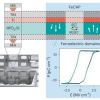
Core Insights - The article emphasizes the importance of edge AI and the need for efficient memory and computation solutions to reduce power consumption and latency in edge devices [3][4][10]. Group 1: Edge AI Challenges - Edge AI applications require real-time responses and often deal with sensitive data that cannot be shared with third parties, leading to strict limitations on computational resources [3]. - In typical mobile workloads, data movement in memory accounts for 62% of total energy consumption, highlighting the inefficiency of current memory systems [3]. Group 2: Memory Solutions - Near-memory computing and advanced memory technologies like RRAM (Resistive Random Access Memory) and ferroelectric capacitors are proposed as potential solutions to address power and performance issues [4][5]. - RRAM offers high read endurance but has low write endurance, making it suitable for inference tasks but challenging for training tasks that require frequent updates [6][9]. Group 3: Hybrid Approaches - Hybrid solutions combining RRAM and ferroelectric materials can leverage the strengths of both technologies, allowing for efficient training and inference in edge AI applications [5][7]. - The integration of ferroelectric transistors into CMOS processes is complex but necessary for achieving high performance in memory computing [6][7]. Group 4: New Computational Frameworks - Memory computing can enhance not only traditional neural network computations but also facilitate the development of new modeling methods, such as solving Ising glass problems [10][11]. - Future advancements in memory computing will require new software frameworks that can adapt memory access patterns to specific problem requirements, independent of external memory controllers [13].