安全GPT大模型

Search documents
构建网络安全发展新生态
Jing Ji Ri Bao· 2025-09-22 21:58
Core Viewpoint - The cybersecurity industry in China is experiencing significant growth and transformation, driven by advancements in technologies such as artificial intelligence, quantum communication, and 6G, alongside a shift from compliance-driven to risk-driven security needs [1][4][7]. Market Growth and Trends - The global cybersecurity market is projected to reach $216.8 billion in 2024, with a year-on-year growth of 12.3% [1]. - China's cybersecurity market is expected to grow from $11.2 billion in 2024 to $17.8 billion by 2029, reflecting a compound annual growth rate (CAGR) of 9.7% over five years [1]. - Global cybersecurity IT investments are forecasted to increase from $244.4 billion in 2024 to $416.2 billion by 2029, with a CAGR of 11.2% [2]. Industry Development and Challenges - The cybersecurity industry in China is transitioning from pure market expansion to a focus on high-quality and sustainable development, influenced by digital transformation and improved regulations [2]. - The number of new cybersecurity companies in China has been increasing, with 30 publicly listed firms by mid-2025, and 12 of 24 analyzed companies projected to achieve revenue growth in 2024 [4]. - The market share of leading cybersecurity firms is declining, while mid-tier and small enterprises are gaining ground, indicating a shift in competitive dynamics [4]. Standardization and Governance - China is advancing its cybersecurity standards framework, which includes developing standards for software supply chain security and data classification, to support healthy industry growth [3]. - The establishment of standards is crucial for the governance of emerging technologies, such as artificial intelligence, providing compliance baselines and technical references [3]. Collaboration and Innovation - Industry stakeholders are encouraged to collaborate to enhance the cybersecurity ecosystem, focusing on key areas like chip technology and artificial intelligence [5]. - The integration of AI in cybersecurity is rapidly evolving, with companies deploying AI-driven solutions to improve operational efficiency and threat response [6]. Emerging Threats and Opportunities - The rise of AI technologies presents both opportunities and risks, as they can be exploited for sophisticated cyberattacks while also enhancing defensive capabilities [7]. - Experts emphasize the need for a comprehensive security framework that incorporates AI capabilities into security management and operational practices to effectively counter evolving threats [7].
从上海到世界:2025世界人工智能大会见证中国AI刻度
Zhong Guo Zheng Quan Bao· 2025-07-27 21:07
Core Insights - The World Artificial Intelligence Conference (WAIC) in Shanghai has evolved from cautious exploration in 2018 to a major event featuring over 1,200 top experts and more than 100 new product launches, reflecting China's ambition in the global AI landscape [1] Industry Development - Shanghai has established a differentiated development pattern with "Mosu Space" focusing on model ecology and "Moli Community" targeting embodied intelligence, hosting over 500 "AI+" companies and nearly 200 AI firms respectively [1] - The AI industry in Shanghai has surpassed 118 billion yuan in scale, growing by 29% year-on-year, becoming a new engine for economic growth [6] Technological Advancements - The emergence of AI agents and large models is recognized as a key area for innovation, with 2025 expected to be the "Year of AI Agent Innovation" [2] - MiniMax's latest Agent product showcases strong programming and multi-modal capabilities, indicating a shift in the advertising ecosystem through AI [3] Governance and Safety - The WAIC emphasizes the importance of AI governance, addressing challenges such as hallucination outputs and deep forgery, while promoting international cooperation for AI safety and ethics [4][5] - The establishment of a global AI innovation governance center aims to facilitate international collaboration and standard-setting for safe AI development [5] Talent and Ecosystem - Shanghai's AI talent pool is approximately 300,000, accounting for one-third of the national total, with local universities enhancing AI-related programs to build a robust talent pipeline [7] - The city aims to create a world-class AI industry ecosystem by 2025, targeting a computing power scale of over 100 EFLOPS and establishing multiple innovation incubators [7]
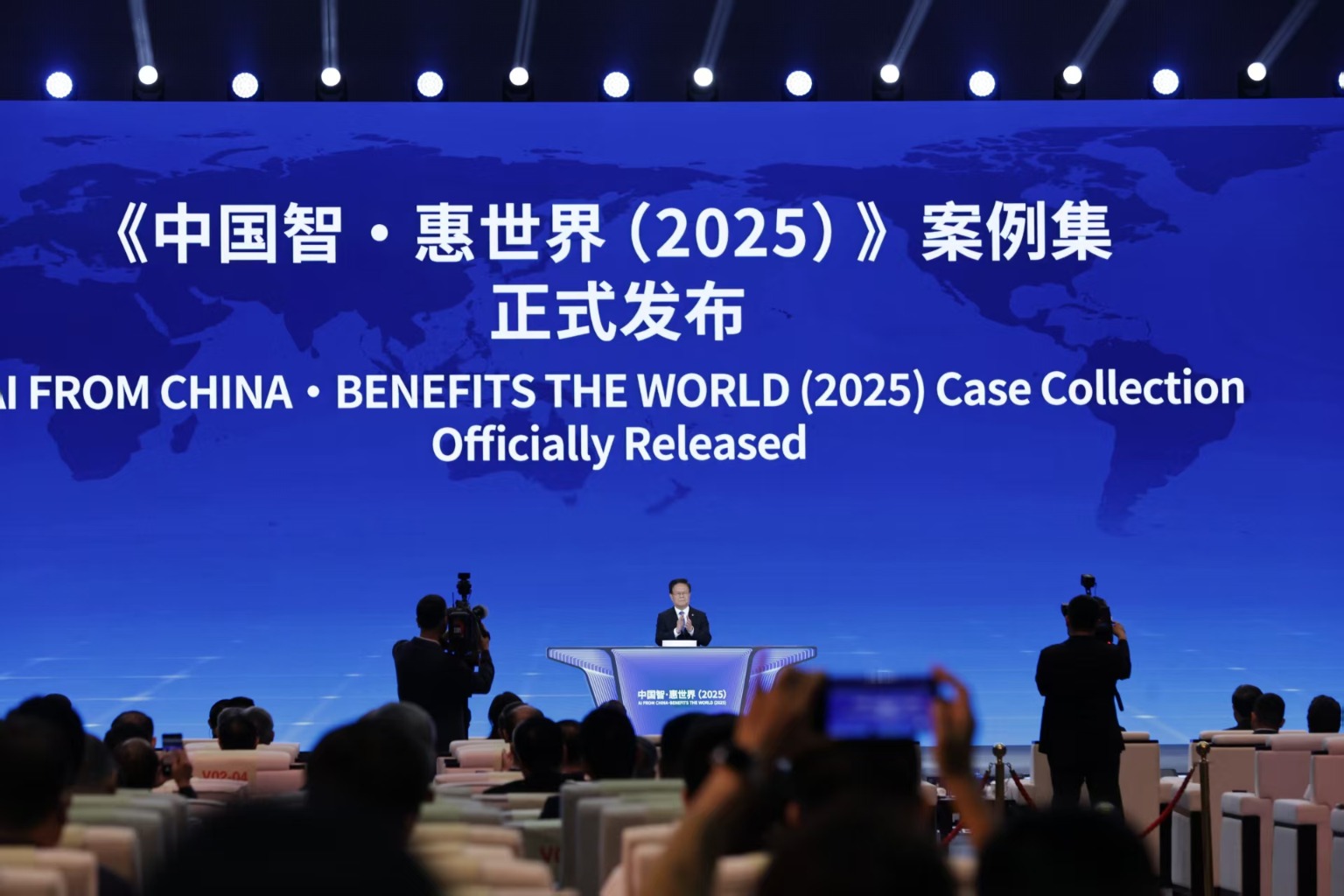
《中国智·惠世界(2025)》案例集发布 展现AI 国际合作多元成果
Xin Hua Cai Jing· 2025-07-26 04:58
Core Insights - The 2025 World Artificial Intelligence Conference and the High-Level Meeting on Global Governance of Artificial Intelligence were inaugurated in Shanghai, where the National Development and Reform Commission released the "China Intelligence: Benefits to the World (2025)" case collection, showcasing China's contributions to global AI development and international cooperation [1][4][5] Group 1: AI's Global Impact - Artificial intelligence is transforming lifestyles and has a profound impact on the global economy and technological development landscape, becoming a new focal point in global tech development [4] - The case collection highlights various international cooperation projects where Chinese AI products and technologies empower development across Asia, Africa, South America, and Europe [5] Group 2: AI Applications and Innovations - Examples of AI applications include a language model facilitating communication with disaster victims, AI in education transcending borders, and smart farming technologies enhancing productivity for farmers [5] - Other applications mentioned are AI in medical imaging analysis improving patient experiences, safety platforms for railways, and algorithms achieving zero casualties in mining operations [5] Group 3: Future Collaboration and Goals - China expresses willingness to collaborate with countries worldwide, using technology as a bridge to deepen AI applications in infrastructure, healthcare, climate change, and public safety [6] - The aim is to create a synergy in addressing global challenges through collaborative innovation and sustainable development [6]