官能化溶聚丁苯橡胶

Search documents
行业聚焦:全球官能化溶聚丁苯橡胶行业头部生产商市场份额及排名调查(附核心企业名单)
QYResearch· 2026-02-04 04:01
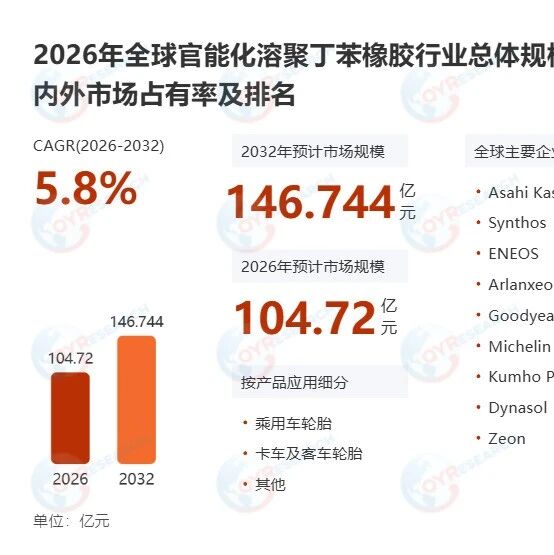
Core Viewpoint - Functionalized Styrene-Butadiene Rubber (F-SSBR) is a high-performance rubber material essential for manufacturing high-performance tires, particularly for electric vehicles, due to its superior properties such as low rolling resistance and high wet traction [2][12]. Market Overview - The global F-SSBR market is projected to reach USD 1,526.38 million by 2032, with a compound annual growth rate (CAGR) of 5.8% from 2026 to 2032 [4][19]. - The top 16 manufacturers dominate the market, with the top three companies holding approximately 44% of the market revenue share [6]. Product Type Segmentation - Non-oil-extended F-SSBR currently represents the largest demand source, accounting for about 62% of the revenue share [8]. Application Segmentation - Passenger car tires are the primary application, making up approximately 75% of the revenue share, driven by increasing demand for energy-efficient and low-emission tires [11]. Driving Factors - The rapid development of the automotive industry has led to a growing demand for high-performance tires, which require excellent wear resistance, tear resistance, and low rolling resistance [12]. Challenges - The production of F-SSBR involves complex polymerization and functionalization processes, requiring high technical standards and significant R&D investment, posing challenges for small to medium-sized enterprises [13]. Industry Development Trends - The growth of F-SSBR is primarily driven by the high-performance tire sector, with increasing standards for fuel economy and safety, particularly in the electric vehicle market [14]. - Chinese companies are rapidly advancing in F-SSBR technology, challenging the traditional dominance of international firms, with notable advancements in production capabilities and product quality [14].

中国石油“十四五”重点工程,投产!
Zhong Guo Dian Li Bao· 2025-10-31 11:34
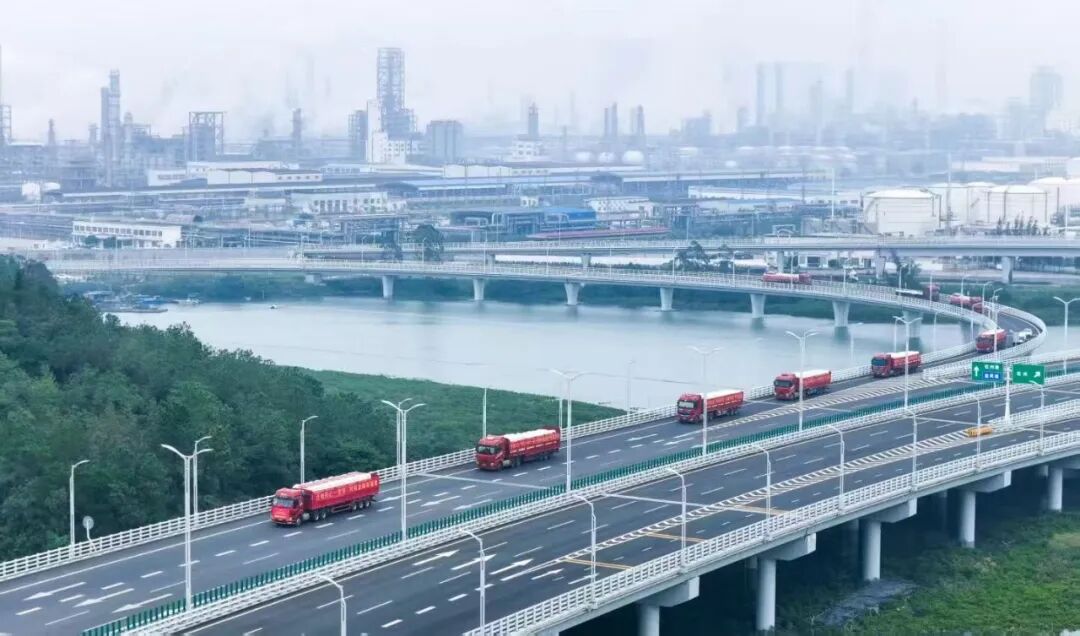
Core Viewpoint - The Guangxi Petrochemical Ethylene Project, a key initiative under China National Petroleum Corporation (CNPC) during the 14th Five-Year Plan, has been fully completed and is now operational, marking a significant milestone in China's petrochemical industry transformation [1][3]. Investment and Scale - The project has a total investment exceeding 30 billion yuan, establishing the largest million-ton ethylene facility in Southwest China, which signifies a critical shift from scale dependency to quality improvement in the petrochemical sector [3]. Technological Innovations - The project features several technological advancements, including the world's largest 200,000-ton diesel adsorption separation unit, which enhances raw material utilization efficiency by over 15% compared to traditional methods [22]. - It employs CNPC's proprietary technology for a 50,000-ton/year 1-hexene production unit, showcasing the company's capacity for independent technological development [10]. - The facility includes the first domestically designed and built 30000 cubic meter ethylene low-temperature tank, ensuring safe storage of ethylene at ultra-low temperatures [19]. Production and Environmental Impact - Upon full operation, the project is expected to reduce refined oil output by 3.49 million tons annually while increasing chemical product output by 3.06 million tons, addressing domestic supply gaps in functional rubber, high-end polyolefins, and advanced membrane materials [23]. - The project achieves 100% green electricity for its new power consumption, with energy consumption metrics for refining and ethylene units exceeding national benchmark standards, aligning with national green and low-carbon development goals [23]. Market and Economic Implications - The project is set to transform Guangxi's industrial landscape from basic chemicals to high-end chemical new materials, leveraging the Western Land-Sea New Corridor to expand market reach into Southwest China, South China, and ASEAN markets [23]. - It aims to create a trillion-yuan green chemical new materials industry cluster, stimulating downstream industries such as packaging, construction materials, and automotive sectors, fostering a "leading role and cluster development" industrial ecosystem [23].