宠物衣物

Search documents
“毛孩子”掀起消费热|经济观察
Sou Hu Cai Jing· 2026-01-20 09:30
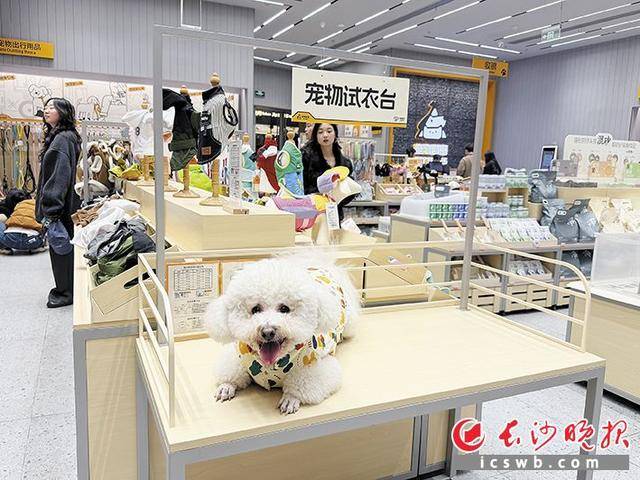
Core Viewpoint - The pet economy in China is experiencing significant growth, with the industry expected to reach a scale of 811.4 billion yuan by 2025, marking a 15.7% year-on-year increase, indicating a golden period of development for the sector [1]. Group 1: Rise of Specialty Pet Stores - Specialty pet stores are rapidly emerging in Changsha, driven by the increasing demand for pet products and services [1][3]. - The "Pet Tribe" store, opened in July 2025, offers a wide range of products including food, clothing, toys, and grooming services, along with a dedicated pet playground [3]. - Another store, "Dog Please Open," features a 1,500 square meter space with outdoor and indoor play areas, catering to pet socialization and offering unique packages for pet owners [4]. Group 2: Increasing Pet Ownership Among Young People - The number of pet dogs and cats in urban China has entered a rapid growth phase since 2017, with projections indicating over 124 million pets by 2024 [5]. - The proportion of pet owners from the "post-2000" generation has significantly increased from 10.1% in 2023 to 25.6% in 2024, reflecting a shift in consumer demographics [5]. - Young consumers are increasingly driven by emotional needs, with many willing to spend substantial amounts on their pets, highlighting a trend towards emotional consumption [5]. Group 3: Rapid Development of Related Industries - The expansion of the pet owner demographic is propelling the growth of related industries, with pet feed production reaching 1.006 million tons in the first seven months of 2025, a 14.5% increase year-on-year [6]. - During the 2025 "618" shopping festival, pet food sales on Tmall reached 7.5 billion yuan, marking a 36% year-on-year growth [6]. - Over 40% of pet owners actively engage in activities to enhance their pets' emotional well-being, indicating a willingness to invest in products that cater to their pets' emotional needs [6].

日本最大家居连锁店NITORI在中国关店收缩
Xin Lang Cai Jing· 2025-06-16 11:23
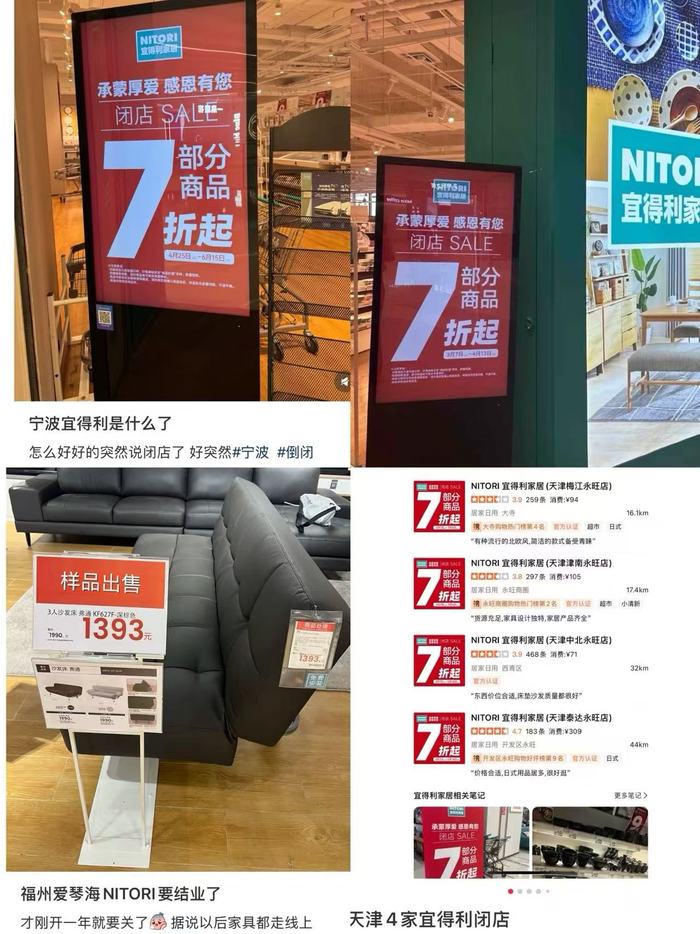
Core Viewpoint - NITORI, a Japanese home furnishings chain known as "Little IKEA," is quietly closing stores in China, indicating a shift in its operational strategy amid challenging market conditions [1][13]. Store Closures - NITORI has closed several stores in cities such as Fuzhou, Ningbo, Tianjin, and Beijing, with a notable closure of the Ningbo store on June 15 and the Beijing Huai Fang Wanda store in March [1][3]. - In the first half of 2023, NITORI closed 21 out of 84 stores in mainland China, resulting in a closure rate of 20% [14]. Sales and Promotions - The Beijing store, which opened less than three years ago, is experiencing stock shortages and significant discounts on furniture and home goods as it prepares to close by the end of August [3][5]. - Discounts of up to 30% are being offered on various products, indicating a strategy to clear inventory before store closures [5]. Expansion Plans - Despite recent closures, NITORI had plans for rapid expansion in China, aiming to open approximately 150 stores annually in the coming years, with a target of reaching 200 stores per year within five to six years [8]. - The company has seen a significant increase in store openings, with plans to reach 105 stores by the end of 2024, compared to an average of fewer than 10 stores per year previously [8]. Financial Performance - NITORI's global revenue is projected to decline in the 2024 fiscal year, with operating and net profits also decreasing for five consecutive years [13]. - The challenging economic environment in China, particularly in the real estate sector and consumer spending, has contributed to the company's decision to close stores [13][14]. Competitive Landscape - NITORI faces competition from IKEA, which has also reported a decline in revenue, highlighting the challenges both companies face in the current market [14]. - The company is attempting to diversify its product offerings by introducing higher-frequency items such as clothing and pet supplies to maintain customer engagement [14][16].