客家围屋

Search documents
客从河洛来——重走客家千年迁徙路丨此途汇赣 路启八方“客从河洛来——重走客家千年迁徙路”行进式报道之二
He Nan Ri Bao· 2025-12-19 00:00
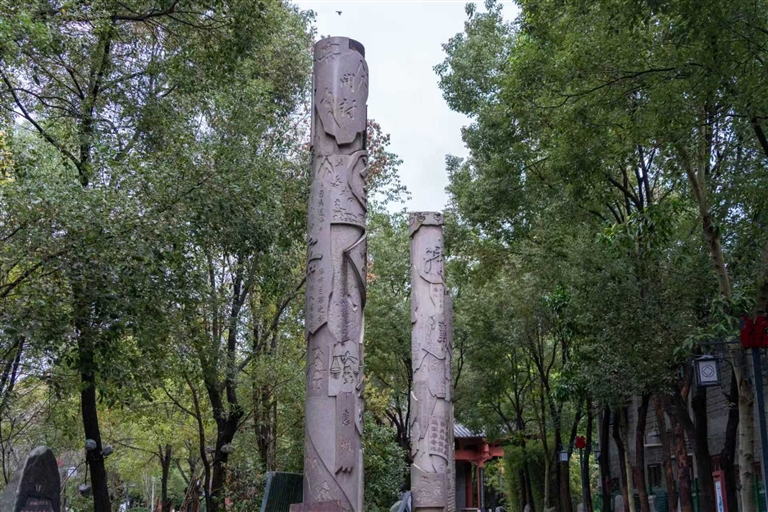
Core Insights - The article highlights the historical migration of Hakka ancestors from the Central Plains to Jiangxi, emphasizing the cultural significance of this journey and its lasting impact on Hakka identity and heritage [1][2][6]. Group 1: Historical Migration - The Hakka people migrated southward from the Central Plains over a period of more than 170 years, establishing a new home in Jiangxi, which became known as the "Hakka cradle" [2][6]. - Five commemorative pillars in the Jiangxi Hakka Museum symbolize the five major migrations of the Hakka people, serving as a spiritual landmark for their collective memory [2]. Group 2: Cultural Heritage - The architecture of Hakka roundhouses in Longnan City reflects the integration of Central Plains cultural elements with local traditions, showcasing the resilience and adaptability of the Hakka community [7][9]. - Traditional Hakka cuisine, such as the preparation of Lei Cha (pounded tea), illustrates the continuity of cultural practices from the Central Plains, adapted to local resources [10][11]. Group 3: Educational and Cultural Institutions - The Lianjiang Academy in Xingguo County represents the Hakka people's long-standing emphasis on education and cultural preservation, having played a significant role in local revolutionary history [14][17]. - Family teachings and cultural practices, such as the emphasis on filial piety and community harmony, are deeply rooted in Hakka traditions and continue to be passed down through generations [18][19]. Group 4: Modern Adaptation - The article discusses the modern revival of Hakka culture through innovative approaches, such as integrating traditional designs with contemporary products and utilizing technology to enhance cultural experiences [19].

廉洁文化中国行丨城湖江岭 文韵悠悠
Zhong Yang Ji Wei Guo Jia Jian Wei Wang Zhan· 2025-06-27 00:30
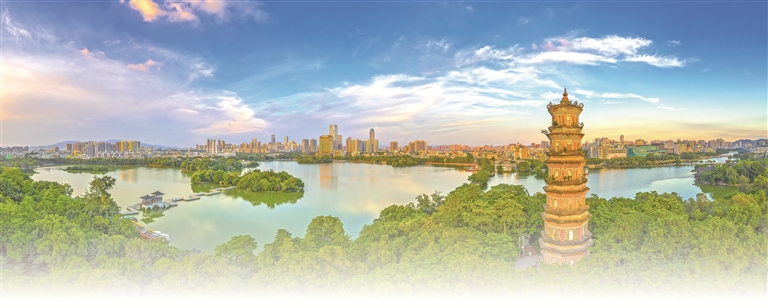
Group 1: Cultural Significance of Huizhou - Huizhou is known for its rich cultural heritage, blending various cultural influences including Dongpo culture, Hakka culture, and revolutionary red culture, making it a historical cultural city with a 5000-year civilization history [6][10] - The city is famous for its scenic West Lake, which is often compared to Hangzhou's West Lake, and has been shaped by the contributions of Su Dongpo, who lived there during his exile [10][11] - Su Dongpo's philosophies and literary contributions during his stay in Huizhou have had a lasting impact on the local culture, promoting values of integrity and dedication to the people [11][12] Group 2: Historical Figures and Their Legacy - General Ye Ting, a significant figure in Chinese history, was born in Huizhou and played a crucial role in the Chinese revolutionary movement, leading the first regular armed force directly controlled by the Communist Party [14][15] - The Ye Ting Memorial Park, which includes his childhood home and various historical buildings, serves as a testament to his contributions and the revolutionary spirit of the area [14][15] - The local architecture, such as the unique Hakka round houses, reflects the cultural and historical narratives of the region, showcasing the resilience and aspirations of the Hakka people [16][18] Group 3: Architectural Heritage - The architectural style of Huizhou, particularly the Hakka round houses, is characterized by defensive features and a symmetrical layout, representing the cultural identity and historical experiences of the Hakka community [18] - The construction of these houses often symbolizes the connection to homeland and the enduring spirit of the diaspora, as seen in the story of the "Biyun Tower" built by a Malaysian Hakka leader [16][18] - The intricate carvings and designs in these buildings not only serve aesthetic purposes but also convey deeper meanings related to family, community, and cultural heritage [17][18]