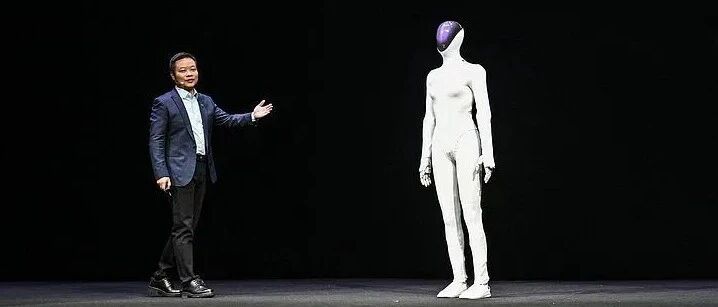
小鹏汽车IRON人形机器人

Search documents
“人形机器人”引争议,何小鹏:明年底将量产
新华网财经· 2025-11-07 03:43
Core Viewpoint - The global automotive market is valued at $10 trillion, producing 90 million vehicles annually, while the robotics market is projected to reach $20 trillion, with expectations of 200 million humanoid robots in the next 10-20 years [1][4]. Group 1: Humanoid Robot Development - Xiaopeng Motors unveiled the next-generation humanoid robot, IRON, which features a human-like spine, bionic muscles, and fully covered flexible skin, set for mass production by the end of 2026 [3][4]. - The company emphasizes that "more human-like" robots are the core development direction, as they can learn from human data through AI, adapt to human-designed environments, and foster consumer affinity, leading to increased sales and cost reductions [4][5]. Group 2: Market Potential and Growth - The CEO anticipates a significant growth phase for the robotics industry, similar to the "iPhone 4 moment" in technology, predicting that once the industry surpasses key technological and product milestones, it will experience rapid growth [5]. - The company believes that in 5-10 years, annual robot sales could exceed 1 million units, surpassing automotive sales, although acknowledges that mass production faces numerous challenges in the short term [5][6]. Group 3: Production and Standards - Xiaopeng Motors is preparing to invest in an automated factory to ensure high-quality production, noting that achieving reliable and stable mass production requires adherence to automotive-grade standards, if not exceeding them [5][6]. - The company plans to open its SDK for global developers to create additional functionalities and applications for its robots, promoting innovation and broader use cases [6]. Group 4: Broader Technological Integration - The humanoid robot is a key component of Xiaopeng Motors' strategy to integrate AI with the physical world, alongside other innovations such as the second-generation VLA, Robotaxi, and a flying vehicle system [7]. - The company aims to launch three Robotaxi models in 2026 and has initiated trial operations, while also progressing towards mass production of its flying vehicles, with a planned annual capacity of 10,000 units [8].