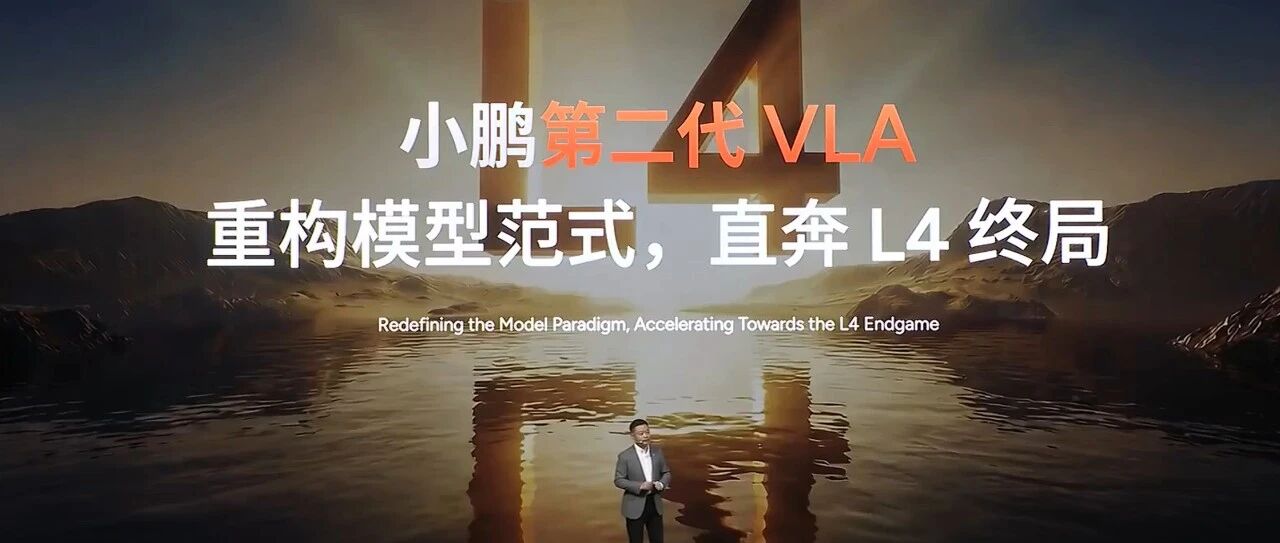
小鹏第二代VLA

Search documents
英伟达搅动L4,自动驾驶开始“二级跳”
3 6 Ke· 2026-04-01 08:16
Core Insights - The article discusses the evolution of autonomous driving technology, highlighting a shift from traditional learning-driven approaches to a new paradigm termed "Physical AI," which focuses on understanding real-world causal relationships and physical laws [2][3] - NVIDIA is leading this transition by launching the DRIVE AV platform and partnering with major automotive companies to accelerate the commercialization of Level 4 autonomous driving by 2026 [1][5] Group 1: Technological Evolution - Autonomous driving has progressed through phases of rule-driven, data-driven, and now learning-driven development, enhancing environmental perception and path planning capabilities [2] - The concept of "Physical AI" emphasizes a system-level reconstruction that allows AI to interact with the physical environment through simulation and causal understanding [2][4] - The new architecture for autonomous driving systems shifts from "perception + large model inference" to "understanding + reasoning + decision-making," enabling better handling of complex traffic scenarios [3][4] Group 2: Commercialization Trends - The investment logic in the autonomous driving sector is transitioning from "vision narrative" to "effect verification," focusing on clear paths to technology implementation and financial returns [5] - There are emerging "hidden gold mines" in the autonomous driving space, particularly in areas like autonomous buses and trucks, which have not been fully explored compared to more competitive segments like Robotaxi [5][6] - Autonomous buses are positioned as a significant opportunity due to their ability to meet high-frequency demand in urban microcirculation and public transport, supported by policy and social value [6][9] Group 3: Market Potential and Applications - The global market for urban buses is projected to reach $432 billion by 2032, with intelligent upgrades creating a substantial market opportunity for autonomous buses [6] - The commercial viability of autonomous buses is enhanced by their application in various scenarios, including tourism, urban public transport, and industrial parks, each with distinct revenue models [7][10] - The integration of autonomous buses into public transport systems is accelerating, with multiple countries incorporating them into their public transport upgrade plans, providing a clear policy framework for commercialization [9][10] Group 4: Future Outlook - The period around 2026 is identified as a critical window for the autonomous driving industry, where the focus will be on companies' self-sustainability and clear commercialization paths [12] - The collaboration between major players like NVIDIA and leading automotive companies indicates a shift towards practical applications of autonomous driving technology, moving from theoretical concepts to real-world implementations [1][12] - The article suggests that the autonomous bus segment, while less glamorous than Robotaxi, is paving the way for sustainable commercialization and broader acceptance of autonomous driving technology [12]


「华舟魔」三强之一,加速迈向物理AI
雷峰网· 2026-03-25 10:05
Core Viewpoint - The article discusses the recent $100 million funding round for Qianzhou Zhihang, emphasizing its strategic shift towards physical AI and the development of advanced technologies in autonomous driving and general physical AI [2][3][4]. Group 1: Funding and Strategic Shift - Qianzhou Zhihang completed a Series D funding round of $100 million, with investors including leading domestic automotive manufacturers and various investment funds [2]. - The company plans to enhance its research in world models and reinforcement learning, which are crucial for advancing physical AI technologies [3][4]. Group 2: Importance of Physical AI - AI can be categorized into digital AI, which processes information, and physical AI, which interacts with the physical world. The latter is still in its early stages, particularly in autonomous driving [4][5]. - The CEO of Qianzhou Zhihang highlighted that autonomous driving is the best entry point for physical AI, with the potential for significant opportunities in the next 5-10 years [5][6]. Group 3: Technological Development - The company aims to leverage structured data from autonomous driving to develop a robust world model, which is essential for understanding physical interactions in complex environments [7][9]. - The integration of world models and reinforcement learning is seen as a solution to the challenges faced in the unpredictable physical world, allowing for proactive decision-making in autonomous systems [9][10]. Group 4: Market Position and Production Scale - Qianzhou Zhihang has achieved a production scale of over 1 million vehicles equipped with its autonomous driving system, positioning itself among the top players in China's intelligent driving sector [12][13]. - The company plans to expand its model offerings significantly by 2026, with a focus on urban navigation assistance (NOA) capabilities [13][14]. Group 5: Competitive Landscape - The competitive landscape includes major players like Huawei and Momenta, each adopting different strategies to penetrate the market. Qianzhou Zhihang focuses on maximizing the efficiency of single-chip solutions for urban NOA [16][17]. - The company aims to target the price segment of 100,000 to 200,000 yuan, which represents a significant portion of the Chinese new energy vehicle market [17][18]. Group 6: Technological Integration and Future Plans - Qianzhou Zhihang's approach emphasizes standardization and compatibility across different vehicle models, allowing for rapid adaptation and deployment of its technologies [20][21]. - The company plans to showcase its latest technological advancements at the Beijing Auto Show in April 2026, highlighting its transition from L2 to L4 autonomous driving and general physical AI [24].
【重磅深度】2026年主流车企城市NOA试驾报告—3月小鹏第二代VLA专题篇
东吴汽车黄细里团队· 2026-03-23 15:41
Core Insights - The main contradiction in C-end automotive intelligence has shifted from coverage to experience optimization by 2026, with major intelligent driving manufacturers achieving urban NOA experiences in complex scenarios like roundabouts and U-turns, and enhancing high-level functions such as parking and ETC passage [2][9] - Between 2024 and 2026, the "impossible triangle" of intelligent driving was summarized, focusing on full-scene capability, human-like smoothness, and emergency handling in experience dimensions, while model dimensions include generalization, interpretability, and latency [3][29] - The second-generation VLA of Xiaopeng has shown significant improvements in road testing, including enhanced full-scene capability, smoother human-like interactions, and some remaining issues in lane selection and emergency response [4][9] Investment Recommendations - The company is optimistic about Xiaopeng Motors, believing its valuation system will transition from an automotive company to a physical AI technology company, with the second-generation VLA model accelerating its layout in C-end smart vehicles, B-end Robotaxi, and robotics [5][9] Technical Developments - The second-generation VLA model has achieved three major experience upgrades, including enhanced safety and smoothness, full-scene capability, and improved efficiency, with plans to cover all road scenarios by 2026 [38][39] - The architecture of the second-generation VLA has shifted from a standard VLA to an innovative VLA, reducing information loss and improving reasoning efficiency [34][39] Road Testing Results - The comprehensive score for Xiaopeng VLA 2.0 in road tests is 3.87, indicating it can handle most urban scenarios with an average takeover frequency of 1.66 times per session, showcasing excellent performance in complex scenarios like roundabouts [53][59] - The road testing highlighted the need for improvements in U-turn scenarios and path planning accuracy, with some instances of incorrect lane selection and navigation path execution [60][79]


小鹏汽车-W(09868):2025年年报点评:Q4业绩符合预期,物理AI转型可期
Soochow Securities· 2026-03-23 12:02
Investment Rating - The investment rating for the company is "Buy" (maintained) [1] Core Insights - The company reported Q4 revenue of 22.25 billion yuan, a year-on-year increase of 38.2% and a quarter-on-quarter increase of 9.2%. The automotive sales revenue was 19.07 billion yuan, up 30.0% year-on-year and 5.6% quarter-on-quarter, primarily due to the growth in new model deliveries. Service and other income reached 3.18 billion yuan, a year-on-year increase of 121.9% [7] - The company achieved its first quarterly profit in Q4 2025, with a net profit of 380 million yuan and a non-GAAP net profit of 510 million yuan [7] - The overall gross margin continued to grow, with a comprehensive gross margin of 21.3% in Q4 2025, an increase of 6.9 percentage points year-on-year and 1.2 percentage points quarter-on-quarter [7] - The company is committed to its AI transformation, planning to increase R&D investment in physical AI to 7 billion yuan in 2026. It aims to launch four new models in 2026, including a flagship SUV [7] - The company has set a target of 1 million units for the shipment of its Turing AI chips in 2026 and plans to achieve full-scenario OTA coverage with its second-generation VLA by Q2 2026 [7] - The earnings forecast has been adjusted, with expected revenues for 2026 and 2027 revised to 96.2 billion yuan and 126.5 billion yuan, respectively, reflecting year-on-year growth of 25% and 31.6% [7] - The projected EPS for 2026, 2027, and 2028 are -0.71 yuan, 1.12 yuan, and 3.38 yuan, respectively, with corresponding P/E ratios of 88.44 and 56 for 2027 and 2028 [7] Financial Summary - Total revenue forecast for 2024 is 40.87 billion yuan, with a year-on-year growth of 33.22% [1] - The company expects to achieve a net profit of 2.13 billion yuan in 2027 and 6.46 billion yuan in 2028 [1] - The projected comprehensive gross margin for 2026 is 17.96%, with a net profit margin of 1.69% in 2027 [8]
智驾、机器人双周报3:宇树招股募资42亿有何看点?-20260323
HTSC· 2026-03-23 08:17
Investment Rating - The report maintains a "Buy" rating for the industry, particularly highlighting companies like Yushu Technology and others in the robotics sector [8]. Core Insights - Yushu Technology has positioned itself as a leading player in the humanoid and quadruped robot market, with significant revenue and profit growth, indicating strong market confidence in the profitability potential of the humanoid robot industry [1][10]. - The company is expected to leverage its self-developed technologies and global scale to enhance its gross margin, which is projected to exceed 60% in 2025, showcasing its competitive edge in the industry [2][12]. - The IPO plans to raise 42 billion yuan, with a substantial portion allocated to developing advanced AI models for robots, aiming to enhance the company's capabilities in intelligent robotics [4][19]. Summary by Sections Production and Revenue Growth - Yushu Technology has achieved cumulative sales of over 30,000 quadruped robots, maintaining the global lead with 25,544 units sold in 2025, and humanoid robot shipments exceeding 5,500 units, also ranking first globally [2][10]. - The company's revenue for 2025 is projected at 1.708 billion yuan, reflecting a year-on-year increase of 335%, with a net profit of 288 million yuan, up 204% from the previous year [2][10]. Gross Margin and Cost Advantages - The gross margin has shown a consistent upward trend, increasing from 44.9% in 2022 to an expected 60% in 2025, driven by self-research and production capabilities that reduce costs [12][14]. - The company has established a pricing power due to its unique position in the market, with a significant portion of its revenue coming from high-margin products, particularly in the industrial sector [13][15]. R&D and Future Prospects - The IPO will fund 20 billion yuan towards intelligent robot model development, enhancing the company's AI capabilities and positioning it for future growth [4][19]. - Yushu Technology's strategy includes a dual-path approach to AI model development, which is expected to yield significant advancements in the company's robotic intelligence [18][19].
为何停售初代小米SU7?雷军:不想背刺老车主;AI大厂月薪3w疯抢文科生!网友:拯救了文科就业率;周鸿祎:将启动360安全龙虾全国巡装计划
雷峰网· 2026-03-18 00:31
Key Points - Xiaomi's CEO Lei Jun announced the discontinuation of the first-generation SU7 to avoid undermining existing customers, despite the impact on initial sales [4] - The new generation SU7 features significant upgrades in safety, power, and chassis, including a 10% increase in strength of the embedded roll cage and a maximum power output of 690 horsepower [5] - Huawei faced a large-scale account suspension issue affecting adult players, attributed to a potential error in their account verification system, raising concerns about user experience [10] - AI companies are increasingly hiring liberal arts graduates, with salaries for positions like AI trainers and ethical researchers reaching up to 30,000 yuan per month, indicating a shift in job market demand [12][13] - 360 Group's founder announced a nationwide installation plan for their AI product, following a security incident that raised concerns about user data safety [15] - Horizon Robotics is reportedly facing leadership changes with the departure of its chip development head, which could impact its competitive position in the market [17] - Alibaba is implementing an internal plan to provide employees with token allowances to encourage the use of AI tools in their work [20] - Dell announced a significant layoff plan affecting 11,000 employees, reflecting ongoing trends in the tech industry to reduce costs and optimize operations [37][38] - The global automotive industry has suffered over $35.4 billion in losses due to U.S. tariffs, with Toyota being the most affected company, facing an estimated cost of $9.1 billion [40][41]



小鹏汽车-W:小鹏第二代VLA开启推送,技术与新品周期共振-20260313
Guoxin Securities· 2026-03-13 00:40
Investment Rating - The investment rating for the company is "Outperform the Market" (maintained) [2][6]. Core Viewpoints - The company officially launched its second-generation VLA (Vision-Language-Action model) intelligent driving system on March 2, which supports full-scene assisted driving and is expected to push autonomous driving from niche to mainstream usage [3][5]. - The 2026 model of the Xiaopeng X9 electric vehicle was also launched on the same day, featuring five variants priced between 309,800 and 369,800 yuan, with significant upgrades in intelligent driving and comfort configurations [3][15]. - The second-generation VLA has improved response time by 80% and increased reasoning efficiency by 12 times, allowing vehicles to respond intuitively to sudden road conditions [4][8]. - The company has adjusted its revenue forecasts for 2025, 2026, and 2027 to 76 billion, 105 billion, and 140.2 billion yuan respectively, and net profits to -1.7 billion, 1 billion, and 4.1 billion yuan respectively [4][24]. Summary by Relevant Sections Product Launch and Features - The second-generation VLA system enables end-to-end decision-making by eliminating traditional intermediate steps, enhancing the vehicle's adaptability to various driving conditions [4][11]. - The 2026 Xiaopeng X9 features a high-voltage platform and AI battery, with a maximum range of 750 km and a charging time of just 8 minutes for 400 km of range [23][24]. Market Position and Strategy - The company aims to penetrate the high-end intelligent driving market with models priced under 200,000 yuan, promoting equality in high-level intelligent driving access [4][24]. - The product matrix includes new intelligent driving models, Robotaxi, and flying cars, aiming to redefine future mobility [4][24]. Financial Projections - The company has revised its revenue and profit forecasts due to external factors like industry subsidies and raw material costs, indicating a cautious outlook while maintaining an "Outperform the Market" rating [4][24].
国信证券晨会纪要-20260311
Guoxin Securities· 2026-03-11 01:21
Macro and Strategy - The macro review highlights that China's CPI increased by 1.3% year-on-year in February 2026, while PPI decreased by 0.9% year-on-year, indicating persistent inflationary pressures [7][8] - The fixed income analysis discusses the characteristics of "fixed income+" funds, emphasizing the importance of asset allocation to mitigate risks and smooth net value fluctuations [8][9] Chemical Industry - The methionine market has seen significant price increases due to rising energy costs, with domestic solid methionine prices reaching 24,000 RMB/ton, a 25.33% increase from late February [9][10] - Global methionine demand is projected to grow from 1.023 million tons in 2014 to 1.7 million tons by 2024, with an average annual growth rate of 5.21% [10] - The production costs for methionine are expected to rise sharply due to increased prices of key raw materials such as natural gas and methanol, which have seen significant price hikes [11] Automotive Industry - The penetration rate of NOA (Navigation on Autopilot) in urban areas reached 23% in December 2025, with significant advancements in smart vehicle technology [14][15] - The market for L2 and above autonomous vehicles is expanding, with a penetration rate of 39.5% as of December 2025, reflecting a year-on-year increase of 23 percentage points [16] - Investment recommendations include companies like XPeng Motors and Jianghuai Automobile, focusing on both complete vehicles and key components for smart driving technology [16] Military Industry - The 2026 national defense budget is set at 1,909.561 billion RMB, reflecting a 7% year-on-year increase, marking the 11th consecutive year of stable growth [17] Renewable Energy and Power Equipment - The demand for energy storage is expected to grow significantly, with global storage capacity projected to reach 455 GWh in 2026, a 40% increase year-on-year [20] - The green fuel sector is identified as a key area for energy security and development, with government initiatives supporting the transition to renewable energy sources [18][19] - Companies involved in solid-state batteries and sodium batteries are highlighted as key players in the evolving energy landscape, with significant advancements in technology and production capabilities [19] Company-Specific Insights - Shangmei Co., Ltd. anticipates a net profit growth of 42-44% year-on-year, driven by multi-brand strategies and channel optimization [22] - The company expects revenue to reach 9.1-9.2 billion RMB in 2025, reflecting a growth of 34.0%-35.4% [22]
汽车与汽车零部件行业周报、月报:地缘政治突发,关注新能源全球化机会-20260309
Guoyuan Securities· 2026-03-09 09:45
Investment Rating - The report maintains a "Buy" recommendation for the automotive and automotive parts industry [5] Core Insights - The report emphasizes that significant geopolitical events create substantial industry opportunities, aligning with Michael Porter's theory of national competitive advantage, which highlights the importance of external opportunities in industry growth [1] - The report notes that China's automotive industry has rapidly grown due to various external events, including the COVID-19 pandemic and the global chip shortage, leading to increased exports since 2019 [1] - The report identifies a potential turning point for Chinese electric vehicles (EVs) as they have established a leading position in technology and industry chain, with over 50% domestic penetration, but face challenges in overseas market demand [2][3] Summary by Sections Weekly Market Review (2026.02.28-03.06) - The automotive sector experienced a decline of 2.76% during the week, with most related sub-sectors also falling [11] - The Shanghai Composite Index decreased by 1.07%, while the automotive industry index fell by 2.76%, indicating a weaker performance compared to the broader market [11] Weekly Data Tracking (2026.02.28-03.06) - Notable sales figures for February 2026 show a decline in sales for major automakers compared to February 2025, with BYD experiencing a 41% drop [18] Industry News Highlights (2026.02.28-03.06) - Key developments include the announcement of the launch of advanced driver assistance systems by Geely, and the significant sales performance of BYD, which surpassed Tesla in 22 countries [20][29] - The report also highlights the implementation of a nationwide vehicle trade-in policy, which aims to stimulate new car sales [35][36] Investment Suggestions - The report suggests focusing on leading companies in the electric vehicle export layout, indicating a potential for significant growth in this area [3]

小鹏加速冲向L4终局:对VLA架构「动刀」成关键一环
机器之心· 2026-03-06 11:07
Core Viewpoint - The article discusses the emergence of physical AI, particularly through the advancements in the second-generation VLA (Vision-Language-Action) model by XPENG, which aims to revolutionize autonomous driving by eliminating the language translation layer and directly generating action commands from visual signals [2][5][39]. Group 1: Technological Advancements - The second-generation VLA has undergone significant improvements, achieving accurate recognition of various vehicle types and enabling real-time path planning in complex driving scenarios [8][10]. - The system supports full-scene driving assistance, capable of handling diverse environments such as parking lots and rural roads, ensuring a seamless driving experience from home to work [12][15]. - The second-generation VLA has demonstrated a 23% increase in overall driving efficiency compared to traditional L2 systems, particularly in urban traffic conditions [15]. Group 2: Architectural Innovations - The second-generation VLA represents a complete overhaul of the underlying technology, transitioning to an end-to-end "Vision-to-Action" architecture that enhances efficiency and response speed [19][20]. - It integrates a native multimodal tokenizer to unify the understanding of visual, auditory, and textual information, significantly improving the system's ability to process complex driving environments [21]. - The introduction of a new visual token pruning framework, FastDriveVLA, allows the AI to focus on essential information while ignoring irrelevant details, thus optimizing computational efficiency [24]. Group 3: Data and Infrastructure - XPENG emphasizes the importance of a robust AI infrastructure, having completed 468 model iterations in six months, and expanded its simulation scenario library from 30,000 to over 500,000 [34]. - The company has accumulated over 50PB of training data, with its vehicles processing 58.8 trillion physical AI tokens daily, which is nearly 80 times the daily usage of all digital AI in China [31][32]. - The integration of a world model for closed-loop simulation training allows XPENG to conduct extensive virtual testing, equivalent to 30 million kilometers of real-world driving [34]. Group 4: Future Implications - The advancements in the second-generation VLA are positioned as a significant breakthrough for the automotive industry, with expectations for it to lead to fully autonomous driving within the next three years [39]. - The unified physical world intelligence system developed by XPENG aims to continuously learn and evolve, setting a new standard for competition in the autonomous driving sector [39][40].