
山姆爆款烤鸡

Search documents
山姆开店第一大省 广东坐稳了
Xin Lang Cai Jing· 2026-01-06 00:12
Core Insights - Sam's Club, a subsidiary of Walmart, is aggressively expanding in Guangzhou, with significant investments indicating a strong commitment to the region [2][10] - The rapid opening of new stores in Guangzhou reflects a strategic response to the growing consumer demand and economic potential in the Guangdong province [4][10] Expansion Plans - The main structure of the Sam's Club project in Baiyun District has been completed, with plans for completion by mid-2026 and opening by the end of 2026 [2][6] - Sam's Club opened its third store in Guangzhou on December 22, 2025, marking a record year with a total of 10 new stores opened in China [3][12] - Future store openings include locations in Huangpu and other areas, aiming to create a comprehensive network around Guangzhou [7][9] Market Dynamics - The shift from a single store to multiple locations in Guangzhou is designed to capture high-income households within a 3-kilometer radius [7][10] - The average sales per store in Guangdong are higher than in most regions, with Guangzhou and Shenzhen ranking among the top globally [10][12] Consumer Behavior - The membership model of Sam's Club has proven effective, with a 90% renewal rate, indicating strong consumer loyalty [8][10] - The unique shopping experience and high-quality products cater to the affluent consumer base in the region, enhancing the brand's appeal [10][11] Financial Performance - Walmart China's net sales reached $6.1 billion (approximately 42.9 billion RMB) in the third quarter of fiscal year 2026, with a year-on-year growth of 21.8% [12] - Sam's Club's sales in China surpassed 120 billion RMB, with a projected increase to 140 billion RMB in 2025, reflecting a growth rate of approximately 40% [12]


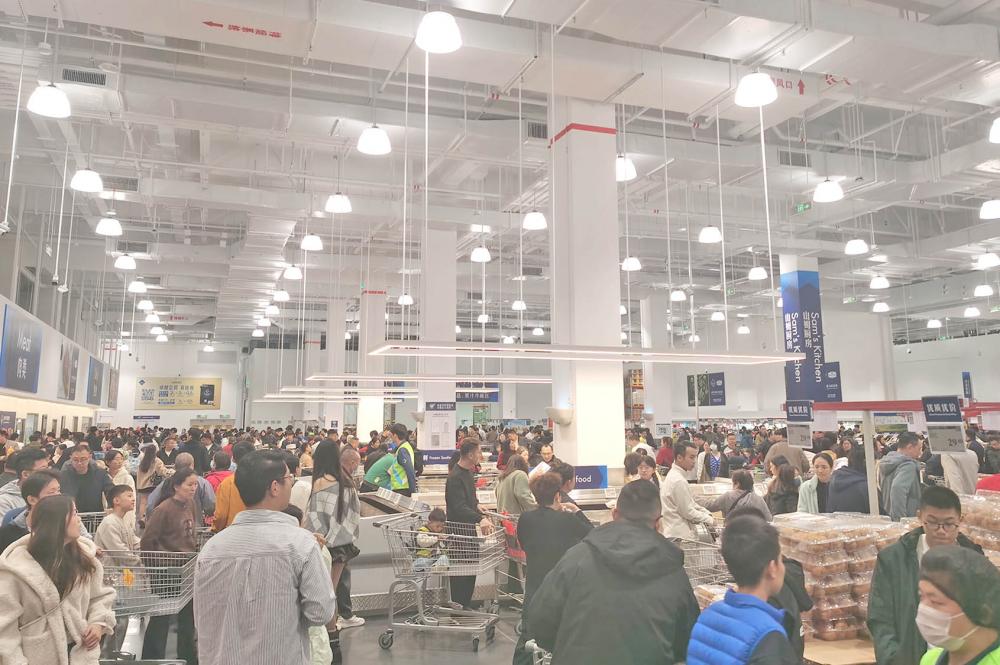
广东稳坐山姆开店第一大省,沃尔玛重仓大湾区
21世纪经济报道· 2026-01-05 04:35
Core Viewpoint - Walmart's Sam's Club is aggressively expanding its presence in Guangzhou, indicating a strong confidence in the region's economic potential and consumer demand [3][14]. Group 1: Expansion Plans - The main structure of the Sam's Club project in Baiyun District, Guangzhou, has been completed, with plans for completion by mid-2026 and opening by the end of 2026 [1]. - Sam's Club opened its Guangzhou Liwan store on December 22, 2025, which saw overwhelming customer turnout, indicating strong demand [5]. - A framework agreement was signed between the Guangzhou Development Zone Management Committee and Walmart (China) for a new store in Huangpu District, further expanding Sam's footprint in the region [3]. Group 2: Market Dynamics - Sam's Club has shifted from a single store in Panyu for 12 years to a rapid expansion, with 10 new stores opened in 2025 alone, marking a record for the brand in China [8][11]. - The turning point for Sam's Club's growth in Guangzhou was the opening of the Tianhe District Meilin Tiandi store in 2021, which achieved record sales and significant customer traffic [8]. - The average sales per store in Guangdong are higher than in most regions, with both Shenzhen and Guangzhou ranking among the top globally for sales [14]. Group 3: Consumer Behavior and Trends - The membership model of Sam's Club has proven effective, with a 90% renewal rate, indicating strong customer loyalty among high-income consumers [11]. - The demand for high-quality products and the unique shopping experience offered by Sam's Club align with the preferences of Guangzhou's affluent consumer base [14]. - The introduction of cross-border shopping services for Hong Kong and Macau residents has further boosted customer traffic and sales [15][18]. Group 4: Financial Performance - Walmart China's net sales reached $6.1 billion (approximately 42.9 billion RMB) in the third fiscal quarter of 2026, reflecting a 21.8% year-over-year growth [19]. - Sam's Club's sales in China surpassed 120 billion RMB, with a year-on-year growth of about 20%, exceeding the previous year's total by 20 billion RMB [19]. - Projections indicate that Sam's Club's sales in China will exceed 140 billion RMB in 2025, marking a 40% increase from 2024 [19].
