川渝火锅

Search documents
联合百大餐饮品牌覆盖超万家门店 京东外卖年夜饭预订正式开启
Zheng Quan Ri Bao Wang· 2026-02-10 11:09
Group 1 - JD.com launched a nationwide New Year's Eve dinner reservation service, partnering with over 10,000 restaurants across more than 100 cities [1] - User searches for "New Year's Eve dinner" on JD.com have increased eightfold since the service was launched, indicating strong consumer interest [1] - The service offers a variety of meal options, including traditional Chinese dishes, hot pot, and global cuisines, catering to diverse consumer preferences [1] Group 2 - The service features popular brands such as Dayali, Jinbaiwan, and Yunhaiyao, focusing on quality large dishes suitable for family gatherings [1] - Traditional New Year's Eve meals emphasize Beijing roast duck and regional specialties, while interactive hot pot options are expected to be popular choices for 2026 [1] - JD.com provides additional services for reservations over 100 yuan, including one-on-one delivery on New Year's Eve and special family photo printing for orders over 1888 yuan [1]

95后跨年怎么过?吃火锅烤肉、打台球、美发美甲……
Sou Hu Cai Jing· 2026-01-03 17:11
Core Insights - Urban consumption vitality was fully released during the New Year period, with cities like Shanghai, Nanjing, and Changsha showcasing strong local consumption activity [1][8] - Diverse consumption experiences, including shopping, cross-city travel, and winter activities, saw significant growth, indicating a robust experience economy [1][3] Consumption Trends - Supermarket shopping and cross-city tourism were popular, with supermarket coupon sales on Douyin increasing by 164% year-on-year, and sales of clothing and jewelry rising by 147% and 109% respectively [3] - The pet care sector also saw a notable increase, with pet grooming services growing by 63% [3] Travel and Accommodation - The travel market was vibrant, with hotel and guesthouse sales increasing by 93% and 97% year-on-year, respectively, and attraction ticket sales rising by 46% [3] - The "Heartfelt List" of hotels saw a 71% increase in sales and an 85% increase in order volume from December 19 to January 1 [3] Experience Economy - The offline experience economy became a new highlight, with "Pindou" handcraft experiences seeing a staggering 1461% increase in sales on Douyin [6] - Theme park visits and pottery experiences also gained popularity, with sales increasing by 106% and 99% respectively [6] Food Consumption - Food consumption remained a key focus during the holiday, with hot pot, chicken pot, grilled fish, and other dishes being particularly favored, and buffet sales increasing by 94% year-on-year [4] Regional Highlights - Cities such as Shanghai, Zhengzhou, Fuzhou, Chengdu, Wuhan, Guangzhou, Hangzhou, Beijing, Nanjing, and Changsha demonstrated strong local consumption vitality during the New Year holiday [8] - Hainan experienced a tourism surge, attracting visitors with its unique climate and travel resources, leading to high demand for group purchases of scenic area tickets and travel packages [8]


千亿火锅市场转向“价值增长”!这份报告讲透3大机会
Sou Hu Cai Jing· 2025-12-29 16:45
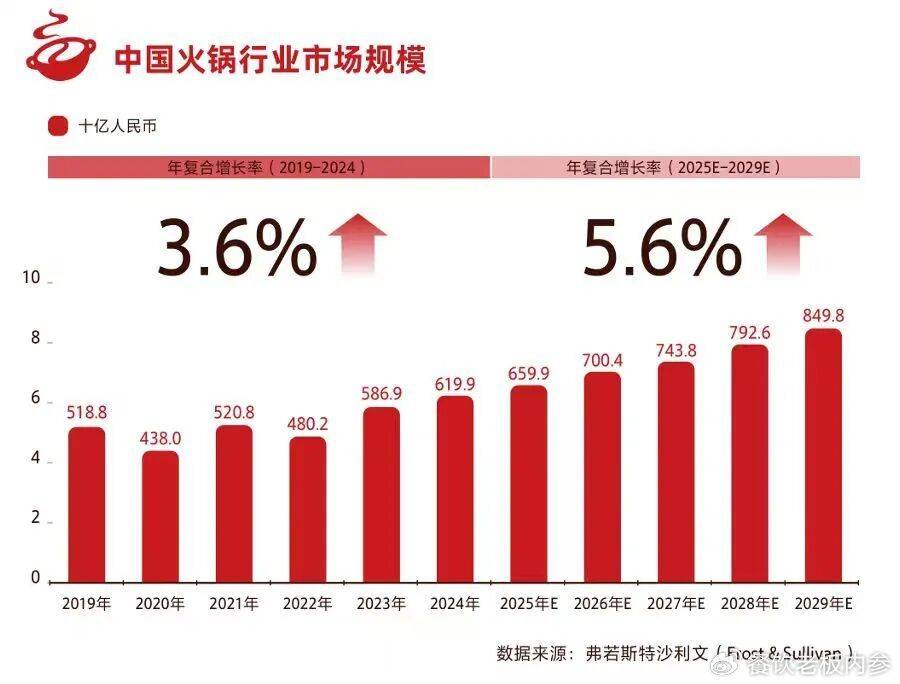
Core Insights - The hot pot industry is projected to grow significantly, with an estimated market size of approximately 619.9 billion yuan in 2024, increasing to 659.9 billion yuan in 2025, indicating a sustained high growth rate [1] - The number of hot pot establishments in China has reached 431,000 as of December 4, 2025, reflecting a year-on-year growth of 4.59% [3] - Regional hot pot varieties are gaining traction, with platforms like Douyin amplifying local flavors through short videos and live streaming, leading to a nationwide consumption trend [5] Market Growth and Trends - The Sichuan-Chongqing hot pot remains dominant, holding a 57.8% market share, although its overall share has decreased by 3% due to the emergence of niche categories [3] - The rise of regional hot pot opportunities is evident, with specific orders from Yunnan, Beijing, and seafood hot pots increasing by 0.49%, 0.61%, and 0.41% respectively [5] - The hot pot industry is entering a new phase of refined and value-driven growth, with consumer preferences shifting towards mid-range pricing and a focus on emotional value [14][16] Consumer Behavior - The concept of "emotional price ratio" is becoming a key driver in consumer choices, with social needs accounting for 46.72% of hot pot consumption demand [16] - There is a notable increase in "one-person meal" scenarios, with small hot pot orders growing from approximately 1.57 million in January 2025 to about 2.9 million by October 2025 [18] - The average spending in the hot pot sector is shifting towards more affordable options, with the mainstream price range (61-100 yuan) expected to reach 51% by 2025 [14] Digital Transformation - Douyin has become an essential platform for hot pot businesses, with a 69% increase in transaction value and a 78% rise in order volume from January to October 2025 [20] - Live streaming has emerged as a significant growth engine, with exposure rates increasing by 150.37% and transaction values rising by 53.21% during the same period [22] - Hot pot brands are leveraging Douyin's resources for brand exposure, influencer partnerships, and participation in platform events to drive sales [24][26] Industry Evolution - The hot pot industry is transitioning from homogeneous competition to value-driven differentiation, focusing on product quality, cultural significance, and consumer experience [28] - The integration of hot pot with cultural tourism is enhancing local economies and promoting cultural heritage, as seen in events like the "Kunming Mushroom Festival" [29] - The industry's growth is characterized by a comprehensive competition model that includes ingredient quality, cultural depth, experiential dining, and collaborative industry efforts [29]
【行业深度】洞察2025:中国火锅行业竞争格局(附竞争梯队、企业竞争力评价等)
Qian Zhan Wang· 2025-08-25 02:18
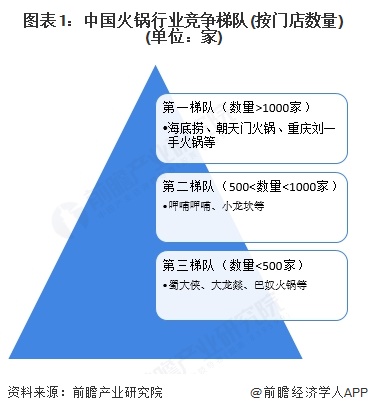
Group 1 - The core viewpoint of the article highlights the competitive landscape of the Chinese hot pot industry, detailing the market structure and key players [1][11]. - The first tier of hot pot companies includes those with over 1,000 stores, such as Haidilao and Chongqing Chao Tian Men, while the second tier includes brands like Xia Bo Xia Bo and Xiao Long Kan with 500-1,000 stores [1][4]. - The hot pot industry is characterized by various regional styles, with Sichuan and Chongqing hot pot being the mainstream, while new trends like Guizhou sour soup and Yunnan sour soup are gaining popularity [3][11]. Group 2 - The 2025 Top 100 Hot Pot Enterprises list, released by the China Hotel Association, shows that Sichuan and Chongqing brands dominate, with 7 out of the top 10 companies from these regions [4][5]. - The leading companies in the hot pot industry, based on a comprehensive index that includes operational and consumer evaluation metrics, are Haidilao, Chongqing Chao Tian Men, and Xia Bo Xia Bo [5][8]. - The hot pot market is experiencing robust growth, attracting numerous entrants due to its relatively low entry barriers and stable demand, with a significant portion of consumers being price-sensitive [11][12]. Group 3 - The competitive environment of the hot pot industry can be analyzed using Porter's Five Forces model, indicating a high level of competition among existing players and significant bargaining power for consumers [12]. - The supply chain for hot pot businesses is diverse, allowing companies to lower procurement costs due to the abundance of suppliers for ingredients and seasonings [11]. - The hot pot industry maintains a strong consumer base due to its unique dining experience and flavor profiles, which are difficult to replace with other dining options [11].