牛肉火锅

Search documents
烟火气升腾,潮州古城节日消费热度持续攀升
Sou Hu Cai Jing· 2026-02-23 12:40
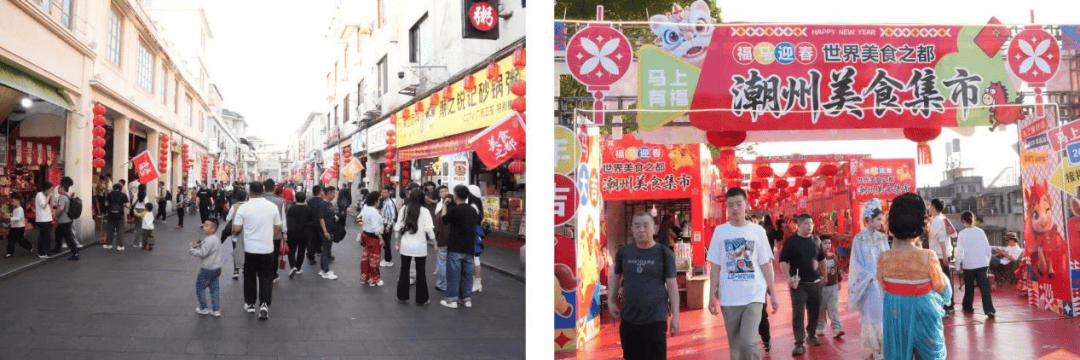
Group 1 - The ancient city of Chaozhou is experiencing a vibrant commercial atmosphere during the Spring Festival, with increased consumer activity from morning to night, highlighted by festive decorations and a bustling crowd [1] - The "Min Su +" model, which combines traditional accommodation with coffee and tea culture, is gaining popularity, leading to high booking rates for these unique lodgings during the holiday period [4] - The night economy is thriving, supported by attractions like the Guangji Bridge light show and drone performances, effectively extending visitor stay times [4] Group 2 - Chaozhou's culinary scene, recognized as a "World Food Capital," is seeing long queues at local eateries, with significant increases in revenue since the start of the holiday [5] - Specialty tea products and beautifully packaged local gifts are becoming popular among tourists, with sales of these items significantly higher than usual [5] - The integration of intangible cultural heritage experiences and Hanfu photography is attracting visitors, creating a complete consumption chain that emphasizes cultural memory [5] Group 3 - The successful blend of traditional and emerging business models in Chaozhou is creating new hotspots for cultural tourism consumption, showcasing a harmonious coexistence of tradition and modernity [6]

黄仁勋现身深圳,“打卡”牛肉火锅店
券商中国· 2026-01-28 02:19
Group 1 - The core viewpoint of the article highlights the visit of Jensen Huang, the founder and CEO of NVIDIA, to Shenzhen, where he enjoyed a beef hot pot meal with friends, showcasing his appreciation for the local cuisine and culture [1] - Huang's visit to China is part of a yearly tradition where he attends NVIDIA's annual meetings in major cities such as Beijing, Shanghai, and Shenzhen [1] - The article notes that Huang's wealth is estimated at $155 billion, emphasizing his status as a significant figure in the tech industry [1]


【行业深度】洞察2025:中国火锅行业竞争格局(附竞争梯队、企业竞争力评价等)
Qian Zhan Wang· 2025-08-25 02:18
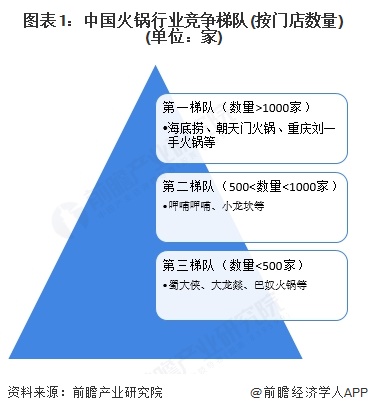
Group 1 - The core viewpoint of the article highlights the competitive landscape of the Chinese hot pot industry, detailing the market structure and key players [1][11]. - The first tier of hot pot companies includes those with over 1,000 stores, such as Haidilao and Chongqing Chao Tian Men, while the second tier includes brands like Xia Bo Xia Bo and Xiao Long Kan with 500-1,000 stores [1][4]. - The hot pot industry is characterized by various regional styles, with Sichuan and Chongqing hot pot being the mainstream, while new trends like Guizhou sour soup and Yunnan sour soup are gaining popularity [3][11]. Group 2 - The 2025 Top 100 Hot Pot Enterprises list, released by the China Hotel Association, shows that Sichuan and Chongqing brands dominate, with 7 out of the top 10 companies from these regions [4][5]. - The leading companies in the hot pot industry, based on a comprehensive index that includes operational and consumer evaluation metrics, are Haidilao, Chongqing Chao Tian Men, and Xia Bo Xia Bo [5][8]. - The hot pot market is experiencing robust growth, attracting numerous entrants due to its relatively low entry barriers and stable demand, with a significant portion of consumers being price-sensitive [11][12]. Group 3 - The competitive environment of the hot pot industry can be analyzed using Porter's Five Forces model, indicating a high level of competition among existing players and significant bargaining power for consumers [12]. - The supply chain for hot pot businesses is diverse, allowing companies to lower procurement costs due to the abundance of suppliers for ingredients and seasonings [11]. - The hot pot industry maintains a strong consumer base due to its unique dining experience and flavor profiles, which are difficult to replace with other dining options [11].