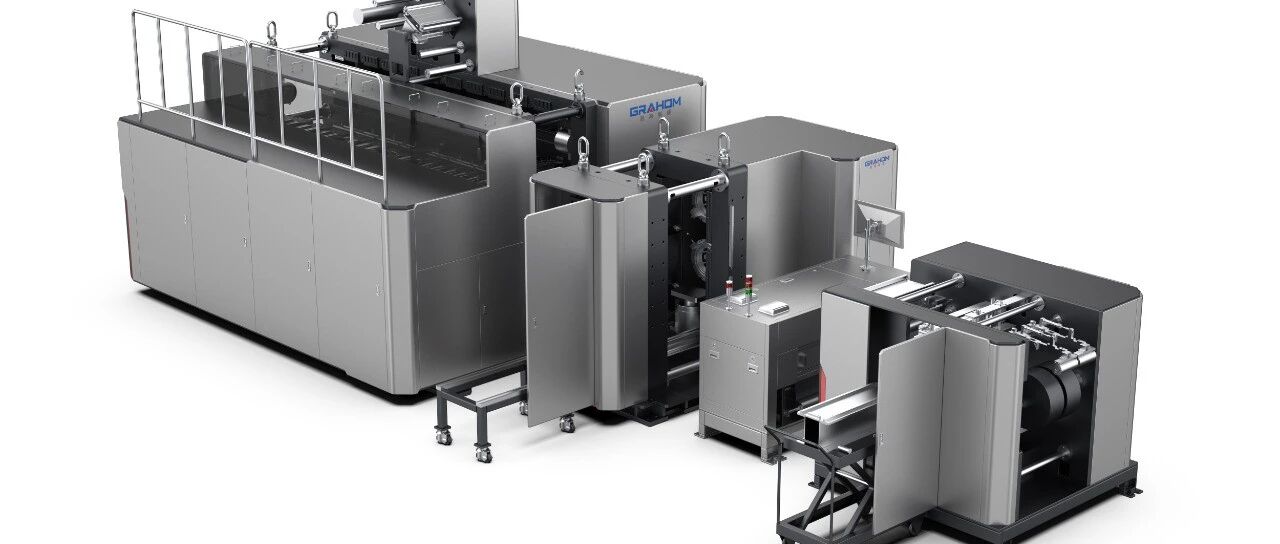
干法电极装备

Search documents
国内首款!新国标51Ah车规级固态电池发布
DT新材料· 2025-12-24 16:04
Core Viewpoint - The article discusses the upcoming 2026 Future Industry New Materials Expo, highlighting China's role in leading global innovation in new materials, particularly in advanced battery technologies and sustainable materials [5]. Group 1: Event Overview - The 2026 Future Industry New Materials Expo will take place from June 10 to June 12, 2026, at the Shanghai New International Expo Center, featuring six major exhibition areas focused on robotics, automotive, drones, data centers, aerospace, AI, and new energy [2][5]. - The expo aims to showcase advancements in various sectors, including solid-state batteries, sodium batteries, perovskite solar cells, and hydrogen energy technologies [6]. Group 2: Solid-State Battery Development - Solid Ion Energy Technology (Wuhan) Co., Ltd. has launched China's first 51Ah automotive-grade solid-state battery, which meets the new national standards for power batteries [2]. - The solid-state battery utilizes polymer-based solid electrolyte technology, allowing stable operation in temperatures ranging from -45°C to 120°C, with a rapid charging time of 6 minutes and a cycle life exceeding 3,500 times [3]. - A strategic cooperation agreement was signed between Jinyin Galaxy and Ion Energy to enhance the development and production of solid-state batteries, focusing on optimizing production processes and scaling up manufacturing capabilities [3]. Group 3: Industry Focus Areas - The expo will feature specialized areas for advanced battery and energy materials, including sodium batteries, liquid flow batteries, supercapacitors, and advanced carbon materials [6]. - Other highlighted areas include 3D printing technologies, automation production techniques, and smart detection and analysis instruments, emphasizing the importance of innovation in material science [6].


固态电池2027量产窗口期临近,干法电极成“破局者”
高工锂电· 2025-12-02 09:16
Core Viewpoint - The solid-state battery industry is approaching a critical commercialization window in 2027, driven by technological breakthroughs and capacity planning from companies like Guanhong Intelligent, which are clearing industrialization obstacles and promoting high-quality development in the new energy battery sector [1][4][23]. Group 1: Industry Trends and Projections - The global lithium battery shipment is expected to reach 10 TWh by 2035, with solid-state battery penetration projected to be 5%-10% [5]. - 2027 is identified as a key milestone for the industry, marking both a technological breakthrough and a market validation period, with the first small-scale production of sulfide-based solid-state batteries anticipated [5][4]. - Major companies such as GAC Group and CATL are advancing their production plans, with GAC Group already testing small-scale production and aiming for mass production between 2027 and 2030 [5][6]. Group 2: Technological Developments - The solid-state battery technology landscape is evolving, with sulfide-based batteries emerging as the most promising option due to their high ionic conductivity and compatibility [9][10]. - Dry electrode technology is gaining traction as a solution to the challenges faced by sulfide solid-state batteries, offering significant advantages in terms of cost and process efficiency [11][12]. - The dry electrode process eliminates the need for liquid solvents, reducing energy consumption by over 30% and improving production efficiency [12][19]. Group 3: Company Focus and Innovations - Guanhong Intelligent is positioning itself as a key player in the dry electrode equipment sector, providing comprehensive solutions that span from laboratory development to large-scale production [16][18]. - The company has achieved significant advancements in its equipment, including a reduction in delivery cycles to under four months and high customer satisfaction with its tailored solutions [17][18]. - Guanhong Intelligent's innovations have been recognized with awards, highlighting its leadership in addressing industry challenges and setting benchmarks for technological innovation [21][23].