年猪饭

Search documents
乡村行·看振兴丨冬至到年味浓 浙江山村年猪饭“烧热”乡村共富路
Xin Lang Cai Jing· 2025-12-21 14:33
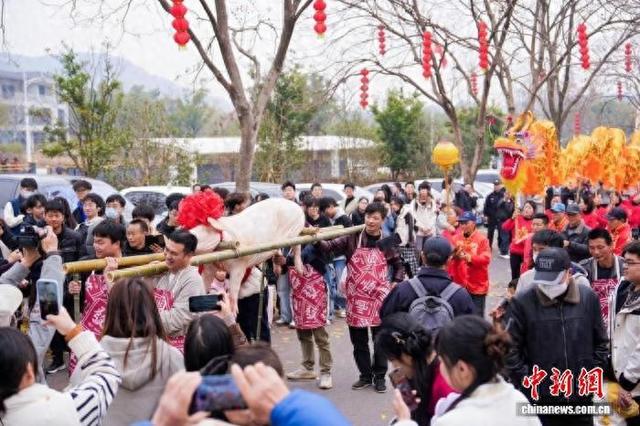
Core Viewpoint - The article highlights the vibrant cultural event of the "Year Pig Feast" in Maowu Village, Huzhou, Zhejiang Province, showcasing local traditions and attracting thousands of tourists, thereby boosting rural tourism and the local economy [1] Group 1: Event Description - The "Year Pig Feast" is a traditional custom in Maowu Village, celebrated around the winter solstice, where villagers prepare local dishes and engage in communal activities [1] - The event features the ceremonial slaughter of a nearly 300-pound local pig, accompanied by traditional music and a parade, creating a festive atmosphere [1] - Tourists participate in various activities, including visiting local specialty markets and experiencing traditional food preparation, such as making glutinous rice cakes [1] Group 2: Economic Impact - Since the inception of the "Year Pig Feast" in 2017, the event has significantly increased the village's popularity, leading to a rise in rural tourism and the establishment of local homestays [1] - The sale of local products, such as traditional rice cakes and other specialties, has improved, benefiting the villagers economically [1] - The village plans to continue leveraging its natural resources to develop more cultural and tourism activities, promoting rural revitalization and shared prosperity among villagers [1]
冬至到年味浓 浙江山村年猪饭“烧热”乡村共富路
Xin Lang Cai Jing· 2025-12-21 12:30
Core Viewpoint - The annual pig feast in Maowu Village, Huzhou, Zhejiang Province, has become a significant cultural event, attracting thousands of tourists and enhancing local economic development through traditional customs and culinary experiences [1][2][3] Group 1: Event Description - The pig feast, known as "Winter Solstice Gathering of Fortune," features local villagers preparing traditional dishes, showcasing the unique flavor of locally raised pigs fed on sweet potatoes, potatoes, and rice bran [1] - The event includes a traditional pig slaughtering ceremony, with a nearly 300-pound pig paraded through the village, accompanied by festive music and celebrations [1] - Visitors, including students and families, express excitement and appreciation for the authentic rural experience and the opportunity to engage with local traditions [2] Group 2: Economic Impact - Since the inception of the pig feast in 2017, Maowu Village has gained increasing recognition, boosting rural tourism and leading to the establishment of numerous homestays and improved sales of local products [2] - The event has not only enhanced the village's reputation but also contributed to the economic well-being of the villagers, allowing them to enjoy the benefits of increased tourism [2] Group 3: Future Development - Maowu Village plans to leverage its natural advantages to develop more unique cultural and tourism activities, aiming to promote rural revitalization and shared prosperity among villagers [3]
(乡村行·看振兴)冬至到年味浓 浙江山村年猪饭“烧热”乡村共富路
Xin Lang Cai Jing· 2025-12-21 09:21
Core Viewpoint - The annual pig feast in Maowu Village, Huzhou, Zhejiang Province, has become a significant cultural event, attracting thousands of tourists and enhancing local tourism and economy [1][3][8] Group 1: Event Description - The pig feast, known as "Winter Solstice Gathering of Fortune," features traditional activities such as pig slaughtering, cooking, and communal dining, showcasing local customs and flavors [1][3] - A nearly 300-pound pig is ceremoniously paraded through the village, accompanied by traditional music and festivities, creating a vibrant atmosphere for both villagers and visitors [3][8] Group 2: Economic Impact - Since the inception of the pig feast in 2017, Maowu Village has gained popularity, leading to increased rural tourism and the establishment of local homestays and specialty product sales [8] - The event has significantly contributed to the local economy, with villagers benefiting from the rise in tourism and the demand for local products [8] Group 3: Cultural Significance - The pig feast embodies the villagers' joy for harvest and aspirations for a better life, reflecting the rich cultural heritage of the region [3][6] - The event includes educational components, such as cultural lectures on traditional practices, enhancing community engagement and cultural appreciation among visitors [6][8]