建筑鸿蒙

Search documents
人工智能如何打造“未来场馆”?
Xin Lang Cai Jing· 2025-12-25 23:21
Core Insights - The Beijing International Convention Center has been officially designated as a "Global Model Smart Venue" through a collaboration between Beijing Beichen Group and Huawei, marking a successful transformation towards intelligence in the exhibition industry [1][7]. Group 1: Transformation and Innovation - The transformation of the venue signifies a shift from traditional exhibition spaces to intelligent, data-driven environments, enhancing operational efficiency and visitor experience [2][3]. - The integration of smart systems allows for real-time monitoring of venue conditions, predictive maintenance, and streamlined communication processes, significantly improving operational workflows [8][9]. Group 2: Technological Infrastructure - The venue has established a robust technological foundation, connecting over 100 types of terminals and deploying more than 3,000 access points to ensure reliable and high-speed network connectivity [10]. - A cloud-edge collaborative digital platform has integrated over 1.1 billion data points across various dimensions, facilitating efficient management and operational insights [10]. Group 3: Industry Implications - The smart venue's transformation provides a replicable model for the exhibition industry, aligning with global trends towards digitalization and sustainability [11]. - The Chinese exhibition industry is projected to reach a total output value of 1.5 trillion yuan by 2025, with technology-driven exhibitions experiencing a compound annual growth rate of 12.5% [11].

携手共绘千行百业新蓝图 开源鸿蒙行业论坛成功举办
Sou Hu Cai Jing· 2025-12-01 05:07
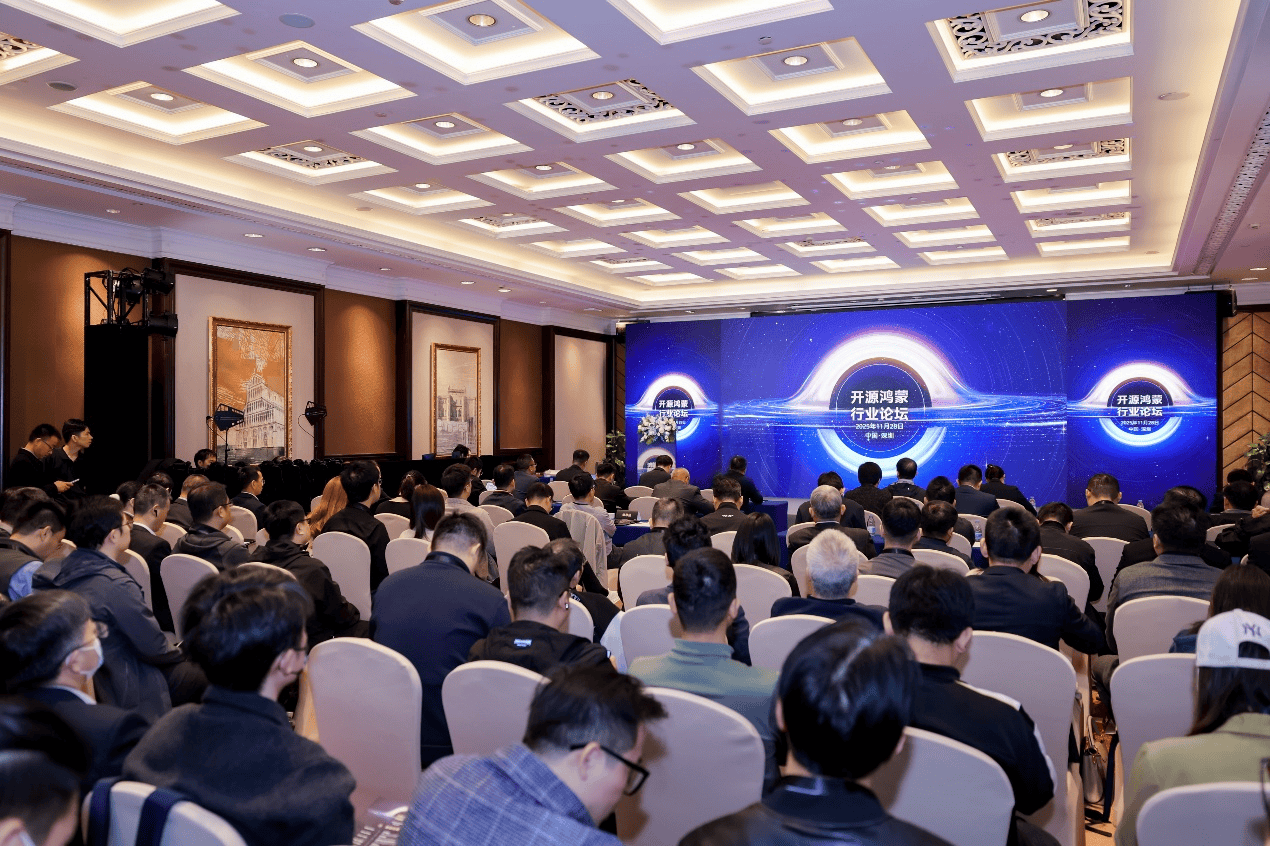
Core Insights - The OpenHarmony Industry Forum held on November 28 in Shenzhen focused on the practical applications of OpenHarmony across various sectors including transportation, healthcare, home, construction, and industry, with industry leaders gathering to outline a new blueprint for innovation and development [1] Group 1: OpenHarmony Development and Ecosystem - OpenHarmony has gathered over 9,700 contributors and more than 70 co-construction units, with code exceeding 130 million lines and over 1,400 products passing compatibility tests, covering sectors such as finance, transportation, education, and healthcare [3][7] - The project has iterated through 10 versions, achieving basic usability in key domestic industries, and aims to enhance its software framework and SDK ecosystem to improve user experience [7][9] - The forum highlighted the establishment of a strong ecosystem for OpenHarmony, emphasizing collaboration among leading enterprises to build a digital foundation for various industries [11] Group 2: Industry Applications and Innovations - In the smart home sector, China Mobile's IoT products based on OpenHarmony have launched in Guangdong, aiming for a "ten-hundred-thousand" development goal over three years [9] - The "Traffic Jiahong" operating system presented by Jiadu Technology aims to standardize device interconnectivity and enhance intelligent business collaboration for urban transportation [9] - OpenHarmony is being utilized in healthcare solutions, with implementations in hospitals like Shandong University Qilu Hospital, improving nurse efficiency and patient experience through device interoperability [10] - The "Kanghong OS" solution for the elderly care industry aims to provide personalized and convenient services, showcasing OpenHarmony's adaptability in various scenarios [10] - In construction, Huawei has released multiple scenario-based solutions using OpenHarmony's architecture, focusing on access control, energy efficiency, and security [10] - The industrial sector is leveraging OpenHarmony for digital upgrades, enhancing operational efficiency and data value through seamless device collaboration [10]