
异维A酸

Search documents
网红“神药”更新说明书:可能影响性功能 很多学生在用…
Xin Lang Cai Jing· 2026-02-07 14:38
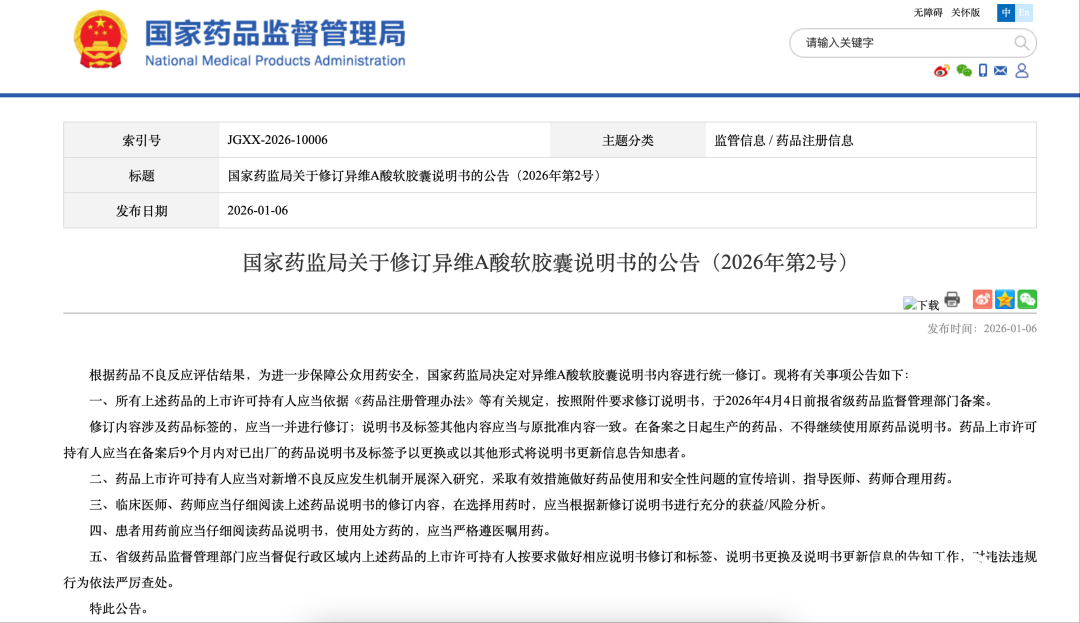
Core Viewpoint - The recent announcement by the National Medical Products Administration (NMPA) regarding the revision of the isotretinoin capsule instructions highlights the growing concerns over the drug's side effects, particularly its potential impact on mental health and sexual function, amidst a surge in acne treatment demand during the winter break [1][2]. Group 1: Drug Overview and Usage - Isotretinoin, commonly referred to as "EVA," has gained popularity as an acne treatment among young people, often promoted on social media for its effectiveness while downplaying its side effects [2][3]. - The drug is available in both oral capsule and topical cream forms, and it has been a key medication for treating severe nodular acne since its introduction in the U.S. and Europe in 1982 [3][4]. Group 2: Side Effects and Regulatory Actions - The revised instructions for isotretinoin now include a comprehensive list of adverse reactions, such as endocrine, digestive, mental, and reproductive issues, emphasizing the need for careful monitoring of patients [2][6]. - Reports of adverse reactions globally include 394 cases of depression and 37 suicide incidents in the U.S. from 1982 to 2000, and 14 cases of sexual dysfunction in the UK from 1985 to 2017 [4][5]. - The Australian Therapeutic Goods Administration has mandated that all isotretinoin products include new safety information regarding emotional changes and risks of sexual dysfunction by April 2025 [5]. Group 3: Recommendations and Patient Management - Medical professionals emphasize that isotretinoin should only be used under the supervision of qualified healthcare providers, and many mild acne cases can be treated with safer alternatives [5][6]. - The NMPA's warning encourages patients to consider safer, appropriate, and effective treatment options rather than risking the use of isotretinoin [5].

“战痘神药”异维A酸新增警示,或致抑郁与性功能障碍,专家提醒用药需谨慎评估
Xin Lang Cai Jing· 2026-02-06 13:45
Core Viewpoint - The recent announcement by the National Medical Products Administration regarding the revision of the isotretinoin capsule instructions has raised significant attention due to the addition of new risk warnings related to its side effects [1][3]. Group 1: Side Effects and Risks - The revised instructions for isotretinoin now include numerous potential adverse reactions, such as endocrine, digestive, mental, and reproductive issues, with specific warnings about depression, agitation, and rare cases of suicidal thoughts or attempts [3][4]. - Reports of sexual dysfunction associated with isotretinoin have emerged, with some patients experiencing long-term symptoms even after discontinuation of the drug, potentially requiring specialized treatment [3][4]. - Common side effects include dryness of the skin, lips, and mucous membranes, which are generally mild and manageable, with most symptoms resolving after stopping the medication [4][5]. Group 2: Clinical Use and Recommendations - Isotretinoin is primarily used for treating acne, particularly severe nodular acne, due to its ability to address multiple factors contributing to acne development [3][4]. - Treatment typically starts with a standard dose, which may be reduced as the condition improves, helping to minimize adverse reactions; the entire treatment cycle usually lasts several months [3][4]. - The prescribing of isotretinoin requires careful evaluation by healthcare professionals, especially for patients with a history of mental health issues, and alternative treatments may be recommended for mild cases [5].
粤小伙罹皮肤病赴济求医涂平妙手施治本月再坐诊
Xin Lang Cai Jing· 2026-01-13 16:42
Core Insights - The article highlights the successful consultation of Professor Tu Ping, a renowned dermatologist from Peking University First Hospital, who provided specialized treatment for difficult skin diseases in Jinan, attracting patients from various regions [1][2]. Group 1: Patient Case Study - A 23-year-old patient, Mr. Li, traveled from Guangdong to seek help for severe skin issues that had persisted for six months, significantly affecting his quality of life [1]. - Mr. Li experienced adverse effects from isotretinoin treatment, leading to symptoms such as nasal bleeding, facial redness, and persistent dryness, which worsened after stopping the medication [1][2]. - After a thorough examination, Professor Tu diagnosed Mr. Li with atopic dermatitis and created a personalized treatment plan that combined Western and traditional Chinese medicine [2]. Group 2: Consultation Outcomes - During the consultation, Professor Tu treated over 40 patients, successfully diagnosing and formulating individualized treatment plans for various rare skin conditions, including lymphocytic infiltration and mycosis fungoides [2]. - The detailed consultations and tailored treatment strategies provided hope to many families struggling with skin diseases [2]. Group 3: Future Engagements - Professor Tu is scheduled to return to Jinan for another consultation on January 27, 2026, allowing more patients to seek his expertise [3].
青春痘战争:被“面子”困住的少年们
3 6 Ke· 2025-10-17 03:48
Core Viewpoint - The article highlights the widespread issue of acne among adolescents in China, emphasizing the psychological and social impacts it has on individuals, and the need for timely and effective treatment rather than the common misconception that it is a normal part of growing up [19][21]. Group 1: Prevalence and Impact of Acne - A study indicates that 95% of individuals experience some degree of acne, with 3% to 7% of patients developing scars [1]. - Many adolescents face self-esteem issues and social anxiety due to acne, which can affect their personal and professional lives [1][19]. Group 2: Treatment Challenges - Parents often resort to ineffective home remedies or delay seeking professional help, believing that acne will resolve on its own [19][21]. - The article discusses various treatment experiences, including the use of topical medications and oral antibiotics, which often come with side effects and limited effectiveness [20]. Group 3: Psychological Effects - Acne can lead to significant emotional distress, with many individuals feeling self-conscious and avoiding social interactions [19][21]. - The stigma associated with acne can exacerbate feelings of isolation and anxiety among affected adolescents [19]. Group 4: Need for Awareness and Education - There is a lack of understanding about acne among the general population, with 60.4% of people not fully aware of the condition [19]. - The article calls for increased awareness and education for both parents and adolescents regarding the importance of early intervention and proper treatment [21]. Group 5: Advances in Treatment - Recent guidelines and advancements in acne treatment are being introduced, aiming to provide safer and more effective options for patients [20]. - The introduction of new technologies and treatment methods is seen as a positive step towards addressing the acne epidemic among youth [20].

母亲节丨孕期哺乳期如何安全变美?这份医生指南请收好
Bei Ke Cai Jing· 2025-05-11 06:41
Group 1 - The article discusses the significant physiological changes women experience during pregnancy and postpartum, highlighting the risks associated with cosmetic treatments during these periods [1] - It emphasizes that many women seek aesthetic improvements after childbirth, but medical professionals caution against premature cosmetic procedures due to potential adverse effects [1] - The article provides expert answers to common questions regarding cosmetic treatments during pregnancy and postpartum, focusing on safety and timing [2][3][4][5] Group 2 - Acne during pregnancy is linked to hormonal fluctuations, and while mild cases can be managed with gentle skincare, more aggressive treatments should wait until after breastfeeding [2] - Postpartum aesthetic procedures, such as facial fillers, should ideally be postponed until after breastfeeding or at least one year postpartum due to safety concerns [3] - The article notes that 70% of melasma during pregnancy may resolve within a year postpartum, suggesting minimal intervention during this time [4] Group 3 - The increase in skin tags and other benign growths during pregnancy is a common physiological response, and most can be monitored until after breastfeeding [5] - The article reassures that accidental cosmetic treatments like Botox or laser procedures are unlikely to harm the fetus, but emphasizes the lack of safety data during pregnancy and breastfeeding [7] - Recommendations for managing surgical scars post-C-section include specialized suturing techniques and extended healing time to minimize scarring [8] Group 4 - The article advises that postpartum body changes are normal and should be addressed through diet and exercise before considering cosmetic procedures [9] - It discusses the prevention and treatment of stretch marks, recommending weight control and skin hydration during pregnancy, with limited treatment options available postpartum [10] - Postpartum hair loss is typically temporary, with most women recovering within 6-12 months, but treatments can be considered if the issue persists beyond this period [11]