
征信报告

Search documents
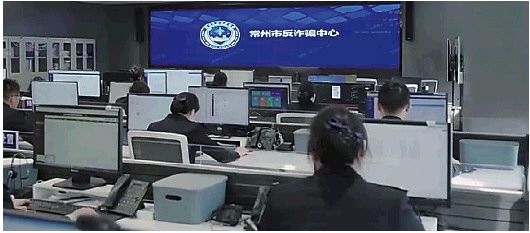
“征信修复”花钱办?背后藏着灰产链
Xin Lang Cai Jing· 2026-02-08 17:26
良好的个人征信是现代社会经济生活的"通行证",今年1月1日,中国人民银行征信中心为特定的小额逾期 人群开辟了一条官方的"信用修复通道":对于单笔金额不超过1万元的个人逾期信息,在满足特定条件并还 清欠款后,将不再进行展示。 本来是帮助部分逾期人群重建信用的政策,却被一些不法分子盯上,成为敛财、诈骗的噱头。近期,网络平 台上涌现出大量打着"征信修复""征信洗白"旗号的中介,他们声称花几千块钱,就可以处理万元以下的小 额逾期,甚至能修复"超过1万元的逾期记录"。记者调查发现,这背后可能隐藏着一条从虚假宣传、伪造证 据到恶意申诉的灰色产业链。 声称能利用"规则漏洞" 消除不良征信记录 在各类社交平台和二手交易网站上,不少中介、商家开始把目光对准了1万元以上的逾期记录——"逾期 不可怕,专业团队帮你销户""征信异议申诉,百分百成功"……类似的广告语比比皆是,这些商家自称能够 利用所谓的"规则漏洞"消除不良征信记录。 记者以咨询者的身份联系了一位声称能处理"疑难杂症"的商家,对方表示自己所在的金融公司掌握"底层 逻辑"。 宣称可"洗白"逾期记录商家:"我们干了五年,这一行是从根本上解决你的征信问题。虽然说现在国家政策 ...

征信新政惠及大众:小额逾期一次性修复,黑灰产“凉凉”
Xin Lang Cai Jing· 2025-12-30 05:53
来源:柒财经 近日,央行发布《关于实施一次性信用修复政策有关安排的通知》,一经出炉便在朋友圈迅速传播,引发广泛热议。 柒财经梳理,这一牵动了无数人心的新政着重讲了三点内容: 对于2020年1月1日至2025年12月31日期间,单笔金额不超过10000元人民币的个人逾期信息,可实现一次性信用修复; 具体操作是:在2025年12月1日至2026年3月31日之间足额偿还逾期债务;一次性信用修复政策不区分金融机构和业务类型,也不限制笔数。 ▲图源:央行官网 划定一万元的"红线",这条通知的指向很明确,其针对的不是金融大鳄、资本大佬、商业巨擘,只能是普通大众。 01 新政惠及大众 1万元的逾期看似微末不足道,但现实却是:这就是勒住太多普通人脖颈的"缰绳"。 今年7月,据媒体从部分助贷平台和金融机构处了解的情况,当前用款方以中青年为主,单笔借款额普遍都在1万元以内。 比如,某助贷平台人士透露,客户中40岁以下的中青年占比近七成,约85%为大专及以下学历,超过80% 从事非白领服务业或制造业,涵盖新蓝领、年轻 白领等,平均借款额8000元左右。 2019年11月,尼尔森在《中国年轻人负债状况报告》中提到: "57%的工作9 ...
微众信科王锦胤:从数据“深挖”到场景“深入”
2 1 Shi Ji Jing Ji Bao Dao· 2025-11-14 06:44
Core Insights - Credit reporting is becoming a key tool to address the financing difficulties faced by small and medium-sized enterprises (SMEs) in China [1] - The 2025 credit work conference emphasizes increasing support for key areas such as technological innovation, inclusive finance for small and micro enterprises, and green development [1] - Credit data helps bridge the information asymmetry between fund providers and demanders, directly influencing the possibility, cost, and efficiency of financing [1] Industry Overview - Shenzhen has a high demand for credit services due to its developed headquarters economy and a large number of SMEs, particularly in technology and e-commerce [1] - Many SMEs in Shenzhen operate with light assets and lack traditional collateral, but they possess substantial digital assets such as tax data and invoices [1] - The market for credit reporting services in Shenzhen is expanding, with companies like WeBank Credit Technology providing over 40 million credit reports, facilitating credit financing exceeding 1 trillion yuan for SMEs [1] Company Strategies - WeBank Credit Technology has focused on extracting tax-related operational data and expanding into supply chain finance based on transaction data [3] - The company is targeting high-information industries such as e-commerce and smart manufacturing to support financing needs [3] - AI technology has significantly improved the processing accuracy of unstructured data, enhancing risk identification and reducing default risks [5] Supply Chain Finance - The shift towards "decoupling" in supply chain finance is aimed at improving online and bulk customer acquisition and risk control [6] - WeBank Credit Technology has developed a model that integrates industry, supply chain, and equity relationships to identify quality clients [6] - The company has provided services to approximately 17 banks, accumulating credit limits of 40 to 50 billion yuan [6] Market Trends - The e-commerce sector shows strong credit demand and manageable risks, with transaction volumes growing faster than the national economy [7] - WeBank Credit Technology utilizes marketing service fees and transaction data to assess the creditworthiness of e-commerce platforms, maintaining a bad debt rate below 1% [7] - The cross-border logistics sector is also a focus area, leveraging operational data to support banks in providing credit [7] Future Directions - WeBank Credit Technology aims to expand its client base beyond banks to include state-owned enterprises and financial institutions [8] - The company is exploring new growth areas such as small and micro asset disposal and enterprise service markets [9] - Plans for consumer-facing services include creating an enterprise information search engine and offering reverse background checks for job seekers [9]
21专访|微众信科王锦胤:从数据“深挖”到场景“深入”
2 1 Shi Ji Jing Ji Bao Dao· 2025-11-14 06:43
Core Insights - Credit reporting is becoming a key tool to address the financing difficulties faced by small and medium-sized enterprises (SMEs) in China, particularly in Shenzhen, where there is a high demand for financing solutions [1][4] - The 2025 credit work conference emphasizes increasing support for key areas such as technological innovation, inclusive finance for small and micro enterprises, and green development [1][4] - The integration of credit data helps bridge the information asymmetry between fund providers and demanders, which is crucial for determining the feasibility, cost, and efficiency of financing [1][4] Group 1: Importance of Credit Data - Credit data is essential for solving the information asymmetry problem in financing activities, which affects repayment capability and willingness [1][4] - Shenzhen's unique economic landscape, with a large number of SMEs and tech companies, creates a significant market for credit reporting services [1][4] Group 2: Company Strategies and Innovations - The company has focused on leveraging tax-related operational data to provide horizontal credit financing services, and is now expanding into vertical fields based on transaction data [4][5] - The company is enhancing its fraud detection capabilities using AI technologies, significantly improving the accuracy of processing unstructured data from 80% to 98% [5] Group 3: Supply Chain Finance - The shift towards "decoupling" in supply chain finance is being explored by the company, which aims to provide services without relying solely on core enterprises [7][8] - The company has developed a model that integrates industry, supply chain, and equity relationships, allowing for better risk management and customer identification [7] Group 4: Industry-Specific Financing Needs - The e-commerce sector shows strong credit demand and manageable risks, with the company utilizing marketing service fees and transaction data to assess creditworthiness [8] - The cross-border logistics sector is also a focus area, with the company analyzing operational data to support banks in providing credit [8] Group 5: Future Growth Directions - The company identifies four main growth areas: deepening core business, exploring B2C marketing, expanding small asset disposal services, and extending into enterprise services [12] - Plans for B2C business include creating an enterprise information search engine and offering reverse background check services for job seekers [12]