微短剧剧本

Search documents
河南:对符合条件的优秀剧本,一次性给予版权方最高不超30万元奖励
Zheng Quan Shi Bao Wang· 2025-12-19 10:16
Core Viewpoint - The Henan Provincial Government has released a set of policies aimed at promoting the high-quality development of the micro-short drama industry, with 15 specific measures to enhance content creation and improve the industry chain, positioning Henan as a competitive hub for micro-short dramas nationally [1] Group 1: Policy Measures - The policies include rewards for outstanding script creation, encouraging writers to participate actively in micro-short drama production [1] - Establishment of a high-quality micro-short drama script database to support ongoing and upcoming projects with financial assistance [1] - Creation of a reserve library for excellent online novels and a platform for the incubation of IP rights and adaptations in the Central Plains region [1] Group 2: Financial Incentives - A one-time reward of up to 300,000 yuan will be given to the copyright holders of excellent scripts selected for various national programs, with each script eligible for only one application [1]
里程碑:年薪200万+的短剧编剧岗,出现了
3 6 Ke· 2025-07-02 10:26
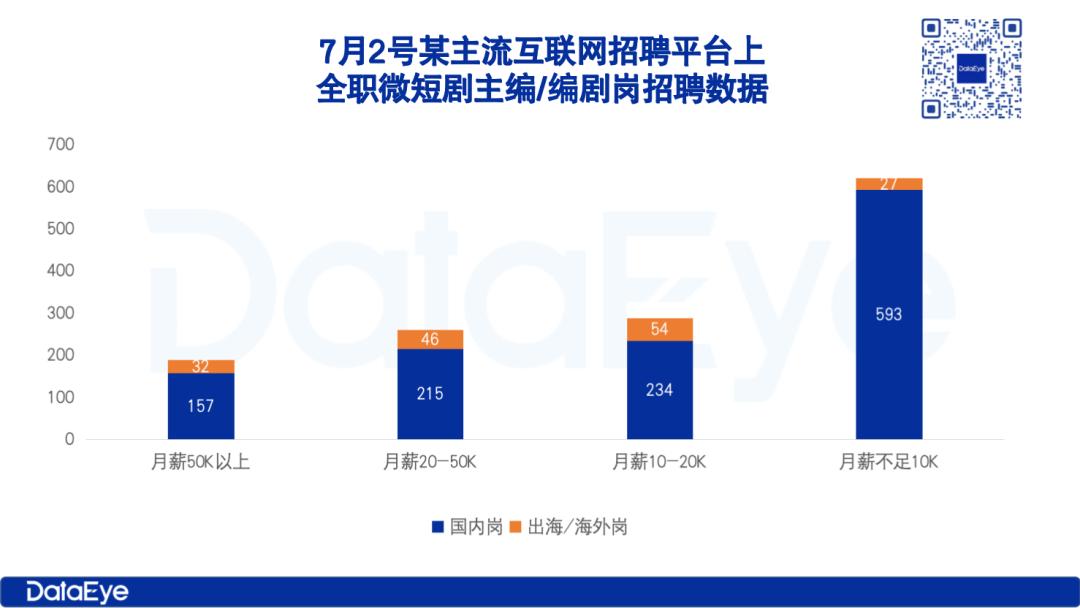
Core Insights - The recruitment of micro-short drama screenwriters has intensified, with salaries reaching unprecedented levels, such as 2 million yuan for top positions, marking a significant milestone in the industry [1][5][29] Group 1: Recruitment Data Observation - There is a stark salary disparity among micro-short drama screenwriters, with average salaries for ordinary screenwriters around 70,000 yuan per year, while senior screenwriters earn between 130,000 to 200,000 yuan annually [2][4] - DataEye's research indicates that over 60% of entry-level screenwriters earn between 6,000 to 15,000 yuan monthly, translating to annual salaries of 70,000 to 180,000 yuan, primarily from fixed salaries without project bonuses [4][28] - Top-tier screenwriters or studios can achieve annual incomes exceeding 1 million yuan, with only about 20 studios in the industry reaching such income levels [4][5] Group 2: The 2 Million Yuan Screenwriter Position - Junle Film and Television, based in Chengdu, has launched a recruitment initiative offering salaries starting at 2 million yuan for top screenwriters, aiming to attract elite talent through its "Chitu Plan" [5][10] - The "Chitu Plan" includes two parts: the "Chitu Awakening Plan" for individual screenwriters and the "Chitu Gallop Plan" for established screenwriting studios, with potential earnings exceeding 2 million yuan plus annual bonuses [5][15] Group 3: Industry Trends and Changes - The competition for screenwriters has escalated due to the introduction of various training and signing programs by micro-short drama platforms, which aim to secure quality screenwriting talent [29] - The micro-short drama industry is undergoing significant transformation, with a shift from paid to free platforms, leading to changes in content requirements and audience expectations [29][30] - The demand for innovative content has increased, as audiences are no longer satisfied with common tropes, prompting a need for screenwriters to adapt and create more engaging narratives [30][28]