
心机旋切

Search documents
湖北打造世界级都市圈,如何“超常规”发力
第一财经· 2026-01-28 12:25
Core Viewpoint - The article discusses the ambitious plan for the Wuhan metropolitan area to become a significant economic growth hub in China, aiming to rival the Yangtze River Delta and Chengdu-Chongqing regions, with a projected economic output of 3.8 trillion yuan by 2025, accounting for over 60% of Hubei province's economy [3][4]. Group 1: Urban Development and Economic Goals - The Wuhan metropolitan area, approved as the seventh national-level metropolitan area, includes nine cities and is expected to play a crucial role in the economic rise of Central China, with nearly 30% of the economic weight in the Yangtze River middle reaches [3][4]. - The government aims to enhance planning coordination, inter-city collaboration, and benefit-sharing mechanisms to leverage Wuhan's leading role in driving regional development [4][5]. Group 2: Challenges and Shortcomings - The metropolitan area faces challenges in infrastructure connectivity, industrial collaboration depth, and equalization of public services, which hinder deeper urban integration [4][5]. - There is a lack of effective platforms for cross-administrative coordination, which complicates industrial layout and resource sharing [4][5]. Group 3: Strategic Recommendations - Experts suggest creating a cross-regional industrial collaboration ecosystem to foster a "deep industrial community" among cities in the metropolitan area, focusing on mechanisms, resources, and supply chains [5][6]. - Recommendations include developing a modern industrial system with distinct roles for Wuhan and surrounding cities to avoid homogenization and competition for resources [5][6]. - The establishment of industry clusters in textiles, circular economy, and other sectors is emphasized to enhance regional economic integration and innovation [6][7].

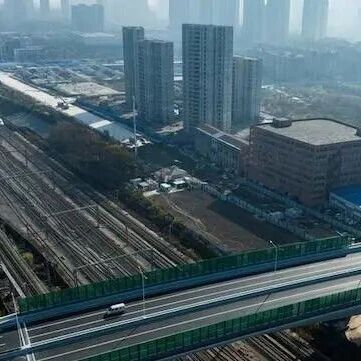
湖北打造世界级都市圈,如何“超常规”发力
Di Yi Cai Jing· 2026-01-28 09:40
Core Insights - The Wuhan metropolitan area aims to achieve an economic total of 3.8 trillion yuan by 2025, positioning itself as a significant growth pole in China and a world-class metropolitan area [1][2] - The metropolitan area consists of nine cities, with Wuhan being the central hub, and is expected to contribute over 60% to Hubei province's economy [1] - There are existing challenges in infrastructure connectivity, industrial collaboration, and equalization of public services that need to be addressed for deeper integration [2] Group 1 - The Wuhan metropolitan area is recognized as the seventh national-level metropolitan area in China, comprising nine cities: Wuhan, Huangshi, Ezhou, Xiaogan, Huanggang, Xianning, Xiantao, Tianmen, and Qianjiang [1] - The metropolitan area is projected to account for nearly 30% of the economic output of the Yangtze River middle reaches urban agglomeration [1] - The government aims to enhance planning coordination, cross-regional collaboration, and benefit-sharing mechanisms to strengthen the metropolitan area's role as a growth driver [2] Group 2 - Key challenges include the lack of a systematic platform for cross-administrative coordination, insufficient infrastructure connectivity, and a need for differentiated industrial guidance to avoid homogeneity and hidden competition [2] - The focus on "super-normal" development emphasizes the need for provincial-level leadership and regular meetings to address significant cross-regional issues [2] - The establishment of an industrial collaborative ecosystem is crucial, particularly in fostering deep industrial communities among cities within the metropolitan area [3] Group 3 - Recommendations include creating integrated development guidelines for characteristic industries in the Jianghan Plain and leveraging existing industrial clusters to build advanced manufacturing capabilities [4] - The metropolitan area should support Wuhan in becoming an international city while developing regional sub-centers in Huangshi, Ezhou, and Xiaogan to create a multi-polar structure [5] - The promotion of cross-city industrial parks and shared management models is suggested to drive overall industrial upgrades within the metropolitan area [5]