产业协同生态系统

Search documents
湖北打造世界级都市圈,如何“超常规”发力
第一财经· 2026-01-28 12:25
Core Viewpoint - The article discusses the ambitious plan for the Wuhan metropolitan area to become a significant economic growth hub in China, aiming to rival the Yangtze River Delta and Chengdu-Chongqing regions, with a projected economic output of 3.8 trillion yuan by 2025, accounting for over 60% of Hubei province's economy [3][4]. Group 1: Urban Development and Economic Goals - The Wuhan metropolitan area, approved as the seventh national-level metropolitan area, includes nine cities and is expected to play a crucial role in the economic rise of Central China, with nearly 30% of the economic weight in the Yangtze River middle reaches [3][4]. - The government aims to enhance planning coordination, inter-city collaboration, and benefit-sharing mechanisms to leverage Wuhan's leading role in driving regional development [4][5]. Group 2: Challenges and Shortcomings - The metropolitan area faces challenges in infrastructure connectivity, industrial collaboration depth, and equalization of public services, which hinder deeper urban integration [4][5]. - There is a lack of effective platforms for cross-administrative coordination, which complicates industrial layout and resource sharing [4][5]. Group 3: Strategic Recommendations - Experts suggest creating a cross-regional industrial collaboration ecosystem to foster a "deep industrial community" among cities in the metropolitan area, focusing on mechanisms, resources, and supply chains [5][6]. - Recommendations include developing a modern industrial system with distinct roles for Wuhan and surrounding cities to avoid homogenization and competition for resources [5][6]. - The establishment of industry clusters in textiles, circular economy, and other sectors is emphasized to enhance regional economic integration and innovation [6][7].

湖北打造世界级都市圈,如何“超常规”发力
Di Yi Cai Jing· 2026-01-28 09:40
Core Insights - The Wuhan metropolitan area aims to achieve an economic total of 3.8 trillion yuan by 2025, positioning itself as a significant growth pole in China and a world-class metropolitan area [1][2] - The metropolitan area consists of nine cities, with Wuhan being the central hub, and is expected to contribute over 60% to Hubei province's economy [1] - There are existing challenges in infrastructure connectivity, industrial collaboration, and equalization of public services that need to be addressed for deeper integration [2] Group 1 - The Wuhan metropolitan area is recognized as the seventh national-level metropolitan area in China, comprising nine cities: Wuhan, Huangshi, Ezhou, Xiaogan, Huanggang, Xianning, Xiantao, Tianmen, and Qianjiang [1] - The metropolitan area is projected to account for nearly 30% of the economic output of the Yangtze River middle reaches urban agglomeration [1] - The government aims to enhance planning coordination, cross-regional collaboration, and benefit-sharing mechanisms to strengthen the metropolitan area's role as a growth driver [2] Group 2 - Key challenges include the lack of a systematic platform for cross-administrative coordination, insufficient infrastructure connectivity, and a need for differentiated industrial guidance to avoid homogeneity and hidden competition [2] - The focus on "super-normal" development emphasizes the need for provincial-level leadership and regular meetings to address significant cross-regional issues [2] - The establishment of an industrial collaborative ecosystem is crucial, particularly in fostering deep industrial communities among cities within the metropolitan area [3] Group 3 - Recommendations include creating integrated development guidelines for characteristic industries in the Jianghan Plain and leveraging existing industrial clusters to build advanced manufacturing capabilities [4] - The metropolitan area should support Wuhan in becoming an international city while developing regional sub-centers in Huangshi, Ezhou, and Xiaogan to create a multi-polar structure [5] - The promotion of cross-city industrial parks and shared management models is suggested to drive overall industrial upgrades within the metropolitan area [5]
从资源输出向价值创造转型
Xin Lang Cai Jing· 2026-01-25 22:24
Core Insights - The article emphasizes the importance of the "rich mineral resources and refined development" strategy in Guizhou to transform resource advantages into industrial strengths and development momentum, focusing on high-quality development [3] Group 1: Strategic Recommendations - The strategy should involve technological innovation, model optimization, and industry chain extension to create a demand-driven industrial collaborative ecosystem [3] - A systematic approach based on resource endowment, ecological sensitivity, and market prospects is essential for maximizing the lifecycle value of mining areas [4] - The transition from "selling raw materials" to "selling materials" requires building an industry collaborative ecosystem driven by end-market demand, with downstream enterprises deeply involved in the mining process [4][5] Group 2: Integrated Development Model - The "exploration-mining-selection-smelting-material" integrated park model is crucial for implementing the "rich mineral resources and refined development" strategy, promoting a shift from extensive mining to deep processing [6] - The current challenges in the development phase include the need for efficient and green selection and smelting technologies for complex ores, as well as overcoming institutional barriers to cross-regional and cross-industry collaborative innovation [6] Group 3: High-Value Product Development - Potential high-value products from key minerals include lithium iron phosphate for new energy batteries from phosphate rock, high-purity aluminum materials, lithium manganese-based cathode materials for next-generation batteries, and solid-state battery materials from lithium resources [7] - These product development directions should align with downstream technological advancements and involve targeted research and pilot testing [7]

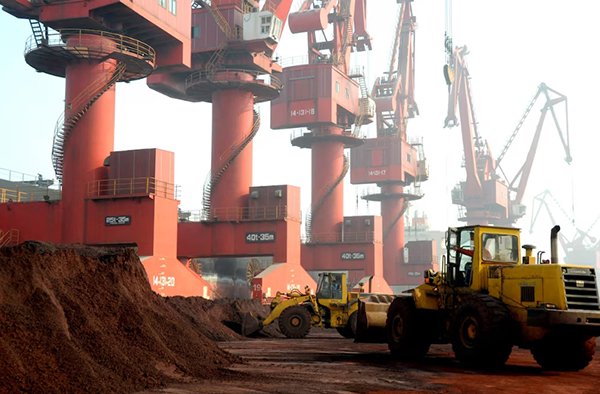
“不止有稀土,特朗普才发现:天平已向中国倾斜”
Guan Cha Zhe Wang· 2025-06-09 07:47
Core Viewpoint - China's dominance in the rare earth supply chain has shifted the balance of power in trade negotiations, particularly against the backdrop of U.S. tariffs and export controls [1][4]. Group 1: China's Export Control Measures - Following the U.S. imposition of tariffs as high as 145% on Chinese goods, China implemented export controls on seven categories of heavy rare earth elements, including samarium and gadolinium [3][4]. - Analysts believe that these export controls not only countered U.S. actions but also affected third countries that had taken a tougher stance against China due to U.S. pressure [4][6]. - China is establishing an export licensing system for rare earth products, which may serve as a long-term policy, indicating a potential for ongoing control over these critical materials [6][7]. Group 2: Implications for Global Supply Chains - The leverage gained from rare earth export controls could be replicated in other high-tech supply chains, such as semiconductors, if the U.S. tightens its chip regulations further [4][5]. - China is a leader in the production of advanced materials like high-performance magnets, transistors, and batteries, contributing to a robust industrial ecosystem in electric vehicles, drones, and AI technologies [5][10]. - The global demand for rare earth elements in civilian applications is increasing, and China is considering the balance between its export controls and the reasonable needs of other countries [8][10]. Group 3: International Reactions and Future Outlook - Countries are intensifying efforts to reduce reliance on Chinese industrial supply chains, but the effectiveness of China's export controls suggests that this transition will not be quick or easy [7][8]. - Recent surveys indicate that over 75% of companies affected by rare earth controls can only maintain inventory for three months, highlighting the urgency of the situation [6]. - China is open to enhancing communication regarding export controls to facilitate compliant trade, while also maintaining its national security interests [8].